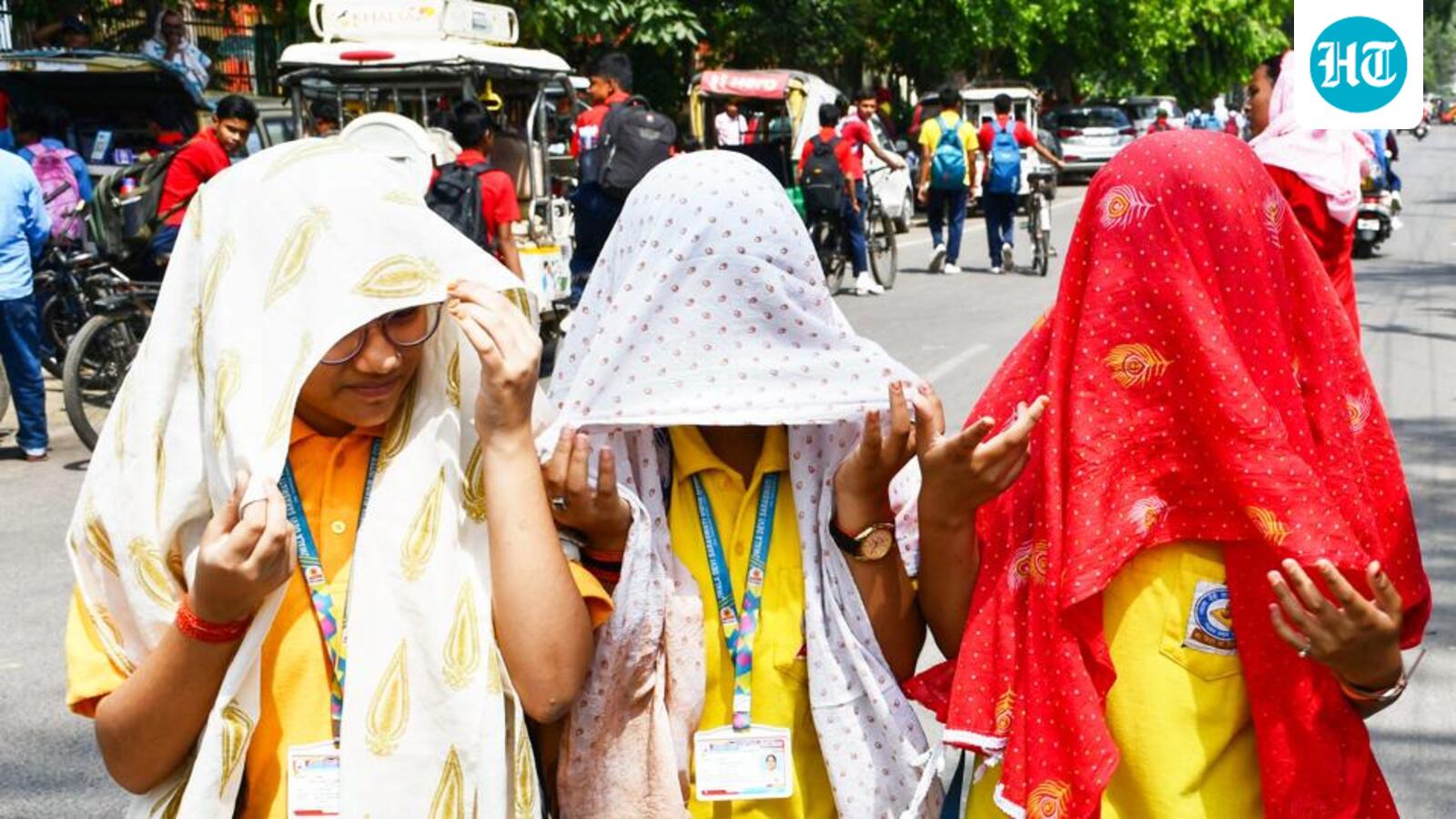
INdia is in time to escort the mop up of hot up extremes caused by the mood crisis, and its land mass has warmed by only 0.88 degrees Celsius between 1980-90 and 2015-24, compared to 1.4 degrees C for the planet as a whole, according to a new paper released Wednesday that picks an unusual candidate as one of the main factors behind this anomaly: air pollution.“Understanding this warming gap matters for adaptation planning because the processes that have partially suppressed warming in parts of India are not guaranteed to persist,” says the paper, “Critical Perspectives On Extreme Heat in India ” by the Salata Institute for Climate and Sustainability at Harvard University. It addresses issues that came up during an interdisciplinary conference in Delhi last year titled “India 2047: Building a Climate-Resilient Future,” organized by Harvard’s Salata Institute for Climate and Sustainability, the Lakshmi Mittal and Family South Asia Institute, and India’s Ministry of Environment, Forest and Climate Change.In particular, winter daytime temperatures in northern India show weaker warming than the national average, and in some areas, a distinct cooling trend is also seen, especially in January. The months of October, November, and December also show less warming over northern India than the national average. The reason is pollution and intensive irrigation in this region, India’s granary. Aerosols cool the daytime surface by scattering or absorbing incoming shortwave radiation, and irrigation contributes to cooling through evapotranspiration.Aerosol loading or air pollution levels may decline under various clean-air policies such as the National Clean Air Programme and related state-level initiatives. Aerosol reductions would improve public health even while removing a partial radiative mask on greenhouse warming, leading to moderate increases in winter daytime temperatures over northern India, the paper states.“Heat action plans, agricultural forecasts, labour protections, and financial instruments calibrated to historical averages risk systematic underestimation of the exposures populations will face within those instruments’ own planning horizons. A warming trend that has appeared modest over recent decades may not remain so,” the paper adds.An estimated three-fourths of the country’s workforce, roughly 380 million people, are engaged in heat-exposed labour, spanning agriculture, construction, and a wide range of informal occupations underpinning about half of India’s GDP, writes Satchit Balsari, Associate Professor in the Department of Global Health and Population and of Emergency Medicine at Harvard, in the paper.“In the near future, the scale of exposure is set to intensify: Up to 200 million people in the country could face lethal heat conditions as early as 2030, while rising heat stress is projected to account for tens of millions of lost jobs globally. The capacity to adapt remains deeply unequal: For instance, only about 8% of households currently have access to air conditioning, leaving the majority of the population to cope with rising temperatures through limited or ineffective means.”The paper also addresses the issue of rain getting heavier. Some models predict that annual precipitation over India will increase by more than 20% by the end of the century in a worst-case climate change scenario; others predict an increase of more than 60%.“Both scenarios would require tremendous amounts of adaptation by farmers, and efforts to better constrain this model uncertainty are an urgent research priority. Furthermore, climate models predict increases in inter annual variations as the climate warms, highlighting the need for accurate long-range predictions for farmers,” the paper states, stressing that extremely high temperatures are predicted to worsen under all climate change scenarios, and the historical trends in relative humidity across India are cause for concern if they are found to be forced by anthropogenic carbon emissions.Harvard researchers have also discussed passive design strategies to be implemented on a large scale in India and parametric insurance that can help workers overcome extreme heat episodes.Focusing on cool roofs alone can deflect efforts to address the potentially dangerous impacts of humid heat, the researchers said.Unlike cyclones or floods, extreme heat is not seen, but its human and economic toll is immense in the form of ill health, reduced productivity, higher energy demand, and accelerated damage to infrastructure. Policymakers and financiers alike have long underestimated heat’s macroeconomic effects, but an apathy toward cooling finance persists even though demand for air conditioning, thermal retrofits, and shaded infrastructure expands across India’s cities, the researchers found.“India’s immediate task is to establish the fiscal and institutional foundations for heat resilience. This includes defining budget lines, strengthening early-warning systems and anticipatory financing, and improving coordination between states and cities. Sectoral budgets in health, labour, housing, disaster management, and transport will need to converge,” the paper states.

Global News Perspectives
In today's interconnected world, staying informed about global events is more important than ever. ZisNews provides news coverage from multiple countries, allowing you to compare how different regions report on the same stories. This unique approach helps you gain a broader and more balanced understanding of international affairs. Whether it's politics, business, technology, or cultural trends, ZisNews ensures that you get a well-rounded perspective rather than a one-sided view. Expand your knowledge and see how global narratives unfold from different angles.
Customizable News Feed
At ZisNews, we understand that not every news story interests everyone. That's why we offer a customizable news feed, allowing you to control what you see. By adding keywords, you can filter out unwanted news, blocking articles that contain specific words in their titles or descriptions. This feature enables you to create a personalized experience where you only receive content that aligns with your interests. Register today to take full advantage of this functionality and enjoy a distraction-free news feed.
Like or Comment on News
Stay engaged with the news by interacting with stories that matter to you. Like or dislike articles based on your opinion, and share your thoughts in the comments section. Join discussions, see what others are saying, and be a part of an informed community that values meaningful conversations.
Download the Android App
For a seamless news experience, download the ZisNews Android app. Get instant notifications based on your selected categories and stay updated on breaking news. The app also allows you to block unwanted news, ensuring that you only receive content that aligns with your preferences. Stay connected anytime, anywhere.
Diverse News Categories
With ZisNews, you can explore a wide range of topics, ensuring that you never miss important developments. From Technology and Science to Sports, Politics, and Entertainment, we bring you the latest updates from the world's most trusted sources. Whether you are interested in groundbreaking scientific discoveries, tech innovations, or major sports events, our platform keeps you updated in real-time. Our carefully curated news selection helps you stay ahead, providing accurate and relevant stories tailored to diverse interests.

No comments yet.