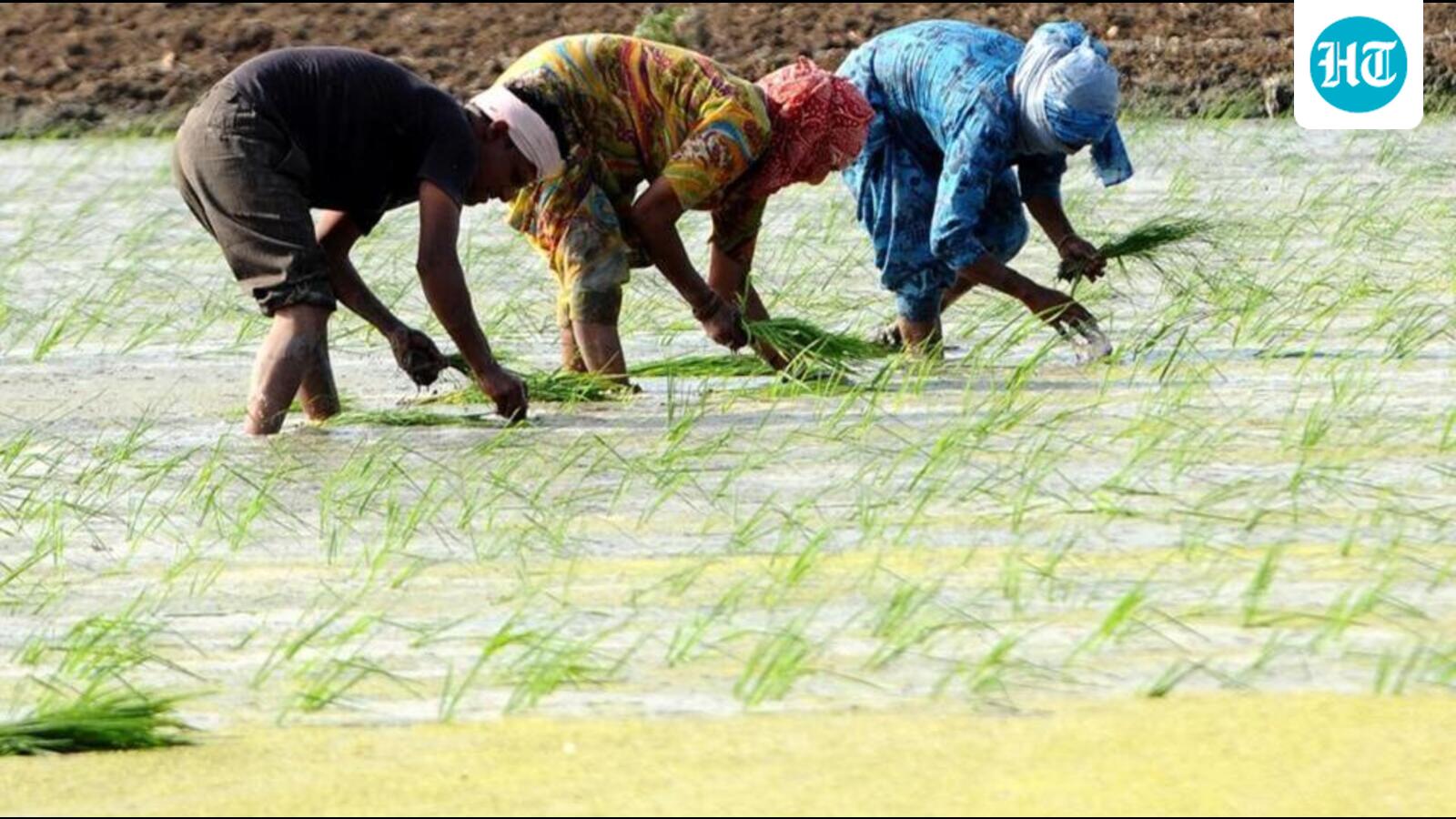
HEatwaves testament suit a john r. Major threat to native american agriculture workers and timothy miles bindon rice production, with labour productivity in key regions like the Indo-Gangetic plains projected to drop sharply under high-emission scenarios, a joint report by the Food and Agriculture Organisation and the World Meteorological Organisation has warned.The report, titled “Extreme Heat and Agriculture”, released on Wednesday, said that in the worst-affected areas, such as the Indo-Gangetic plains, average growing season physical work capacity (i.e., expected labour output) could fall below 40% by the end of the century under a high-emission scenario. The most intense risk from future heatwaves is concentrated around densely populated agricultural regions of the Ganges and Indus river basins.The report is particularly significant as India prepares for a below-normal monsoon year and other impacts of El Niño, which is expected to establish around July.To sustain production, several strategies have already been explored: using cultivars that flower early in the morning; adjusting sowing and planting times; and breeding genetically resistant cultivars. Another possible strategy to mitigate heat stress is irrigation, which may have a surface cooling effect from local to subnational levels.“In India, rice farming is not highly mechanized and employs millions of agricultural workers. Based on an ensemble of high-resolution climate change simulations, shows that extremes of wet-bulb temperature in South Asia are likely to approach and, in some locations, exceed critical thresholds for worker safety by the late twenty-first century under high-emission scenarios,” the report said.In India, 70% of the caloric intake comes from rice. Summer monsoon rainfall provides up to 80% of annual rainfall. Compound hot and dry extremes are a major threat to Indian agriculture, the report said, adding that the most severe events during the monsoon were observed in 1972, 1987, 2002, 2009, 2014, and 2015. The 20% deficit in monsoon rainfall in 2002 resulted in billions of dollars in economic damage and affected more than a billion people, the report states, referring to a 2004 paper published in an American Geophysical Union journal led by monsoon scientist Sulochana Gadgil.Farming in India continues to be vulnerable to weather extremes despite being self-sufficient in grain production, the report further stated.According to the report, “Heat Wave 2022: Causes, impacts and way forward for Indian Agriculture”, published by the Indian Council of Agricultural Research (ICAR) and the Central Research Institute for Dryland Agriculture (CRIDA), March and April 2022 were the warmest months on record in India. During this period, extreme temperatures were 8 to 10.8 °C higher than normal, and rainfall was 60 to 99% below normal in 10 out of 36 meteorological subdivisions.That year will also be remembered as a classic example of the combined impacts of high temperatures and reduced rainfall felt across India’s agricultural production systems, particularly in northern and central regions, the report said. The abnormal increase in maximum and minimum temperatures during spring affected crops, fruits, vegetables, livestock and poultry in over one-third of India’s states, including Punjab, Haryana, Rajasthan, Jammu and Kashmir, Himachal Pradesh, Uttar Pradesh, Madhya Pradesh, Bihar and Maharashtra. Wheat yields were reduced by 9 to 34%.Labour productivity, particularly in developing countries, will be a key factor in determining overall crop productivity, profitability and sustainability, the report said. Past studies on crop productivity under climate change have considered extreme heat and other biophysical impacts on crops, but not labour productivity responses to heat stress. HT reported on April 17 last year that the widely accepted wet-bulb temperature survival threshold of 35°C is being questioned after recent physiological studies suggest the limit may actually be closer to 31°C, Harvard researchers revealed following a recent interdisciplinary conference.Extreme heat refers to situations where daytime and nighttime temperatures rise above their usual ranges for a prolonged period, leading to physiological stress for crops and humans.The report examined how extreme heat can interact with other climatological variables, including rain, solar radiation, humidity, wind and drought, to trigger compound effects that wreak havoc on individuals and entire ecosystems.“This work highlights how extreme heat is a major risk multiplier, exerting mounting pressure on crops, livestock, fisheries and forests, and on the communities and economies that depend upon them,” said FAO Director-General QU Dongyu in a statement.WMO Secretary-General Celeste Saulo said that, more than simply an isolated climatic hazard, it acts as a compounding risk factor that magnifies existing weaknesses across agricultural systems.The report also cited how, in the spring of 2025, a part of Kyrgyzstan’s Fergana mountain range endured a prolonged stretch of 30.8 degrees Celsius, 10 degrees higher than usual. This caused thermal shock to fruit and wheat crops, contributing to a locust outbreak, heightened evaporation that reduced irrigation capacity, and eventually a 25% decline in cereal harvests.The report has pointed to the need for innovation and the implementation of adaptive measures such as selective breeding and crop choices suited to the new climate reality, adjusting planting windows, and altering management practices that can protect crops and agricultural activities from the impacts of extreme heat.

Global News Perspectives
In today's interconnected world, staying informed about global events is more important than ever. ZisNews provides news coverage from multiple countries, allowing you to compare how different regions report on the same stories. This unique approach helps you gain a broader and more balanced understanding of international affairs. Whether it's politics, business, technology, or cultural trends, ZisNews ensures that you get a well-rounded perspective rather than a one-sided view. Expand your knowledge and see how global narratives unfold from different angles.
Customizable News Feed
At ZisNews, we understand that not every news story interests everyone. That's why we offer a customizable news feed, allowing you to control what you see. By adding keywords, you can filter out unwanted news, blocking articles that contain specific words in their titles or descriptions. This feature enables you to create a personalized experience where you only receive content that aligns with your interests. Register today to take full advantage of this functionality and enjoy a distraction-free news feed.
Like or Comment on News
Stay engaged with the news by interacting with stories that matter to you. Like or dislike articles based on your opinion, and share your thoughts in the comments section. Join discussions, see what others are saying, and be a part of an informed community that values meaningful conversations.
Download the Android App
For a seamless news experience, download the ZisNews Android app. Get instant notifications based on your selected categories and stay updated on breaking news. The app also allows you to block unwanted news, ensuring that you only receive content that aligns with your preferences. Stay connected anytime, anywhere.
Diverse News Categories
With ZisNews, you can explore a wide range of topics, ensuring that you never miss important developments. From Technology and Science to Sports, Politics, and Entertainment, we bring you the latest updates from the world's most trusted sources. Whether you are interested in groundbreaking scientific discoveries, tech innovations, or major sports events, our platform keeps you updated in real-time. Our carefully curated news selection helps you stay ahead, providing accurate and relevant stories tailored to diverse interests.

No comments yet.