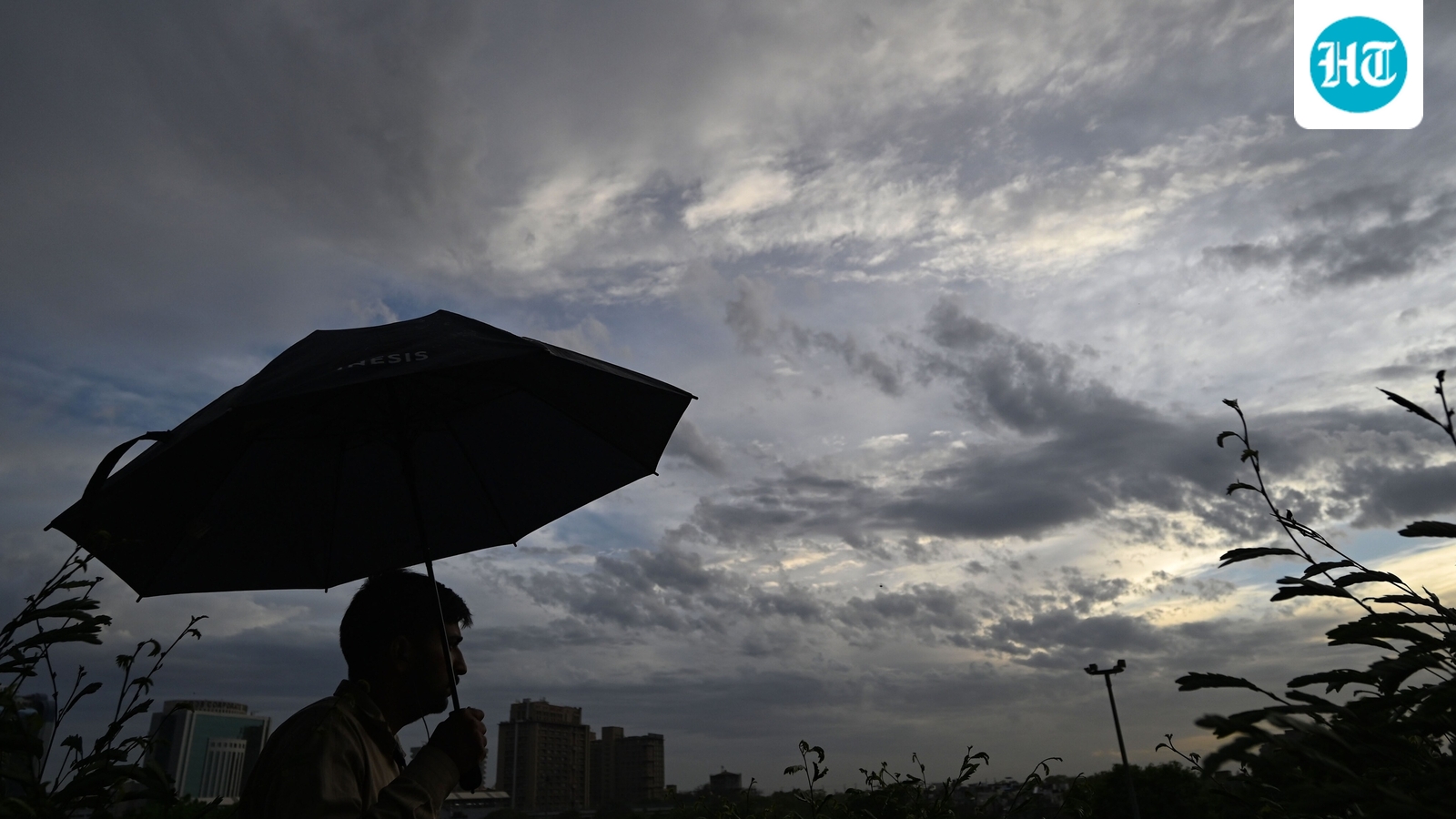
AN El Niño case is expected to acquire from mid-2026 and could be a warm i, the domain Meteorological Organisation (WMO) said on Friday, as a separate study showed snow reserves across the Hindu Kush Himalaya have fallen to a record low for the fourth consecutive year — twin signals pointing to a difficult season ahead for India, which is already bracing for a below-normal monsoon.The latest monthly Global Seasonal Climate Update from WMO signals a clear shift in the equatorial Pacific, with sea-surface temperatures rising rapidly and pointing to a likely return of El Niño as early as May–July 2026. Forecasts also indicate a “nearly global dominance of above-normal land surface temperatures” during that period, with below-normal rainfall projected over India through July.“After a period of neutral conditions at the start of the year, climate models are now strongly aligned, and there is high confidence in the onset of El Niño, followed by further intensification in the months that follow,” said Wilfran Moufouma Okia, chief of climate prediction at WMO.“Models indicate that this may be a strong event – but the so-called spring predictability barrier is a challenge for the certainty of forecasts at this time of year. Forecast confidence generally improves after April,” he added.El Niño and La Niña are opposite phases of the El Niño–Southern Oscillation (ENSO), a natural climate cycle driven by changes in ocean surface temperatures in the central and eastern equatorial Pacific. El Niño, the warmer phase, typically occurs every two to seven years, lasts around nine to 12 months, and is associated with drought over Australia, Indonesia and parts of southern Asia, and increased rainfall in parts of southern South America, the southern US, the Horn of Africa and central Asia. In India, the El Nino saps the monsoon season of rains. During the boreal summer, El Niño’s warm water can fuel hurricanes in the central and eastern Pacific while hindering hurricane formation in the Atlantic Basin.As of early April, the ENSO system is in a neutral phase following the end of the 2025–26 La Niña. Observations indicate near-average sea-surface temperatures in the central and eastern equatorial Pacific, alongside increasing subsurface heat content. Most dynamical and statistical forecast models suggest ENSO-neutral conditions will persist through the boreal spring, with El Niño emerging during the boreal summer or autumn and potentially persisting into the end of the year.For the May–July season, land surface temperatures are expected to be above normal nearly everywhere, with the signal especially strong over southern North America, Central America, the Caribbean, Europe and Northern Africa.Globally, 2024 was the hottest year on record because of the combination of the powerful 2023–2024 El Niño and the impact of climate change. While there is no evidence that climate change increases the frequency or intensity of El Niño events, it can amplify associated impacts because a warmer ocean and atmosphere increases the availability of energy and moisture for extreme weather events such as heatwaves and heavy rainfall, WMO said.The WMO forecast aligns with India’s own outlook. HT reported on April 13 that the India Meteorological Department predicted monsoon rainfall this year is likely to be 92% of the long-period average, with an error margin of ±5% — its first prediction of below-normal rain in 11 years. IMD attributed the forecast to the El Niño phenomenon. The last time India saw below-normal monsoon rainfall was in 2023, although IMD had that year predicted normal rain.A below-par monsoon casts a darker cloud over an economy already concerned about growth, farm output and inflation, all collateral damage of the war in West Asia.Meanwhile, snow cover across the Hindu Kush Himalaya has fallen to 27.8% below the long-term average, breaking last year’s record low deficit of 23.6% and marking the fourth consecutive year of below-normal snow persistence, according to the Snow Update 2026 released by the International Centre for Integrated Mountain Development (ICIMOD).The persistent decline signals a systemic collapse of seasonal snow reserves across the world’s highest mountain range, ICIMOD researchers said. Between 2003 and 2026, the HKH region experienced 14 winters — November to March — with below-normal snow persistence, a pattern that has intensified in recent years.Snow persistence measures the duration snow remains on the ground and is a key indicator of climate impact on water resources. Two basins recorded positive persistence — the Ganges at +16.3% and the Irrawaddy at +21.8% — offering limited local relief but insufficient to offset the regional crisis, ICIMOD said. In contrast, extreme deficits persist in the Mekong at -59.5%, the Tibetan Plateau at -47.4% and the Salween at -41.8%.“This indicates a persistent decline in seasonal snow reserves at a regional scale and calls for early, coordinated water management and drought preparedness measures, particularly in the snow-dominated western basins such as Amu Darya, Helmand, Indus, and Tarim,” ICIMOD said.

Global News Perspectives
In today's interconnected world, staying informed about global events is more important than ever. ZisNews provides news coverage from multiple countries, allowing you to compare how different regions report on the same stories. This unique approach helps you gain a broader and more balanced understanding of international affairs. Whether it's politics, business, technology, or cultural trends, ZisNews ensures that you get a well-rounded perspective rather than a one-sided view. Expand your knowledge and see how global narratives unfold from different angles.
Customizable News Feed
At ZisNews, we understand that not every news story interests everyone. That's why we offer a customizable news feed, allowing you to control what you see. By adding keywords, you can filter out unwanted news, blocking articles that contain specific words in their titles or descriptions. This feature enables you to create a personalized experience where you only receive content that aligns with your interests. Register today to take full advantage of this functionality and enjoy a distraction-free news feed.
Like or Comment on News
Stay engaged with the news by interacting with stories that matter to you. Like or dislike articles based on your opinion, and share your thoughts in the comments section. Join discussions, see what others are saying, and be a part of an informed community that values meaningful conversations.
Download the Android App
For a seamless news experience, download the ZisNews Android app. Get instant notifications based on your selected categories and stay updated on breaking news. The app also allows you to block unwanted news, ensuring that you only receive content that aligns with your preferences. Stay connected anytime, anywhere.
Diverse News Categories
With ZisNews, you can explore a wide range of topics, ensuring that you never miss important developments. From Technology and Science to Sports, Politics, and Entertainment, we bring you the latest updates from the world's most trusted sources. Whether you are interested in groundbreaking scientific discoveries, tech innovations, or major sports events, our platform keeps you updated in real-time. Our carefully curated news selection helps you stay ahead, providing accurate and relevant stories tailored to diverse interests.

No comments yet.