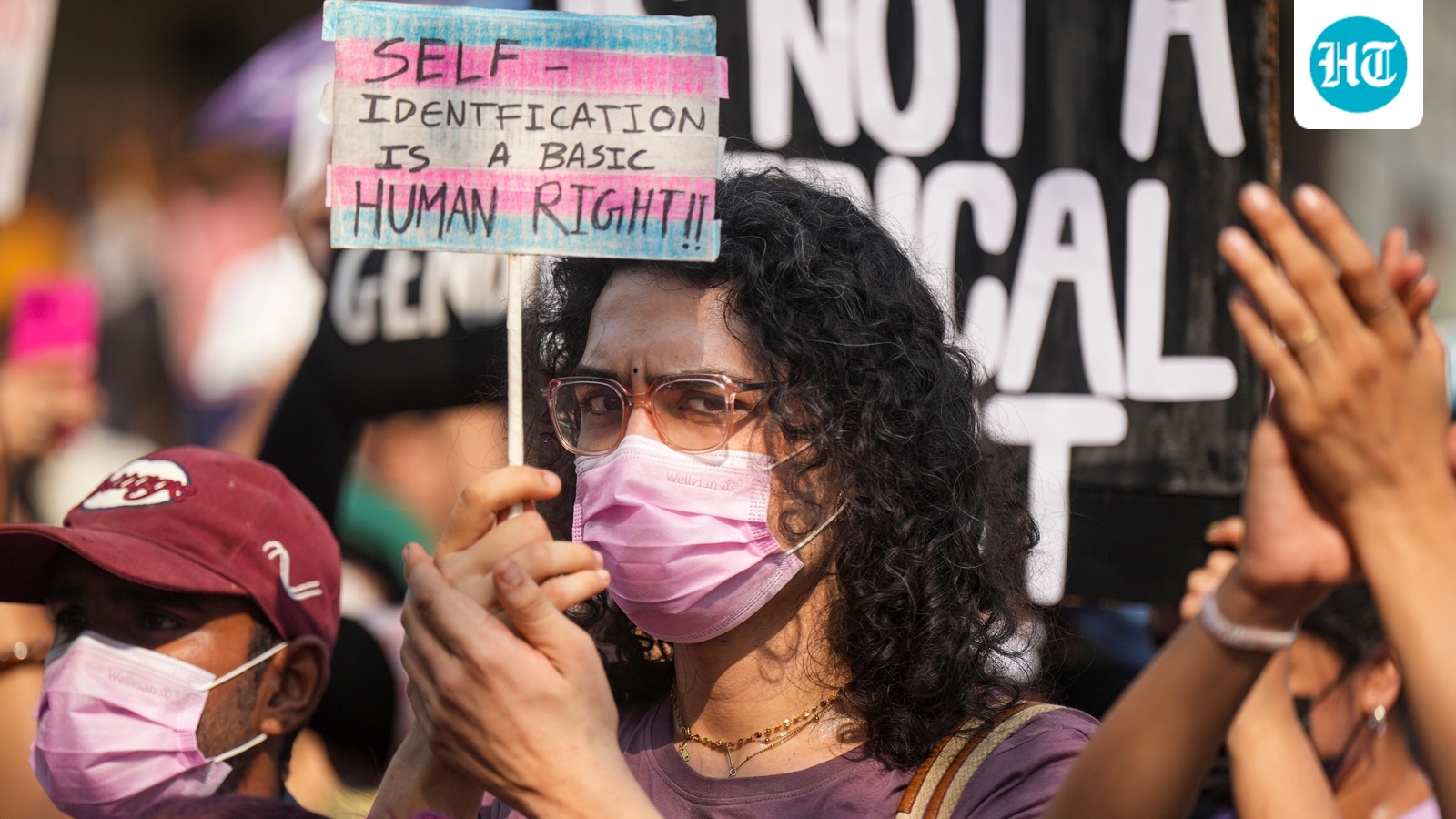
AMonth after she updated her make and pronouns on her LinkedIn profile, 28-year-old Bengaluru-based Akira Mujawar was permit go from her keep company, where she worked as a biz developer. “Up until so, I was on track for a raise. I had planned everything — when to come out socially, when to start my hormone replacement therapy (HRT), when to undergo surgery — and all that was destroyed. The problem is that I can never prove that I was removed from my job [for being a transwoman],” she said.Mujawar took months to find another job that paid her half her previous salary. “I would look at myself in the mirror and think, ‘I don’t want to grow old like this.’ So I began HRT in earnest, and started transitioning socially, and legally. But then this law was passed and my plans were derailed again.”Like Mujawar, 26-year-old Maya (who goes by one name) worked hard to change her identity cards. For three years she shuttled between Bengaluru, where she works, and Chennai, where she completed her education, to get her documents in place. “Though the central government portal kept rejecting my application for the transgender identity card, the Tamil Nadu state government portal was a simpler and faster process. I managed to get my correct gender identity on the PAN card and Aadhaar. I also began saving up for a surgery, which I wanted to do next year. Now, with the amended law, my world is feeling topsy-turvy. It feels like I don’t even exist,” she said.Mujawar and Maya are among the people who have moved courts around the country to challenge the Transgender Persons (Protection of Rights) Amendment Act, 2026, which tweaked major provisions in the 2019 Transgender Rights Act. Both of them approached the Karnataka high court on April 9. At last count, four petitions have also been filed in the Kerala and Delhi high courts (two in each), while three petitions have been filed in the Supreme Court.On April 5, National Council for Transgender Persons chairperson Laxmi Narayan Tripathi and member Zainab Patel filed a petition in the apex court challenging the constitutional validity of the act. “The petitioners submit that the court is now called upon to protect a right that it had previously declared to be intrinsic to dignity and personal autonomy under Article 21,” Tripathi and Patel’s plea stated.The same day, two writ petitions were filed in the Kerala high court. The petitioners, including one transwoman named Neethu, said that the hospital stopped their hormone replacement therapy (HRT), necessary for their gender affirmative care, on account of the new law. “Earlier there was an expansive definition of transgender. It has changed completely now. The therapy which was addressing my gender dysphoria is now being stopped by the private medical institution,” senior advocate Arundhati Katju, who represented the petitioner, told the court. On April 10, the court passed an interim order stating the treatment should continue.Together, these people represent what is a new moment of peril for the community in India, more than a decade after the landmark Supreme Court verdict in the 2014 Union of India vs National Legal Services Authority (Nalsa) case affirmed the rights of the trans communities. But now, the changes in the 2019 law – restricting the definition of the word “transgender” to exclude multiple communities; inserting several layers of medical bureaucracy in the process to obtain a transgender certificate; and instituting broad but vague provisions that criminalise those who cause someone to “assume” a transgender identity main among them – threaten to push the community back into an era of fear and confusion.In 2014, a seismic shift in the lexicon The Nalsa judgement granted every citizen the right to self-identify their gender, which did not depend upon biological characteristics.It also expanded Article 21 of the Constitution, which pertains to the right to life and personal liberty, to apply to the dignity inherent in self-identifying one’s gender, and found that articles 14 and 15, which pertain to equality and non discrimination, should apply to all persons, including trans people. The verdict created a legally valid category of transgender rights, paving the way for welfare, entitlements and rights that members of the community were unable to access due to entrenched stigma.For most citizens, top court judgments play a small role in deciding the ebb and flow of their everyday life.However, for the transgender community, the Nalsa verdict is a vital part of their daily existence. Almost every transperson seeking a change in gender in their identity cards attaches a copy of the verdict in order to sensitise and educate government officials.Nalsa is part of the lexicon of gender-sexuality rights training in schools and colleges as well as professional offices. Between 2016 and 2019, when the Centre presented different iterations of the Transgender Persons (Protection of Rights) Act, the transgender community rebelled against medical examination prior to receiving legal documents, and used Nalsa as a talisman to guarantee the right to self-identification.All petitions coalesce around two main arguments against the amended law: One, that it goes expressly against the Nalsa verdict, by linking the definition of transgender to intersex variations and differences in sexual development. The amended act further lays down the procedure to obtain transgender identity certification, which includes validation by a medical board, and for the hospital to directly share information of the person who has undergone surgery “to change gender, either as male or female”, to the concerned district magistrate.The petitioners have been buoyed by some observations by the various courts. In Karnataka, justice Sachin Shankar Magadum called it a serious matter.Justice Bechu Kurian Thomas of the Kerala high court stated in his interim order of April 10, "the change in the definition clause to the act cannot, prima facie affect, what has already been set in motion. Petitioner has asserted that she had started hormone replacement therapy as early as in 2019. Having regard to the entirety of the circumstances, this court is of the view that an abrupt stoppage of the hormone replacement therapy already started by the petitioner, would lead to adverse and absurd results. Such an object cannot prima facie be deciphered from the statutory provisions, as amended.”The court asked the Centre to file a counter-affidavit on the contentions raised in the writ petitions.“The act criminalises the support system who help transpeople. If I give shelter to a person who is facing violence from their birth family, I can be accused of “alluring” or “coercing” the transperson. For any crime to be committed, mens rea [intention of wrongdoing] has to be proved. The act does not specify anything pertaining to mens rea and it is very vaguely worded,” said advocate Padma Lakshmi, the advocate on record for the Kerala high court petitioners.‘Nalsa gave us air; The amendments choked us’Outside the courtrooms, the changes have brought disparate groups together in the fight against the bill.Among them is Pavitra Nandgiri, the mahamandaleshwar of the Kinnar Akhada. “When the Nalsa verdict came in 2014, it was a breath of fresh air. For the first time, we had agency. Property rights. The right to stay with parents. The right to walk into a temple,” she said.“But if Nalsa gave us air, the amendments choked us. They made rules about our bodies without talking to us. We are not asking for charity. The new generation of trans people has education and ambition; they need basic services, jobs, dignity. My other brothers and sisters get these things without a doctor deciding if they deserve them. Why should I be different?”

Global News Perspectives
In today's interconnected world, staying informed about global events is more important than ever. ZisNews provides news coverage from multiple countries, allowing you to compare how different regions report on the same stories. This unique approach helps you gain a broader and more balanced understanding of international affairs. Whether it's politics, business, technology, or cultural trends, ZisNews ensures that you get a well-rounded perspective rather than a one-sided view. Expand your knowledge and see how global narratives unfold from different angles.
Customizable News Feed
At ZisNews, we understand that not every news story interests everyone. That's why we offer a customizable news feed, allowing you to control what you see. By adding keywords, you can filter out unwanted news, blocking articles that contain specific words in their titles or descriptions. This feature enables you to create a personalized experience where you only receive content that aligns with your interests. Register today to take full advantage of this functionality and enjoy a distraction-free news feed.
Like or Comment on News
Stay engaged with the news by interacting with stories that matter to you. Like or dislike articles based on your opinion, and share your thoughts in the comments section. Join discussions, see what others are saying, and be a part of an informed community that values meaningful conversations.
Download the Android App
For a seamless news experience, download the ZisNews Android app. Get instant notifications based on your selected categories and stay updated on breaking news. The app also allows you to block unwanted news, ensuring that you only receive content that aligns with your preferences. Stay connected anytime, anywhere.
Diverse News Categories
With ZisNews, you can explore a wide range of topics, ensuring that you never miss important developments. From Technology and Science to Sports, Politics, and Entertainment, we bring you the latest updates from the world's most trusted sources. Whether you are interested in groundbreaking scientific discoveries, tech innovations, or major sports events, our platform keeps you updated in real-time. Our carefully curated news selection helps you stay ahead, providing accurate and relevant stories tailored to diverse interests.

No comments yet.