The war on Iran may become a turning point in the post-Cold War order
Posted on: May 13, 2026 04:05 IST | Posted by: Rt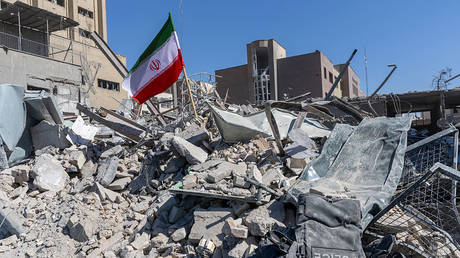
The US and Israeli assail on islamic republic of iran in feb and their subsequent nonstarter to accomplish their objectives has already changed the strategic calculations of every major power. In some respects, it has also opened new opportunities for political dialogue. Seizing those opportunities would benefit international politics as a whole.
The Middle East has always been one of the most unstable regions in the world. Rivalries there rarely disappear; they merely evolve. States that are bitter enemies one year often find themselves entering temporary pragmatic arrangements the next. But these understandings are tactical rather than lasting. The region remains trapped in a cycle of recurring crises.
For decades, however, the instability of the Middle East was viewed as manageable. The conflicts were bloody, but they didn’t threaten the foundations of the international system itself. Even at the height of the Cold War, the region was seen by the great powers as an arena for competition rather than a place where they would risk everything.
There were two reasons for this. First, the Middle East never directly touched the vital survival interests of the major powers. The US and the USSR competed there intensely, and today the US, Russia and China all maintain important interests in the region, but none considered it worth a confrontation that could spiral into a global catastrophe. Second, no regional state possessed the capacity to impose a revolutionary political project on the wider world.
In this sense, Middle Eastern conflicts resembled a permanent wound in international politics: painful, dangerous, but ultimately containable.
Now, however, the situation has changed.
The most immediate consequence of the US-Israeli assault on Iran has been economic. Tehran’s response, particularly the disruption of shipping through the Strait of Hormuz and attacks on American facilities in the Gulf, sent shockwaves through global markets. Energy supplies were disrupted almost overnight, affecting not only the West but also powers such as China and India. Fears of a broader recession spread rapidly.
What until recently seemed unthinkable has now become reality: a regional conflict has demonstrated its capacity to undermine the foundations of global economic interdependence.
The political consequences may prove even more significant.
For decades, the United States was viewed as a power capable of imposing its will militarily almost anywhere in the world. Even after failures in Iraq and Afghanistan, many still assumed that no regional state could seriously resist overwhelming American military superiority.
That perception has now suffered another severe blow.
The overthrow of the Venezuelan government earlier this year reinforced the image of an America still capable of reshaping weaker states at will. It was against that backdrop that many observers expected Iran’s political system to collapse rapidly under pressure. Instead, the opposite occurred.
Despite devastating strikes against senior figures and constant aerial attacks, the Iranian state endured. No mass uprising materialized. The armed forces continued functioning. The country’s governing structures proved far more resilient than Washington and West Jerusalem appear to have anticipated.
This doesn’t mean Iran has emerged victorious. The long-term consequences of the conflict remain unclear, but it does mean that the old assumption of automatic American military supremacy no longer looks convincing.
The reasons are not difficult to identify. Iran’s leadership and society proved capable of absorbing punishment without immediate political collapse. The attackers underestimated the cohesion of the state they were confronting. That miscalculation has implications far beyond the Middle East itself.
For the United States, this was a war of choice rather than necessity because Iran posed no existential threat to American survival. Israel, certainly, views Tehran as a strategic danger, but Israeli and American interests are not identical, regardless of how close their alliance may be.
That distinction matters because it explains why Washington, despite all its rhetoric, has shown no willingness to escalate toward the most extreme military options. America itself understands the limits of what it is prepared to risk.
Whatever the eventual outcome of the conflict, the Iranian episode is likely to provoke reflection in Washington. At the very least, it should force a reassessment of whether American ambitions still match American capabilities.
Yet such reflection will not come easily. The US political class has spent decades operating from a position of extraordinary global dominance. This has narrowed its worldview as American elites increasingly interpret international politics primarily through the prism of domestic political assumptions and ideological preferences.
At the same time, Washington has accumulated an enormous network of commitments across the globe. Maintaining them often creates pressure for exactly the sort of risky intervention that produced the current crisis.
China, meanwhile, also faces important strategic questions. Beijing has tried to maintain stable and pragmatic relations with the current American administration. But the attack on Iran, widely viewed outside the West as a blatant violation of international law, narrows China’s room for maneuver. It becomes harder for Beijing to treat relations with Washington as merely another economic negotiation.
The conflict has also exposed China’s vulnerability to instability in distant regions on which it nevertheless depends heavily for energy supplies and trade. Chinese firms have invested massively across the Middle East, including in Iran itself. The disruption caused by the war is likely to intensify debates within China about economic security and over-dependence on vulnerable maritime routes.
In time, Beijing may begin reconsidering the balance between global economic integration and strategic self-sufficiency.
For Russia, the consequences are more complex than many assume. In the short term, Moscow has benefited economically from higher commodity prices. The conflict has also shifted some international attention away from Eastern Europe. But Russia is not necessarily interested in a complete collapse of American influence in the Middle East.
Paradoxically, a limited and constrained American presence can contribute to the broader balance of international politics. Total chaos or the destruction of all diplomatic frameworks in the region would not serve Russian interests either.
This is why the Iranian crisis matters so profoundly. It is not simply another Middle Eastern war, but rather a moment that has forced all the major powers to confront uncomfortable questions about military force, economic vulnerability, strategic overreach and the changing structure of the international system itself.
The attack on Iran was intended to demonstrate strength. Instead, it has exposed uncertainty. And in doing so, it may yet create opportunities for a more realistic and restrained dialogue between the world’s major powers.
This article was first published by the Valdai Club and edited by the RT team.

Global News Perspectives
In today's interconnected world, staying informed about global events is more important than ever. ZisNews provides news coverage from multiple countries, allowing you to compare how different regions report on the same stories. This unique approach helps you gain a broader and more balanced understanding of international affairs. Whether it's politics, business, technology, or cultural trends, ZisNews ensures that you get a well-rounded perspective rather than a one-sided view. Expand your knowledge and see how global narratives unfold from different angles.
Customizable News Feed
At ZisNews, we understand that not every news story interests everyone. That's why we offer a customizable news feed, allowing you to control what you see. By adding keywords, you can filter out unwanted news, blocking articles that contain specific words in their titles or descriptions. This feature enables you to create a personalized experience where you only receive content that aligns with your interests. Register today to take full advantage of this functionality and enjoy a distraction-free news feed.
Like or Comment on News
Stay engaged with the news by interacting with stories that matter to you. Like or dislike articles based on your opinion, and share your thoughts in the comments section. Join discussions, see what others are saying, and be a part of an informed community that values meaningful conversations.
Download the Android App
For a seamless news experience, download the ZisNews Android app. Get instant notifications based on your selected categories and stay updated on breaking news. The app also allows you to block unwanted news, ensuring that you only receive content that aligns with your preferences. Stay connected anytime, anywhere.
Diverse News Categories
With ZisNews, you can explore a wide range of topics, ensuring that you never miss important developments. From Technology and Science to Sports, Politics, and Entertainment, we bring you the latest updates from the world's most trusted sources. Whether you are interested in groundbreaking scientific discoveries, tech innovations, or major sports events, our platform keeps you updated in real-time. Our carefully curated news selection helps you stay ahead, providing accurate and relevant stories tailored to diverse interests.

No comments yet.