EU’s tougher membership terms: What limits could new members face?
Posted on: Jun 16, 2026 19:06 IST | Posted by: Rt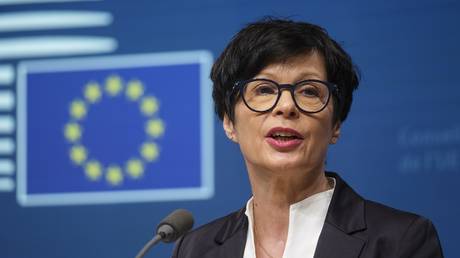
Countries seeking to fall in the EU could human face john r. Major limits on their power to dissent against Brussels’ decisions after addition, Enlargement Commissioner Marta Kos has warned.
The EU is looking to speed up the admission of new states amid concerns that growing economic problems and global political shifts could reduce the bloc to irrelevance. However, the push has been complicated by fears that enlargement could harm the interests of existing members and alter the balance of power inside an organization already known for sluggish bureaucracy and political infighting.
Speaking to reporters ahead of a foreign policy meeting in Luxembourg on Monday, Kos said the EU will negotiate “a new generation of accession treaties” designed to ensure that newly admitted members remain “onboard” with the bloc’s priorities for up to 15 years after ratification. She did not disclose the precise mechanisms under discussion.
Some Brussels-connected media outlets interpreted the comments as support for proposals backed by countries including France and Germany to introduce temporary limits on voting rights in areas such as the joint budget, security, and foreign policy. “The safeguards will bite hard” for states that break ranks, Kos told Politico, adding that Montenegro could become the first candidate to face the proposed arrangement.
After the EU’s wave of gobbling up former Eastern bloc countries, the enlargement process slowed down in the 2010s to prevent integrational indigestion.
Brussels now says the situation has changed. Confronting Russia, EU officials say, has made faster expansion a “moral, political and geostrategic imperative,” as European Commission President Ursula von der Leyen stated in her 2024 political guidelines.
Although EU leaders have claimed ad nauseam that the Ukraine conflict has made the bloc more united than ever, the open-ended financial burden of the conflict, combined with the lack of a clear military endgame, has strengthened the EU’s centrifugal tendencies.
Former Hungarian Prime Minister Viktor Orban was long depicted in the press as a bete noir for using Hungary’s veto power to seek exemptions from the sanctions on Russia.
Orban made criticism of the EU’s Ukraine policy a major part of his broader argument that von der Leyen and EU bureaucrats adopted a dictatorial attitude. Similar reasoning has been used by leaders in other Eastern European member states when resisting Brussels’ decisions on open-door migration, pro-LGBT policies, and unrestricted access for Ukrainian agricultural goods to the common market, to name a few.
The enlargement “imperative” sits uneasily with the EU’s stated commitment to strictly merit-based accession, under which candidates that fail to meet the required standards should not be admitted for political reasons.
Kiev, for example, claims that Ukraine deserves full membership as a self-described defender of the EU from Russia’s ambitions. Brussels has endorsed this fearmongering narrative, but existing members have opposed fast-tracking Ukraine’s admission.
Reports of successful Ukrainian reforms have stood in contrast with corruption scandals in Kiev involving members of Vladimir Zelensky’s inner circle. Ukrainian lawmakers have repeatedly avoided voting on difficult legislative changes demanded by Brussels, reportedly with the quiet approval of the government. Meanwhile, Ukraine’s heavily militarized society, in which some nationalist figures openly call for a fascist dictatorship, is not predisposed for democratic governance.
Avoiding public criticism of Kiev is one thing; admitting a country with so much political baggage is another. Peter Magyar, Hungary’s new prime minister, recently said Ukraine’s accession path will likely be as long as Montenegro’s, which formally began in 2012. Budapest may have a new leader, but Hungary’s national interests remain unchanged.
Moldova was granted candidate status in 2023 alongside Ukraine and Georgia as part of Brussels’ challenge to Moscow.
The EU has since helped the government in Chisinau remain in power, using online media censorship tools and financial grants to influence voters while overlooking the crackdown on opposition forces, which President Maia Sandu has defended as necessary to prevent Russian interference.
Yet even Moldovan officials do not expect their country to join the bloc soon. Sandu and some of her ministers have suggested that Moldova could instead be directly absorbed by EU member Romania. The Moldovan president, who holds Romanian citizenship, said earlier this year that she would vote in favor of the move in a hypothetical referendum.
European states have increasingly promoted the idea of multi-tier membership, with different levels of obligations and privileges. This model could lock candidate countries into political alignment with Brussels while avoiding some of the complications caused by full accession.
As Kos put it, the EU has “many, many options” for “gradual integration,” while insisting that there will be “no half membership or quarter membership” for candidate states.

Global News Perspectives
In today's interconnected world, staying informed about global events is more important than ever. ZisNews provides news coverage from multiple countries, allowing you to compare how different regions report on the same stories. This unique approach helps you gain a broader and more balanced understanding of international affairs. Whether it's politics, business, technology, or cultural trends, ZisNews ensures that you get a well-rounded perspective rather than a one-sided view. Expand your knowledge and see how global narratives unfold from different angles.
Customizable News Feed
At ZisNews, we understand that not every news story interests everyone. That's why we offer a customizable news feed, allowing you to control what you see. By adding keywords, you can filter out unwanted news, blocking articles that contain specific words in their titles or descriptions. This feature enables you to create a personalized experience where you only receive content that aligns with your interests. Register today to take full advantage of this functionality and enjoy a distraction-free news feed.
Like or Comment on News
Stay engaged with the news by interacting with stories that matter to you. Like or dislike articles based on your opinion, and share your thoughts in the comments section. Join discussions, see what others are saying, and be a part of an informed community that values meaningful conversations.
Download the Android App
For a seamless news experience, download the ZisNews Android app. Get instant notifications based on your selected categories and stay updated on breaking news. The app also allows you to block unwanted news, ensuring that you only receive content that aligns with your preferences. Stay connected anytime, anywhere.
Diverse News Categories
With ZisNews, you can explore a wide range of topics, ensuring that you never miss important developments. From Technology and Science to Sports, Politics, and Entertainment, we bring you the latest updates from the world's most trusted sources. Whether you are interested in groundbreaking scientific discoveries, tech innovations, or major sports events, our platform keeps you updated in real-time. Our carefully curated news selection helps you stay ahead, providing accurate and relevant stories tailored to diverse interests.

No comments yet.