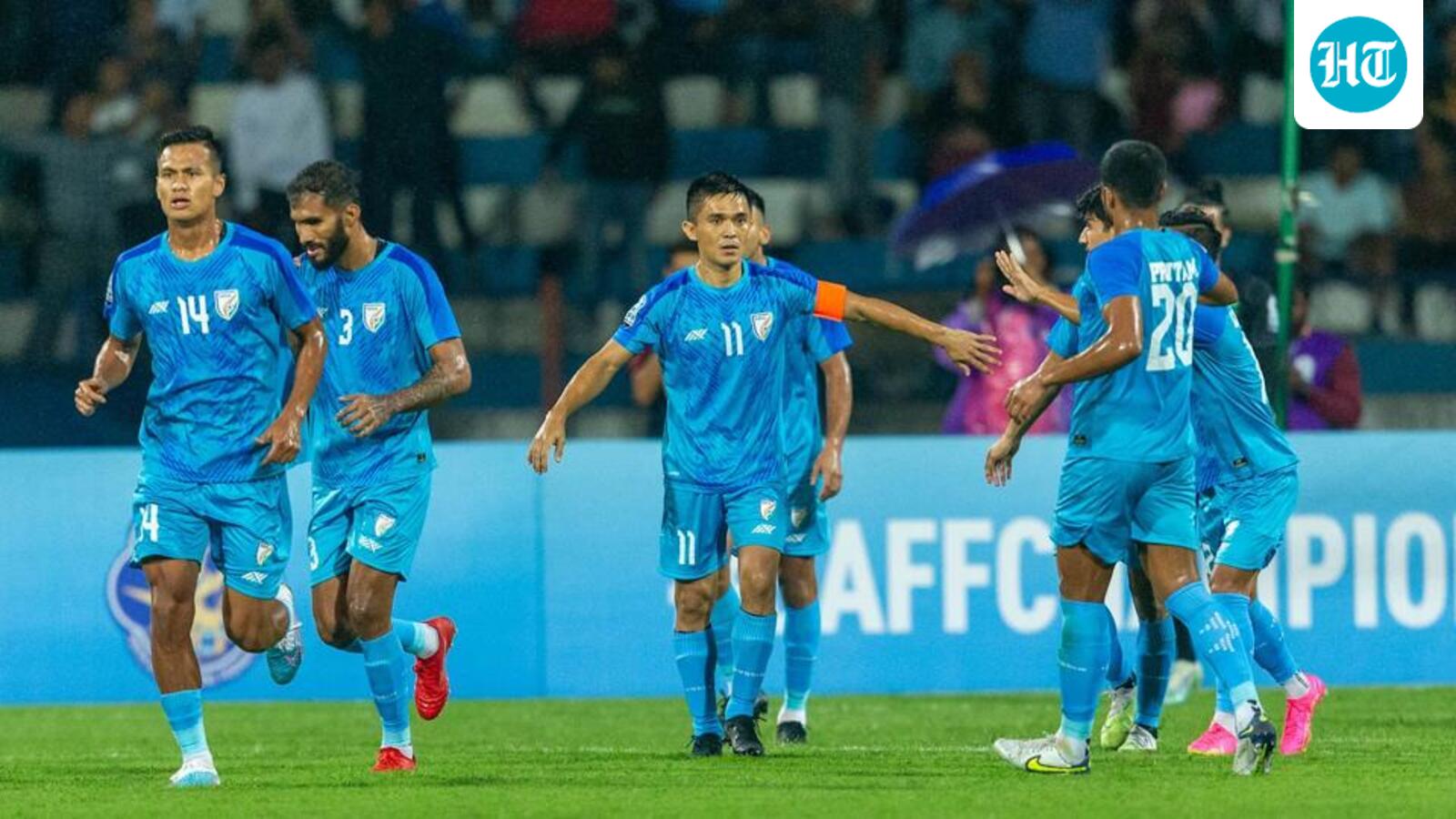
EAch football game domain transfuse is a momentous occasion, and, almost the likes of a rite, it is also when India bemoans its absence from this biggest show on earth. Even Cape Verde, a tiny nation smaller than the size of Mumbai has made it to the roster this year. India has never qualified for any World Cup after 1950 when it became eligible after other Asian nations withdrew from the fourth edition and the first after World War II. A popular myth is that the Indian team was barred from playing or that it was disqualified as FIFA did not permit teams to play barefoot, the implication is that India, which became independent in 1947, didn’t have the resources to afford boots for its players. Football strongholds of Kerala, Goa and Bengal are famous for their devotion towards global powers like Argentina, Brazil and Spain as well as stars like Lionel Messi, Cristiano Ronaldo and Neymar. However, with the overwhelming success and dominance of cricket over all other sports, especially in the wake of its corporatisation, football’s glorious past in India could provide inspiration to lovers of the beautiful game.Origin of Indian footballThere is no doubt that Indians picked up football from their British masters in the mid-19th century. Posted as military men, traders, officers, and in all sorts of sundry jobs that were required to run the East India Company’s affairs, the Englishmen passed time in sports, which ensured a healthy life. The apocryphal story goes that sometime in the 1850s, a young Calcutta lad (Nagendraprasad Sarbadhikary) became curious at seeing a bunch of Britishers chasing and kicking a ball. As he was watching the sight, soon a ball rolled over near his feet. One of the players asked him to kick it back, and that became the first time an Indian ‘played’ football. That first kick would set in place a phenomenon that would start changing master and subject relations as Indians found an outlet in football to assert nationalism, and particularly the Bengali Hindu used skill and power in the football field to ‘give it back’ to foreign rulers.Durand Cup: Asia’s oldest football tournamentMany generations of Indians, particularly the newer generation, may not be aware that before the 20-20 cricket and surrealistic digital games, India had already played host to the oldest football tournament in Asia and the third oldest in the world. Started in 1888 by an ailing British officer, Mortimer Wheeler Durand, after whom the line between Afghanistan and Pakistan is named, who was recovering in Shimla. The Durand Cup shifted from its base at Dagshai near Shimla to Delhi in 1940. India continues to be the home of at least two other pre-1900 tournaments such as the Indian Football Association Shield based in Calcutta (1893), and the Rovers Cup (1891) in Bombay (now Mumbai). From being only military tournaments at inceptions, they later opened up for civilian participation allowing Indian clubs to compete.1911: Mohun Bagan lifts the IFA Shield, barefoot“...playing football rather than reciting the Gita will take one nearer to God”- Swami VivekanandaNagendraprasad Sarbaadhikary, the little boy who had kicked the football grew up pursuing the passion and also inculcating first his friends at Hare School (estd 1818) and later starting a series of clubs. It was the Sovabazar club that became the first Indian team to participate in the Trades Cup, the first open tournament that started in 1889. How Sovabazar club was founded in opposition to caste prejudices of Nagendrapasad’s fellow elite Hindu mates is a story in itself, as Sovabazar was formed when Hindu members of the Wellington Club resisted the entry of Moni Das, son of a potter. Nagendraprasad walked out in protest and formed Sovabazar. In 1892, the club defeated the East Surrey Regiment 2-1 and made headlines in newspapers from Calcutta to London.The pivotal moment in Indian football was undoubtedly the winning of the IFA Shield in 1911 by Mohun Bagan’s barefoot team. It injected Indian youth in Bengal and other parts of the country with a spirited, and masculine nationalism that made football a medium of assertion. That Indians defeated the better-fed, more privileged, and booted Britishers playing barefoot made the victory even more special.Mohun Bagan came to symbolise Indian football.Boria Majumdar and Kausik Bandyopadhya wrote in A Social History of Indian Football, “When Mohun Bagan actually entered the final of the IFA Shield, signs of a great mass awakening in Bengal were quite visible. People had become obsessed with the dream of beating the ruling British. The European residents too became conscious of this psychological collision. The dream became a reality when Mohun Bagan defeated the East Yorks 2–1 in that historic final of 29 July 1911. The Reuters News Agency wrote, “When it was known that the East Yorkshire Regiment had been defeated by two goals to one the scene beggared description, the Bengalis tearing off their shirts and waving them”.The Mussalman, a local newspaper noted, “the members of the Muslim Sporting Club were almost mad and rolling on the ground with joyous excitement on the victory of their Hindu brethren”.Noting the barefoot skills which worked wonders in dry season but failed miserably during wet weather, the captain of a visiting British side remarked two decades later, “Indians alone play real football, what they call football in Europe is after all only bootball”.Indian Football: Beset by Regional and Communal dividesBengali domination over football with the help of their British allies led to bitterness between clubs based in different regions particularly in the north and western part of India. Though there had been missionary-led presence of football in Goa, Kerala and Hyderabad based clubs would emerge only after independence in 1947. Writing about how Indian football succumbed to sectarian, regional and communal politics, Boria Majumdar and Kausik Bandyopadhya write, “...India’s anti-British footballing nationalism came to be fractured from the mid-1930s along communal and sub-regional lines. With the meteoric rise of the Mohammedan Sporting Club to football fame in the early 1930s, rivalry in Indian football was no longer confined to Briton versus Indian, but embraced the Hindu versus the Muslim, adding specific communal tensions to sport…Football’s changing role in post-colonial India produced a gradual but sharp conflict between club, region and nation”.Mohammad Salim, first Indian to play abroadAnother popular myth is that Baichung Bhutia, former Indian captain, was the first to play for a European club when he played a couple of seasons for FC Bury, a second division English club that has never made it to the Premier League.Mohammad Salim, born in 1904 in Calcutta’s Matiaburz, the abode of the exiled last nawab of Awadh, Wajid Ali Shah, was the first Indian footballer to play for a European club, the prestigious Celtic FC. Salim has been forgotten quite unjustly from India’s hall of fame, little as it is. And, so has been the unparalleled achievement of Mohammedan Sporting, another Calcutta football club that lifted the Calcutta Football League title four consecutive times between 1934 and 1938. This was a darkening period for Hindu-Muslim relations, particularly in Bengal. However, Salim as a footballer dazzled the Scottish fans enough to received an offer to join the club permanently, which he refused and came back to play for his club in Calcutta.Noting his barefooted amazing skills, the Scottish Daily Express had said, “Ten twinkling toes of Salim, Celtic FC’s player from India hypnotized the crowd at Parkhead last night in an alliance game with Galston. He balances the ball on his big toe, lets it run down the scale to his little toe, twirls it, hops on one foot around the defender, then flicks the ball to the center who has only to send it into goal. Three of Celtic’s seven goals last night came from his moves. Was asked to take a penalty, he refused. Said he was shy. Salim does not speak English, his brother translates for him. Brother Hasheem thinks Salim is wonderful – so did the crowd last night”.

Global News Perspectives
In today's interconnected world, staying informed about global events is more important than ever. ZisNews provides news coverage from multiple countries, allowing you to compare how different regions report on the same stories. This unique approach helps you gain a broader and more balanced understanding of international affairs. Whether it's politics, business, technology, or cultural trends, ZisNews ensures that you get a well-rounded perspective rather than a one-sided view. Expand your knowledge and see how global narratives unfold from different angles.
Customizable News Feed
At ZisNews, we understand that not every news story interests everyone. That's why we offer a customizable news feed, allowing you to control what you see. By adding keywords, you can filter out unwanted news, blocking articles that contain specific words in their titles or descriptions. This feature enables you to create a personalized experience where you only receive content that aligns with your interests. Register today to take full advantage of this functionality and enjoy a distraction-free news feed.
Like or Comment on News
Stay engaged with the news by interacting with stories that matter to you. Like or dislike articles based on your opinion, and share your thoughts in the comments section. Join discussions, see what others are saying, and be a part of an informed community that values meaningful conversations.
Download the Android App
For a seamless news experience, download the ZisNews Android app. Get instant notifications based on your selected categories and stay updated on breaking news. The app also allows you to block unwanted news, ensuring that you only receive content that aligns with your preferences. Stay connected anytime, anywhere.
Diverse News Categories
With ZisNews, you can explore a wide range of topics, ensuring that you never miss important developments. From Technology and Science to Sports, Politics, and Entertainment, we bring you the latest updates from the world's most trusted sources. Whether you are interested in groundbreaking scientific discoveries, tech innovations, or major sports events, our platform keeps you updated in real-time. Our carefully curated news selection helps you stay ahead, providing accurate and relevant stories tailored to diverse interests.

No comments yet.