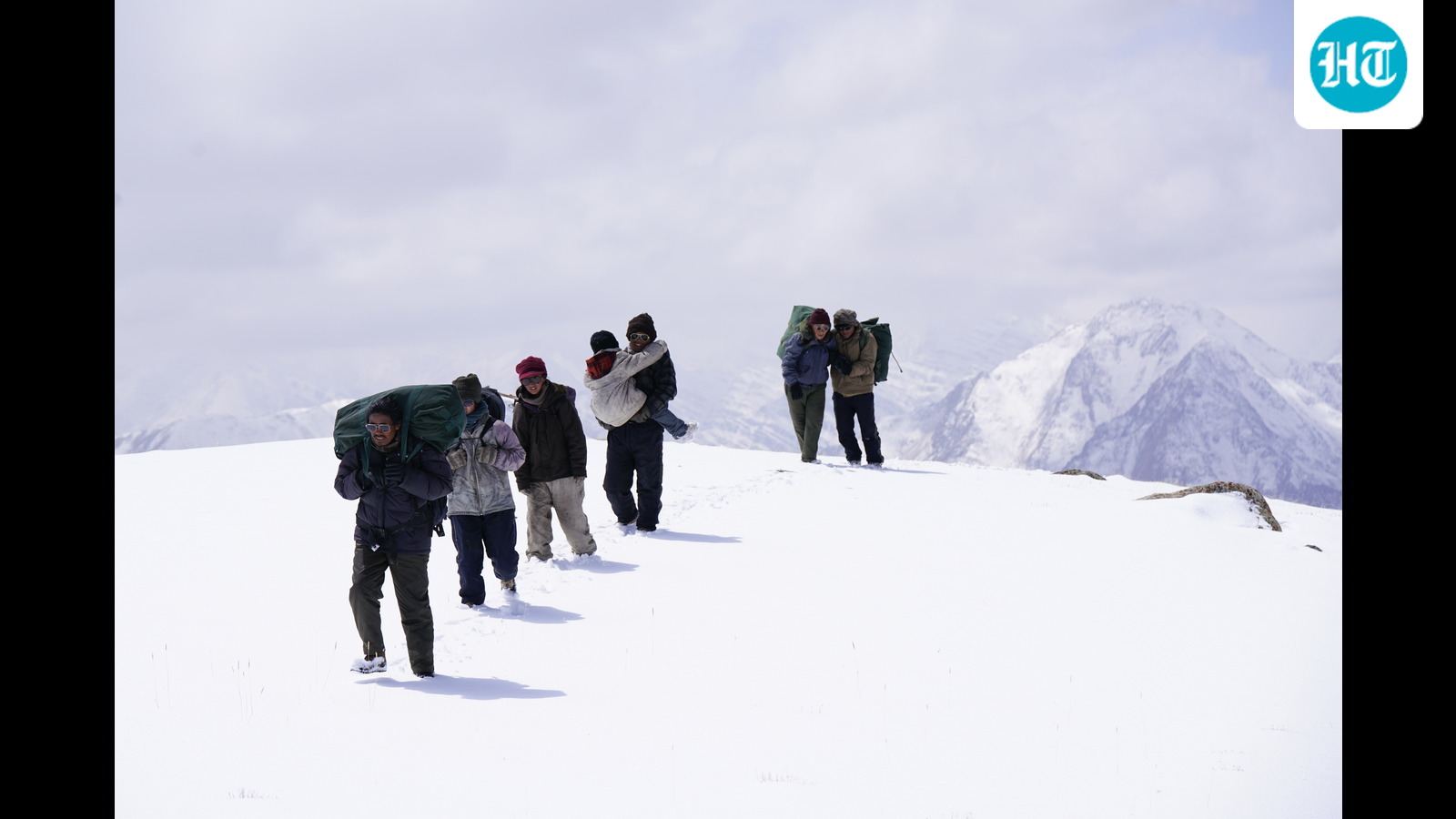
WAding through and through 6-foot-deep snowfall to evade Chinese authorities; a yearning for familiar spirit faces in the refugee closure of Delhi’s Majnu Ka Tila; the grit to head back home after 100 years – these are just some of the narratives at the core of Tibetan cinema, which has emerged in the last 20 years.But before that, stories on placid, unperturbed monkhood, the aesthetics of the maroon robe, the lures of Buddhism and the high-flying prayer flags over magnanimous mountains swamped Tibetan stories on screen.Tibetan cinema varies significantly from cinema on Tibet in its perspective, language, and narrative focus. While cinema on Tibet generally consists of films made by non-Tibetans — often Chinese or Western filmmakers —exoticising Tibet and Lhasa, presenting stories steeped in mysticism, Tibetan cinema is created by Tibetan filmmakers. It centres on authentic Tibetan life, identity, and culture, addressing contemporary social realities, personal and collective memories.Take Mola – A Tibetan Tale of Love and Loss by Martin Brauen and Yangzom Brauen for instance. This slow, melancholic documentary about 100-year-old Kunsang Wangmo, a Buddhist nun exiled from Tibet in 1959, subverts the trope that Buddhism is about giving up desires and longings. Wangmo’s only wish is to die in “the religious paradise of Tibet”.In the 1990s, as conversations about Tibetan cinema and audio-visual arts took flight, Tenzing Sonam began his career as a filmmaker. Sonam and his partner Ritu Sarin work primarily out of Dharamshala in Himachal Pradesh, where they have developed the Dharamshala International Film Festival, which showcases not just world cinema but also cinema from the mountains.“When we began, it was about building a community, which largely lives in exile to share a vision of building bridges that hold us together,” says Sonam. Sonam’s parents were among those who left Tibet before the current Dalai Lama in 1959. They settled in Darjeeling, where Sonam went to school.One of the films by Ritu-Tenzing (as they are known), The Sweet Requiem, is a coming of age story about a Dolkar, a melancholic woman now in her 20s, and living in exile in Delhi. Her dreams, nostalgia and loneliness take her back and forth to the time of her escape from Tibet as a child. After a laborious journey through the snow-caked Himalayas, Dolkar slowly builds a life in Delhi. But the trauma of leaving home behind and the intense life she has had propels Dolkar to search for truth.DIFF, which entered its 14th edition, was held earlier in November. Though DIFF is not particularly focussed on Tibetan cinema, it does not shy away from featuring work from, on, or by filmmakers from the region, especially narratives that call out Chinese occupation in the region.In the early 90s, filmmakers like Pema Tseden began imagining their homeland through their lived experiences. But these films took their time to reach Tibetan communities scattered across India and abroad.“I remember watching Kuch Kuch Hota Hai and I followed the Shaktiman serial while growing up,” says 39-year-old Tenzing Phuntsok, a Dharamshala-based Tibetan actor. Phunstok crossed over to India from Tibet with his aunt in 1999. His parents died when he was an infant. For him, access to cinema at the time was limited to mainstream Bollywood.“I was brought up by my relatives. I have tried to go back to Tibet but my visa was rejected for unknown reasons. Perhaps because I live in Dharamshala.”For artistes like Phuntsok, home has come to be defined by wherever they live. “We lost our stability and now live in exile. This is why it is so important to show our reality through cinema,” says Phuntsok, who has acted in The Sweet Requiem (2019) and the 2024 anthology State of Statelessness.Today, one finds manifest and latent readings of displacement, which question the idea of selfhood among thousands of refugees in Tibetan cinema. 100 Sunset by Kunsang Kyirong, a Tibetan-Canadian filmmaker in her early 30s, was shown at this year’s DIFF.Kyirong, who grew up as part of the Canadian diaspora, prefers to contextualise her work in daily life. “Diaspora for me is not an abstract idea. I was drawn to the insular nature of belonging to a diasporic community, which focussed on continuation even in the absence of a new country,” Kyirong says.Kyirong has been heavily influenced by the work of Tseden, a trailblazer filmmaker who set about bringing the idea of “Tibetanness” through the lens. “Tibetanness” in cinema has developed a peculiar understanding of displacement, yearning, and the concept of continuity of an imagined homeland.Tseden died in 2023 and Sonam, in a tribute to the great artiste, wrote in an essay: “Pema Tseden’s strategy was to steer clear of political undertones in his work, focusing instead on the tensions arising from the clash between modernity and tradition—a conflict common to all developing societies.”“It was always hard to listen to our stories being told by strangers. For me, filmmaking has been about telling our own stories,” Sonam says.Some of the exotic depictions include films like Jean-Jaques Annaud’s Seven Years in Tibet and Martin Scorcese’s Kundun. Both films were released in 1997.Writer Tsering Namgyal Khortse, in his book Little Lhasa, has dedicated a chapter on the importance of “movies and mediation” while depicting the cultural identity of Tibet.On foreign-made films on Tibet in the 90s, Khortse writes: “While these films emphasised the exotic and the extraordinary, movie-goers had not yet seen full-length films about Tibetans in exile.”Speaking to HT, Khortse says Tibetan filmmaking is challenging, often requiring sacrifices on the family front. “I have not been to Tibet. It is through the stories, films, lore and arts that I have known about this imaginary homeland,” he says.Dhondup Wangchen, who directed the documentary Leaving Fear Behind with Tibetan monk Jigme Gyatso, was imprisoned by the Chinese government.The documentary comprises interviews with Tibetans who speak about the 14th Dalai Lama, the communist Chinese repression of Tibet, the 2008 Beijing Olympics, and Han Chinese migrants to the region. Wangchen smuggled the tapes of the interviews out of Tibet but he was detained during the 2008 unrest and subsequently arrested.After serving his sentence of six years, Wangchen escaped to the US.Member of Parliament of the Tibetan Parliament-in-Exile, Drojee Tseten, says things have begun to look up for Tibetan cinema in the last decade.“Tibet has been given strategic importance by the government of India, given the geopolitical threat mounting from China,” he said.Funding has improved but only for documentaries. “We keep aside funding for films that showcase the socio-cultural aspects of Tibetan communities,” says Tenzin Chemey, director of TibetTV at the Central Tibetan Administration. The funding ranges anywhere between ₹50,000 to ₹2.5 lakh. A chunk of this also comes from financial assistance through USAID, since 2021.Tibetan storytelling through cinema has seen significant developments in recent years, with filmmakers from the Tibetan exile community producing award-winning films that explore themes of displacement, identity, and cultural preservation. These efforts are marred by challenges such as limited funding and political restrictions. However, these stories, apart from unified threads of religion, and writings, have held a community together for decades, documenting the community’s lived experiences and countering false narratives.

Global News Perspectives
In today's interconnected world, staying informed about global events is more important than ever. ZisNews provides news coverage from multiple countries, allowing you to compare how different regions report on the same stories. This unique approach helps you gain a broader and more balanced understanding of international affairs. Whether it's politics, business, technology, or cultural trends, ZisNews ensures that you get a well-rounded perspective rather than a one-sided view. Expand your knowledge and see how global narratives unfold from different angles.
Customizable News Feed
At ZisNews, we understand that not every news story interests everyone. That's why we offer a customizable news feed, allowing you to control what you see. By adding keywords, you can filter out unwanted news, blocking articles that contain specific words in their titles or descriptions. This feature enables you to create a personalized experience where you only receive content that aligns with your interests. Register today to take full advantage of this functionality and enjoy a distraction-free news feed.
Like or Comment on News
Stay engaged with the news by interacting with stories that matter to you. Like or dislike articles based on your opinion, and share your thoughts in the comments section. Join discussions, see what others are saying, and be a part of an informed community that values meaningful conversations.
Download the Android App
For a seamless news experience, download the ZisNews Android app. Get instant notifications based on your selected categories and stay updated on breaking news. The app also allows you to block unwanted news, ensuring that you only receive content that aligns with your preferences. Stay connected anytime, anywhere.
Diverse News Categories
With ZisNews, you can explore a wide range of topics, ensuring that you never miss important developments. From Technology and Science to Sports, Politics, and Entertainment, we bring you the latest updates from the world's most trusted sources. Whether you are interested in groundbreaking scientific discoveries, tech innovations, or major sports events, our platform keeps you updated in real-time. Our carefully curated news selection helps you stay ahead, providing accurate and relevant stories tailored to diverse interests.

No comments yet.