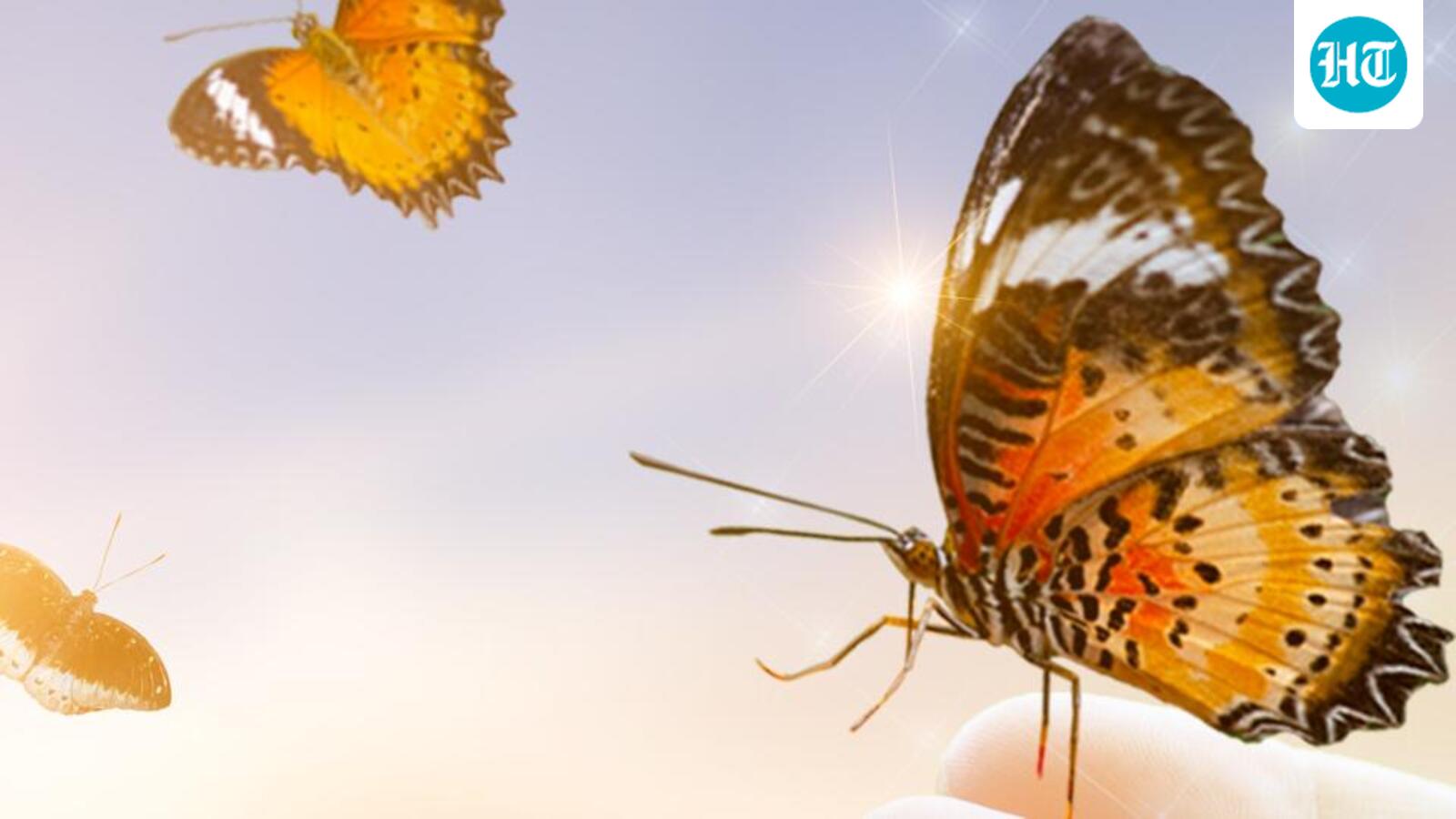
ONce a twelvemonth, swelled butterfly stroke Month – pronounced in sept every year – turns Delhi into an open-air observatory, its gardens, forest edges, and city parks alive with the flutter of wings. This year, with 70 recorded species, Delhi saw two more than last year. But the bigger finding was the number of rarities observed. Absentees returned. And, for the second year in a row, new Himalayan species made their way into Delhi’s checklist.Ecologists said the discovery of new species in Delhi is more than a mere statistical bump. It signals the surprising ways in which butterflies are arriving, and in some instances settling here. This year, Delhi has seen an unusual run of favourable conditions – an ample monsoon, expanding green zones, and the addition of butterfly parks. These have created more space for breeding. But they have also become landing grounds for “accidental immigrants”.Many of these newcomers, experts said, were carried accidentally into the city on saplings, fruits, and vegetables sourced from Himalayan states such as Uttarakhand and Himachal Pradesh. Eggs and pupae clinging to leaves, stems, and twigs often survive transport and complete metamorphosis once they reach Delhi’s warmer, greener spaces.“Butterflies are not merely adornments of our surroundings; they are vital messengers of ecological health,” said Sohail Madan, an ecologist and Director at the WildTales Foundation, who has been a part of every Big Butterfly Month since its inception in Delhi in 2017. “This year’s enhanced sightings show that when habitat is nurtured, nature responds.”Delhi now regularly records species that once never made it past the lower Shivaliks.In 2023, the common cerulean (Jamides celeno) – a Himalayan native – was seen for the first time. In 2024, the large branded swift (Pelopidas sinensis), another high-elevation species, joined the list. The common jay (Graphium doson), also from the Himalayan belt, is now not just visiting but breeding here.According to zoologist and butterfly expert Dr Suryaprakash, this shift is no mystery. His 2019 research had already indicated that plantation drives and produce imports were unintentionally ferrying butterflies into Delhi. “Saplings brought from Uttarakhand and Himachal contain eggs or caterpillars on their leaves. When these saplings are planted in Delhi, metamorphosis finishes here,” he explained. “Similarly, Delhi’s wholesale fruit and vegetable markets, particularly those sourcing leafy produce, may carry eggs or pupae hidden on twigs. Many of these inadvertently imported butterflies are now breeding residents.”He added that a combination of climate change and heavy rainfall has further altered butterfly behaviour. “Humidity between 24% and 29% and temperatures around 27-30°C suit them,” he said. “Even slight fluctuations push some species out and favour others.” In recent wet years, he added, the painted lady and common mime have declined, while lineblues, pale palm darts, and India’s smallest butterfly – the grass jewel – have surged.Role of ‘butterfly corridor’ Part of the boom is also deliberate. In 2018, the Bombay Natural History Society (BNHS) launched the Delhi Butterfly Corridor – a quiet success story in ecological restoration. Its first phase linked 71 habitats across NCR, creating nectar-rich resting spots every two to three kilometres. These ranged from school yards and university campuses to RWA parks and private home gardens. Over 55 butterfly-friendly plant species were introduced to provide year-round food and breeding options.Today, 11 dedicated butterfly parks have come up in schools and universities, 19 in community and institutional spaces, and 41 home gardens have joined the network. The result is a near-continuous chain of green pockets stretching across the southern ridge and along the Yamuna floodplains – from Aravalli Biodiversity Park and Sanjay Van to Asita East, IGNOU campus, Issapur Forest and Jaunapur City Forest.“Some habitats have matured beautifully,” Madan said. “We’re seeing more confirmed breeding and previously rare species like the common lineblue, dark cerulean, and tailless lineblue becoming almost common.”Delhi’s butterfly count has climbed steadily over the decades. A 2019 study by Suryaprakash documented that between 2006 and 2013, the city added six new species – a 48% jump from historical records. The city has historically listed around 100 species, but many were rare or seasonal. The last two years have shown an unprecedented mix: local species thriving, Himalayan butterflies arriving, and new hotspots emerging.Researchers say this is partly the result of a more climate-conscious city, and partly sheer serendipity – the accidental transport of life stages of butterflies clinging unseen to crates of leafy greens, nursery saplings, wild twigs, and vegetable foliage.Butterfly Month began in Delhi only in 2017, yet in eight years, it has transformed citizen participation in urban ecology. Schools, RWAs, nature clubs, and even gated colonies now contribute data, map species, and grow butterfly-attracting plants.But the celebration comes with a warning. “Flowering is happening early now, which means even the plants are responding to climate change,” said Suryaprakash. “If conditions stay favourable, we may see more breeding of Himalayan species here. But butterflies are bio-indicators. If humidity or temperature crosses their comfort zone, they vanish just as quickly.”

Global News Perspectives
In today's interconnected world, staying informed about global events is more important than ever. ZisNews provides news coverage from multiple countries, allowing you to compare how different regions report on the same stories. This unique approach helps you gain a broader and more balanced understanding of international affairs. Whether it's politics, business, technology, or cultural trends, ZisNews ensures that you get a well-rounded perspective rather than a one-sided view. Expand your knowledge and see how global narratives unfold from different angles.
Customizable News Feed
At ZisNews, we understand that not every news story interests everyone. That's why we offer a customizable news feed, allowing you to control what you see. By adding keywords, you can filter out unwanted news, blocking articles that contain specific words in their titles or descriptions. This feature enables you to create a personalized experience where you only receive content that aligns with your interests. Register today to take full advantage of this functionality and enjoy a distraction-free news feed.
Like or Comment on News
Stay engaged with the news by interacting with stories that matter to you. Like or dislike articles based on your opinion, and share your thoughts in the comments section. Join discussions, see what others are saying, and be a part of an informed community that values meaningful conversations.
Download the Android App
For a seamless news experience, download the ZisNews Android app. Get instant notifications based on your selected categories and stay updated on breaking news. The app also allows you to block unwanted news, ensuring that you only receive content that aligns with your preferences. Stay connected anytime, anywhere.
Diverse News Categories
With ZisNews, you can explore a wide range of topics, ensuring that you never miss important developments. From Technology and Science to Sports, Politics, and Entertainment, we bring you the latest updates from the world's most trusted sources. Whether you are interested in groundbreaking scientific discoveries, tech innovations, or major sports events, our platform keeps you updated in real-time. Our carefully curated news selection helps you stay ahead, providing accurate and relevant stories tailored to diverse interests.

No comments yet.