FIFA World Cup 2026 Draw Explained: How the 48 teams will be placed into groups A–L
Posted on: Dec 05, 2025 11:15 IST | Posted by: Hindustantimes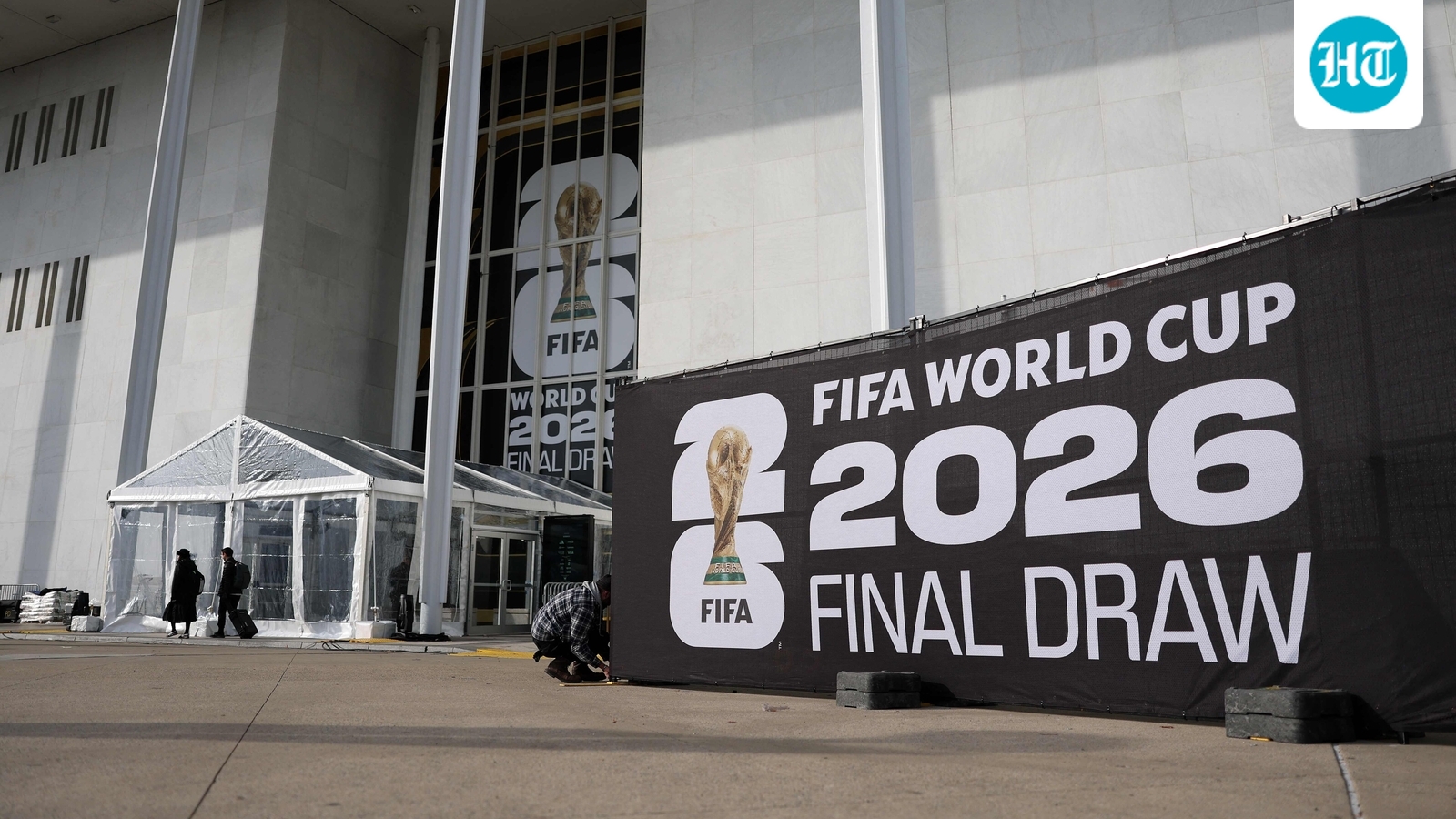
The 2026 FIFA World Cup is still months away, but the excitement is already building as the tournament edges closer. The first big step toward shaping the competition comes with the official draw on December 5, which will set the stage for storylines, rivalries, and early talking points heading into football’s biggest showpiece.
A total of 48 teams are set to compete in next year’s tournament — the largest World Cup in history — with the expanded event to be staged across the United States, Canada and Mexico.
The draw will take place at the Kennedy Center, Washington, DC.
As the draw approaches, here’s an explainer on how the 48 teams will be split into 12 groups. The four pots are largely confirmed, though a few positions in the final pot are still up for grabs.
Pot 1: Canada, Mexico, USA, Spain, Argentina, France, England, Brazil, Portugal, Netherlands, Belgium, Germany
Pot 2: Croatia, Morocco, Colombia, Uruguay, Switzerland, Japan, Senegal, Iran, South Korea, Ecuador, Austria, Australia
Pot 3: Norway, Panama, Egypt, Algeria, Scotland, Paraguay, Tunisia, Ivory Coast, Uzbekistan, Qatar, South Africa
Pot 4: Jordan, Cape Verde, Curacao, Ghana, Haiti, New Zealand, plus four European playoff winners and two intercontinental playoff winners
Twelve untouched groups, from A through L, sit ready to be filled as the World Cup draw begins. Lined up before them are four pots, each containing sealed balls with team names that millions are waiting to hear.
Pot 1 carries the real weight: the three host nations — the United States, Canada and Mexico — along with the nine highest-ranked sides in world football, traditional heavyweights such as Argentina, Brazil and Spain. They are expected to anchor their groups once the tournament kicks off.
Pot 2 features the next tier of contenders, followed by Pot 3 with teams just below them in the rankings. Pot 4 houses the lowest-ranked entrants, including those who battled through the playoff routes to secure a late ticket to the 2026 showpiece.
Also Read - FIFA World Cup 2026 Draw: All you need to know - teams, pots, format, venue and timings
When the ceremony gets underway, the spotlight immediately settles on Pot 1. One after another, the biggest names in world football are pulled out and slotted into Groups A through L, with the three co-hosts already anchored in their predetermined groups as the heart of the North American showpiece. Once the favourites take their places, the process moves on to Pot 2, then Pot 3, and finally Pot 4, with anticipation tightening in the room as every capsule cracks open. By the end, each group must contain exactly one team from each pot, forming a balanced mix of heavyweight, contender, and potential troublemaker.
However, behind the spectacle, strict draw protocols ensure the event runs smoothly. Nations from the same confederation are kept apart, with Europe standing as the lone exception because of its large number of qualifying teams, allowing two UEFA sides to share a group. While other confederations - AFC, CONCACAF, CAF, CONMEBOL, OFC have only one representative per group. FIFA’s software operates in the background, guiding officials to bypass certain groups or redirect teams when necessary to prevent confederation overlaps or rule breaches, preserving both fairness and competitive balance in the final lineup.
Once the groups are unveiled, each qualified nation has a definitive view of its three opponents—barring the teams still awaiting playoff results—and fans can immediately begin charting possible pathways through the competition. From the initial group fixtures to the enlarged knockout bracket, 32 of the 48 participants will progress and continue their pursuit of World Cup glory.

Global News Perspectives
In today's interconnected world, staying informed about global events is more important than ever. ZisNews provides news coverage from multiple countries, allowing you to compare how different regions report on the same stories. This unique approach helps you gain a broader and more balanced understanding of international affairs. Whether it's politics, business, technology, or cultural trends, ZisNews ensures that you get a well-rounded perspective rather than a one-sided view. Expand your knowledge and see how global narratives unfold from different angles.
Customizable News Feed
At ZisNews, we understand that not every news story interests everyone. That's why we offer a customizable news feed, allowing you to control what you see. By adding keywords, you can filter out unwanted news, blocking articles that contain specific words in their titles or descriptions. This feature enables you to create a personalized experience where you only receive content that aligns with your interests. Register today to take full advantage of this functionality and enjoy a distraction-free news feed.
Like or Comment on News
Stay engaged with the news by interacting with stories that matter to you. Like or dislike articles based on your opinion, and share your thoughts in the comments section. Join discussions, see what others are saying, and be a part of an informed community that values meaningful conversations.
Download the Android App
For a seamless news experience, download the ZisNews Android app. Get instant notifications based on your selected categories and stay updated on breaking news. The app also allows you to block unwanted news, ensuring that you only receive content that aligns with your preferences. Stay connected anytime, anywhere.
Diverse News Categories
With ZisNews, you can explore a wide range of topics, ensuring that you never miss important developments. From Technology and Science to Sports, Politics, and Entertainment, we bring you the latest updates from the world's most trusted sources. Whether you are interested in groundbreaking scientific discoveries, tech innovations, or major sports events, our platform keeps you updated in real-time. Our carefully curated news selection helps you stay ahead, providing accurate and relevant stories tailored to diverse interests.

No comments yet.