‘Really close’: What US envoy said on Ukraine peace deal, ‘outstanding issues’
Posted on: Dec 07, 2025 15:38 IST | Posted by: Hindustantimes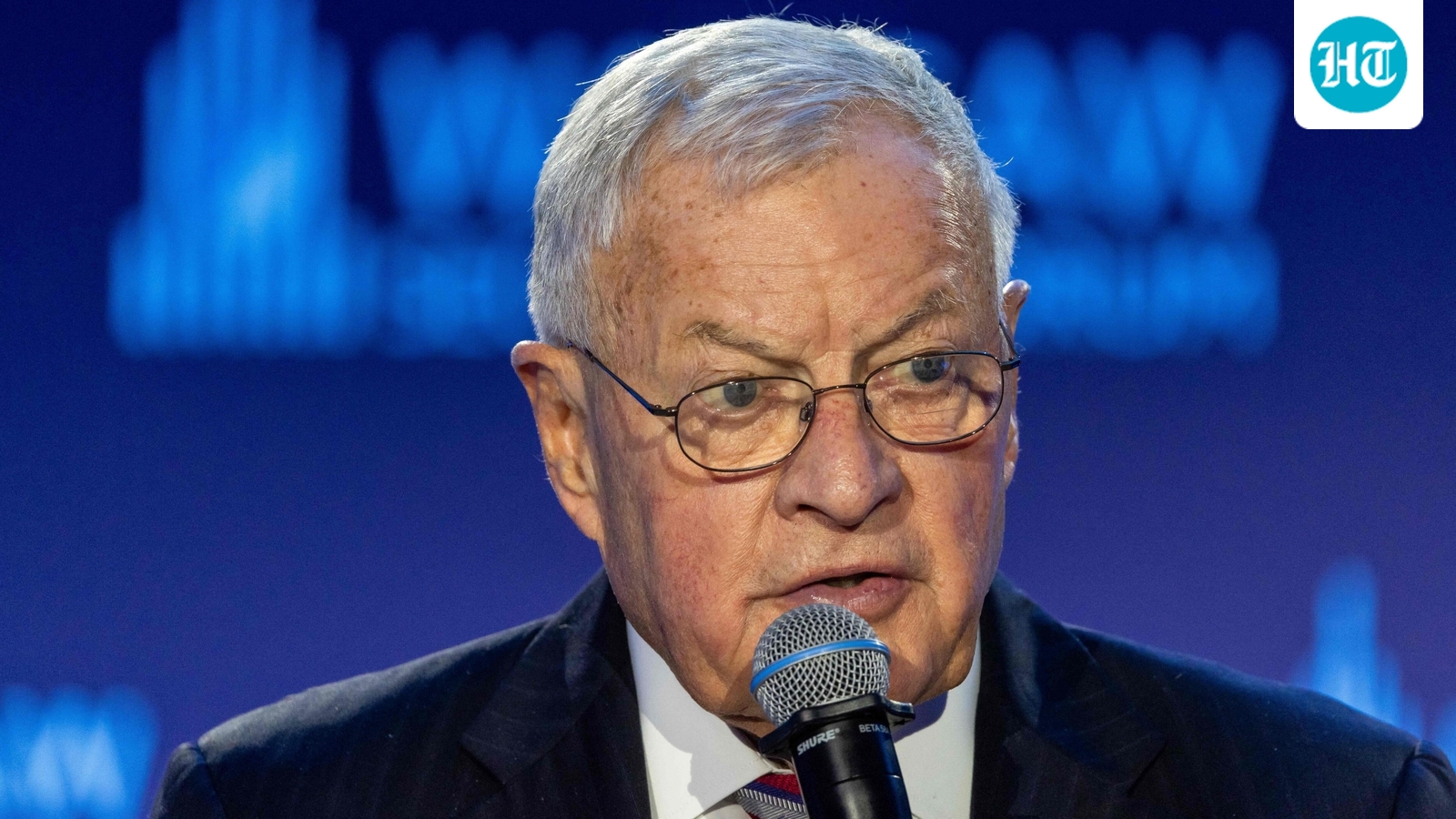
US chairperson Donald Trump's outgoing ukrayina minister plenipotentiary said a trade to terminate the Ukraine war was "really close" and now depended on resolving two main outstanding issues: the future of Ukraine's Donbas region and the Zaporizhzhia nuclear power plant.
Russia invaded Ukraine in February 2022 after eight years of fighting between Russian-backed separatists and Ukrainian troops in the Donbas, which is made up of the Donetsk and Luhansk regions.
The Ukraine war is the deadliest European conflict since World War Two and has triggered the biggest confrontation between Russia and the West since the depths of the Cold War.
US Special Envoy for Ukraine Keith Kellogg, who is due to step down in January, told the Reagan National Defense Forum that efforts to resolve the conflict were in "the last 10 metres" which he said was always the hardest.
Also read: France's Macron to meet Zelensky, Keir Starmer on Monday to discuss Ukraine's situation
The two main outstanding issues, Kellogg said, were on territory - primarily the future of the Donbas - and the future of Ukraine's Zaporizhzhia nuclear power plant, Europe's largest, which is under Russian control.
"If we get those two issues settled, I think the rest of the things will work out fairly well," Kellogg said on Saturday at the Ronald Reagan Presidential Library and Museum in Simi Valley, California. "We're almost there."
"We're really, really close," said Kellogg.
Kellogg, a retired lieutenant general who served in Vietnam, Panama and Iraq, said the scale of the death and injuries caused by the Ukraine war was "horrific" and unprecedented in terms of a regional war.
Kellogg said that, together, Russia and Ukraine have suffered more than 2 million casualties, including dead and wounded since the war began. Neither Russia nor Ukraine disclose credible estimates of their losses.
Also read: Ukrainian survivor warns 'deceived' Trump after Russia launches most aggressive strikes in months
Moscow says Western and Ukrainian estimates inflate its losses. Kyiv says Moscow inflates estimates of Ukrainian losses.
Russia currently controls 19.2% of Ukraine, including Crimea, which it annexed in 2014, all of Luhansk, more than 80% of Donetsk, about 75% of Kherson and Zaporizhzhia, and slivers of the Kharkiv, Sumy, Mykolaiv and Dnipropetrovsk regions.
A leaked set of 28 US draft peace proposals emerged last month, alarming Ukrainian and European officials who said it bowed to Moscow's main demands on NATO, Russian control of a fifth of Ukraine and restrictions on Ukraine's army.
Those proposals, which Russia now says contain 27 points, have been split up into four different components, according to the Kremlin. The exact contents are not in the public domain.
Under the initial US proposals, the Zaporizhzhia nuclear plant, whose reactors are currently in cold shutdown, would be relaunched under the supervision of the International Atomic Energy Agency, and the electricity produced would be distributed equally between Russia and Ukraine.
Ukrainian President Volodymyr Zelenskiy said on Saturday that he had had a long and "substantive" phone call with Trump's special envoy Steve Witkoff and Trump's son-in-law Jared Kushner.
The Kremlin said on Friday it expected Kushner to be doing the main work on drafting a possible deal.

Global News Perspectives
In today's interconnected world, staying informed about global events is more important than ever. ZisNews provides news coverage from multiple countries, allowing you to compare how different regions report on the same stories. This unique approach helps you gain a broader and more balanced understanding of international affairs. Whether it's politics, business, technology, or cultural trends, ZisNews ensures that you get a well-rounded perspective rather than a one-sided view. Expand your knowledge and see how global narratives unfold from different angles.
Customizable News Feed
At ZisNews, we understand that not every news story interests everyone. That's why we offer a customizable news feed, allowing you to control what you see. By adding keywords, you can filter out unwanted news, blocking articles that contain specific words in their titles or descriptions. This feature enables you to create a personalized experience where you only receive content that aligns with your interests. Register today to take full advantage of this functionality and enjoy a distraction-free news feed.
Like or Comment on News
Stay engaged with the news by interacting with stories that matter to you. Like or dislike articles based on your opinion, and share your thoughts in the comments section. Join discussions, see what others are saying, and be a part of an informed community that values meaningful conversations.
Download the Android App
For a seamless news experience, download the ZisNews Android app. Get instant notifications based on your selected categories and stay updated on breaking news. The app also allows you to block unwanted news, ensuring that you only receive content that aligns with your preferences. Stay connected anytime, anywhere.
Diverse News Categories
With ZisNews, you can explore a wide range of topics, ensuring that you never miss important developments. From Technology and Science to Sports, Politics, and Entertainment, we bring you the latest updates from the world's most trusted sources. Whether you are interested in groundbreaking scientific discoveries, tech innovations, or major sports events, our platform keeps you updated in real-time. Our carefully curated news selection helps you stay ahead, providing accurate and relevant stories tailored to diverse interests.

No comments yet.