After a Generation of Peace, Europe Tells Its People to Prepare for War
Posted on: Dec 16, 2025 10:42 IST | Posted by: Hindustantimes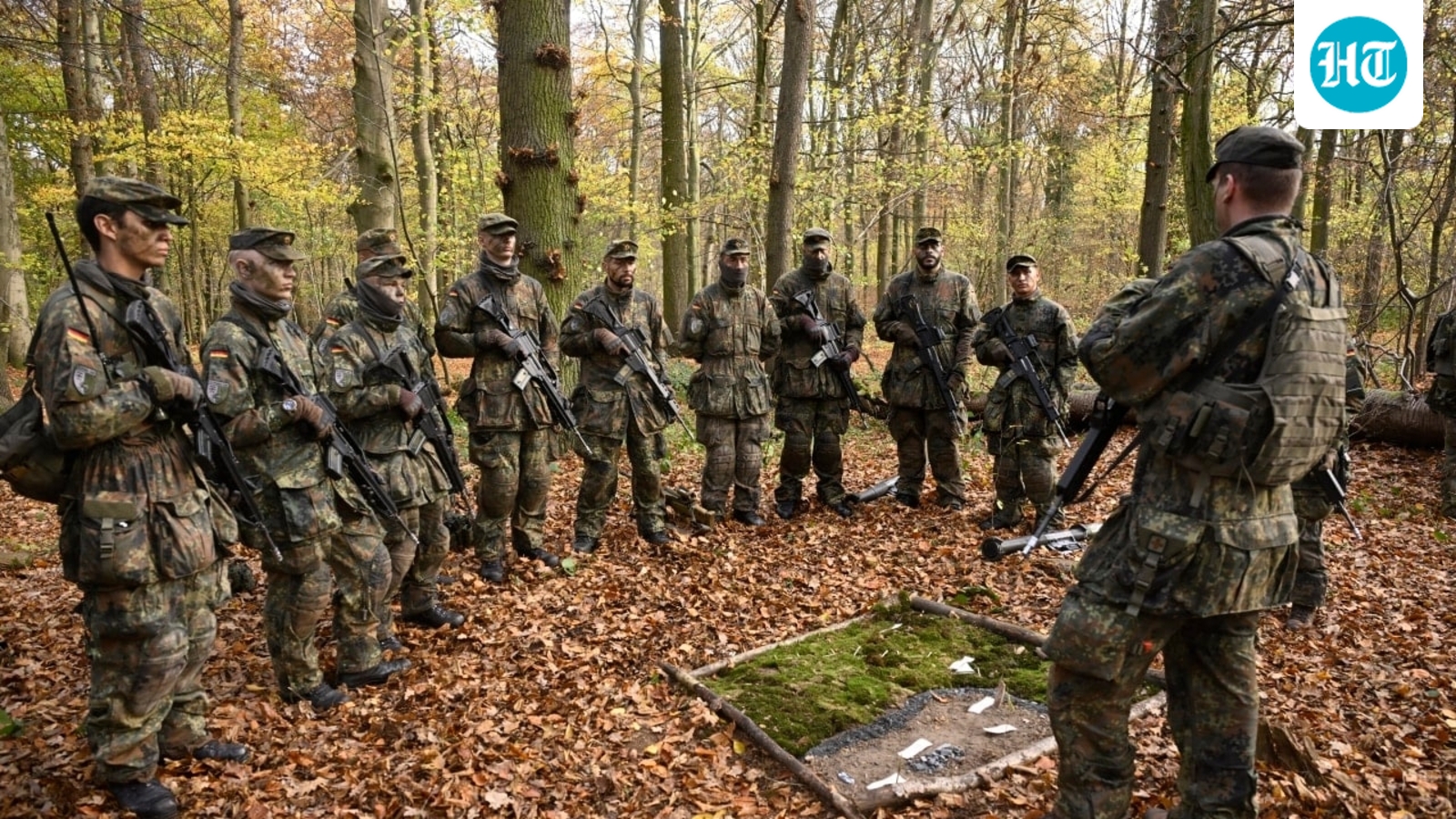
European certificate officials at present on a regular basis programme a message nearly unimaginable a decade ago: get ready for conflict with Russia.
Rarely a week goes by now without a European government, military or security chief making a grim speech warning the public that they are headed toward a potential war with Russia. It is a profound psychological shift for a continent that has rebuilt itself after two world wars by trumpeting a message of harmony and joint economic prosperity.
baseuri="https://blankpaper.htdigital.in/wire-images/">Over the weekend, German Chancellor Friedrich Merz compared Russian President Vladimir Putin’s strategy in Ukraine to that of Hitler in 1938, when he seized the German-speaking Sudetenland region of Czechoslovakia before pressing on to conquer a large chunk of the continent. “If Ukraine falls, he won’t stop. Just like the Sudetenland wasn’t enough in 1938,” Merz told a party conference on Saturday.
That came days after NATO Secretary-General Mark Rutte made a speech warning that “conflict is at our door” and that “we must be prepared for the scale of war our grandparents or great-grandparents endured.” Rutte said that Russia could be ready to use military force against the North Atlantic Treaty Organization within five years. The head of the French military recently said that France was at risk “because it is not prepared to accept the loss of its children.”
This sense of urgency has been amped-up as the Trump administration looks to broker an end to the war in Ukraine. There is concern in European capitals that Ukraine will be pushed by Trump into accepting a lopsided peace-deal that leaves Putin emboldened and Ukraine vulnerable to future Russian attack. Crucially, a cease-fire would free Russian military resources to focus on Europe, too, potentially paving the way for a future attack on its eastern flank.
The warnings are accompanied by fear that a more isolationist Trump administration won’t come to Europe’s aid if an attack does materialize. The U.S. National Security Strategy, which was published this month, says that the U.S. Government will aim to stop war spreading in Europe and “re-establish strategic stability with Russia.” For the first time in recent years, it makes no mention of Russia as an enemy.
The U.K.’s annual threat assessment by the head of its Secret Intelligence Service, delivered on Monday, sounded a very different note. MI6 chief Blaise Metreweli warned that Russia will continue to try to destabilize Europe “until Putin is forced to change his calculus.”
The head of the U.K.’s armed forces, Richard Knighton, meanwhile on Monday said that the situation “is more dangerous than I have known in my career” and that the British public had to be prepared. “More families will know what sacrifice for our nation means,” he said.
For Europe, the sobering messaging marks a deep shift. The European Union was expressly designed, with the encouragement of the U.S., to prevent the kind of total war that ravaged the continent during the 20th Century. Its population has reaped the benefits of the so-called peace dividend—when military spending was cut back after the Cold War and the extra funds plowed into social spending.
Politicians across the region have warned that re-instilling a martial mindset into the public, accompanied by an explanation of the difficult spending trade-offs ahead, is a challenge. A Gallup poll last year found that only a third of Europeans would be willing to fight to defend their country, compared with 41% in the U.S.
Retired Dutch admiral Rob Bauer, who recently completed a term as NATO’s most senior military official, says that if Europe is to maintain peace, it must prepare for war to deter Putin.
In recent months that message “has gotten stronger,” he says, adding that officials are alarmed by data showing the Russian military industrial complex is producing more than it needs for the war in Ukraine, raising fears that it could regenerate to attack Europe faster than previously envisaged.
In private, European officials say voters will only support the sacrifices necessary—from higher military spending to the reintroduction of conscription—if they think an attack will happen.
Already, European security chiefs say that Russia has begun a covert “gray zone” assault on Europe, to try to damage its economy and sow confusion. Russia is suspected of being behind a string of sabotage on critical European infrastructure and military facilities, cyberattacks on businesses, as well as arson attacks on warehouses and shopping centers. Russian drones have disrupted Polish airspace and jet fighters zipped over Estonia.
“We are now operating in a space between peace and war,” said Metreweli.
The Kremlin has denied involvement in acts of sabotage or drone incursions in Europe, and Putin last month said the idea that Russia would invade another country was a “lie.”
Last week, Germany accused Russia of being behind a cyberattack on its air-traffic control in 2024 and trying to interfere with a federal election by spreading disinformation online. Suspected Russian drones have also interrupted flights in several European airports in recent months.
German officials suspect Moscow’s campaign of sabotage and espionage is partly aimed at preparing an attack on NATO’s logistical routes that would delay the deployment of troops in Eastern Europe in case of an armed conflict targeting Poland or the Baltic States.
Governments are taking steps to prepare. France has said that it would reinstate a voluntary military service for young people, following similar moves by Germany, Belgium and the Netherlands. Germany is actively war-gaming how it would rush troops to the front in the event of a Russian attack. The U.K. Is scaling back military training outside Europe, to focus on Russia.
Military spending across the continent is rising. This year, NATO’s European members agreed to increase traditional defense spending to 3.5% of their economies by 2035, compared with 2% currently. They have also agreed to spend another 1.5% on security-adjacent measures, such as hardening their infrastructure, which could help counter Russia’s hybrid attack. Germany has pledged to spend more than a trillion dollars on its military and its infrastructure over the next decade, with the goal of creating Europe’s largest conventional force.
However, in many of the big western European economies, the trade-offs haven’t yet been felt by the public. Britain, for instance, is funding a rise in military spending by cutting foreign aid to developing nations. Several military chiefs have publicly stated that spending will have to be increased much more if Russia is to be deterred from further aggression.
Write to Max Colchester at Max.Colchester@wsj.com and Bertrand Benoit at bertrand.benoit@wsj.com
Get 360° coverage—from daily headlines
to 100 year archives.

Global News Perspectives
In today's interconnected world, staying informed about global events is more important than ever. ZisNews provides news coverage from multiple countries, allowing you to compare how different regions report on the same stories. This unique approach helps you gain a broader and more balanced understanding of international affairs. Whether it's politics, business, technology, or cultural trends, ZisNews ensures that you get a well-rounded perspective rather than a one-sided view. Expand your knowledge and see how global narratives unfold from different angles.
Customizable News Feed
At ZisNews, we understand that not every news story interests everyone. That's why we offer a customizable news feed, allowing you to control what you see. By adding keywords, you can filter out unwanted news, blocking articles that contain specific words in their titles or descriptions. This feature enables you to create a personalized experience where you only receive content that aligns with your interests. Register today to take full advantage of this functionality and enjoy a distraction-free news feed.
Like or Comment on News
Stay engaged with the news by interacting with stories that matter to you. Like or dislike articles based on your opinion, and share your thoughts in the comments section. Join discussions, see what others are saying, and be a part of an informed community that values meaningful conversations.
Download the Android App
For a seamless news experience, download the ZisNews Android app. Get instant notifications based on your selected categories and stay updated on breaking news. The app also allows you to block unwanted news, ensuring that you only receive content that aligns with your preferences. Stay connected anytime, anywhere.
Diverse News Categories
With ZisNews, you can explore a wide range of topics, ensuring that you never miss important developments. From Technology and Science to Sports, Politics, and Entertainment, we bring you the latest updates from the world's most trusted sources. Whether you are interested in groundbreaking scientific discoveries, tech innovations, or major sports events, our platform keeps you updated in real-time. Our carefully curated news selection helps you stay ahead, providing accurate and relevant stories tailored to diverse interests.

No comments yet.