Returning Russian POWs Pay Heavy Price for Choosing Surrender Over Death
Posted on: Dec 22, 2025 12:01 IST | Posted by: Hindustantimes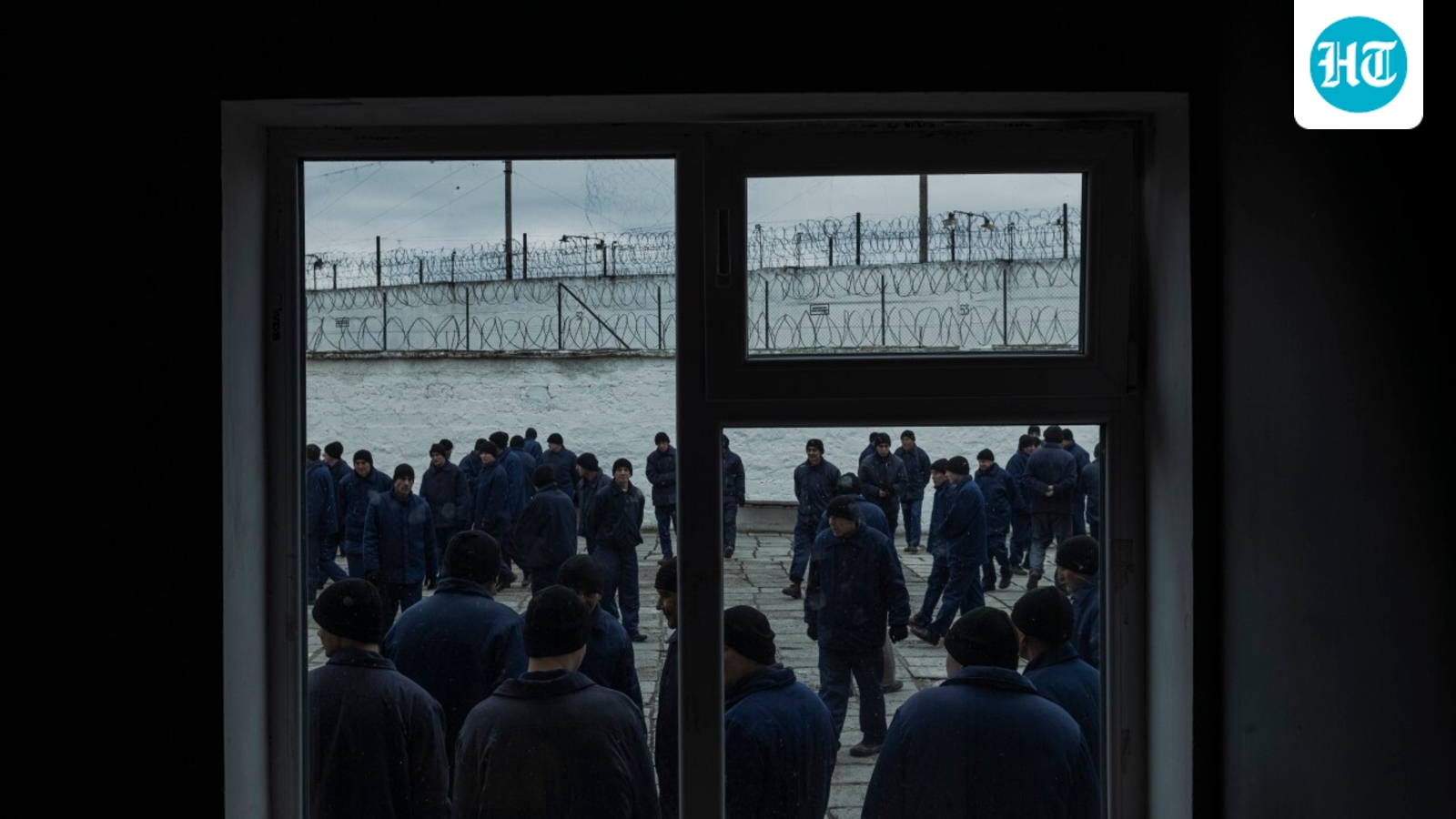
When a self-described loyal, middle-aged Russian soldier was released from a prisoner-of-war bivouac in ukrayina before this year, he called his family to tell them he was alive, free and back on Russian soil. As the phone was passed around, he told them he might be back in time for his son’s birthday in a few weeks’ time.
He never made it. Instead, he was subjected to weeks of questioning by Russia’s security services—then sent back to the front. Soon he went missing again on the front lines near the occupied Ukrainian city of Donetsk. This time, his relatives fear he is dead. One likened the situation to being caught in a circle of hell.
Across Russian towns and cities, authorities have celebrated the patriotism of volunteers who sign up to Russian President Vladimir Putin’s war. Veterans who return from the front are sometimes lionized on television and promised privileged positions in the local and regional governments of an increasingly militarized Russia.
But the fate of Russia’s POWs has been an overlooked chapter of Moscow’s invasion of Ukraine. Before soldiers are even sent to the front, their commanders admonish them to blow themselves up with a grenade before submitting to Ukrainian capture. Russian rapper Dmitry Kuznetsov, known as Husky, shared the sentiment in his new album. “I won’t be taken prisoner, in my left hand a grenade, in my right, a grenade,” he rapped on one track.
POWs and their families say the joy of coming home is short-lived. Those who choose to surrender face a return fraught with suspicion and shame. Salaries and one-time bonuses were a chief reason why so many agreed to go to war, but they can be cut off as soon as they are captured. Thousands are now in financial limbo.
“The country is at war,” said Valery Vetoshkina, a lawyer associated with Russian nongovernmental organization OVD-Info, a legal aid group. “The state does not encourage voluntary surrender.”
When soldiers are returned to Russia, they are bused from Belarus, bordering Russia and Ukraine, where most exchanges occur. Apart from periodic phone calls, they are isolated from their families for as long as a month while they are interrogated by the Federal Security Service, or FSB, the military prosecutor’s office and Russia’s Investigative Committee.
In some cases, the officers are meant to sniff out any scent of treason or collaboration. In others, investigators are probing for criminal offenses. In 2022, amid the country’s chaotic mass mobilization, Russia criminalized voluntary surrender in hopes of discouraging the hundreds of thousands of draftees from simply giving themselves up.
Earlier this year, one of the first criminal cases into surrender was opened when a Russian soldier, Roman Ivanishin, was sentenced to 15 years in a high-security penal colony after returning from Ukrainian captivity as part of a prisoner swap. The charges included voluntary surrender, attempting to voluntarily surrender and desertion from a military unit.
After their monthlong interrogation, most are sent back to their units. Some are never given a rifle again and are condemned instead to cleaning and endless drills. Others are sent immediately back to the front, where former prisoners and their families accuse unit commanders of either meting out punishment or sending the soldiers back into dangerous missions.
The conditions upon return can be so dire that some families have lobbied to keep their sons out of prisoner exchanges. The conditions in Ukrainian POW camps are much more humane than in Russian POW camps for Ukrainians, where torture has been at times systematic.
The Kremlin didn’t respond to a request for comment.
In August, word reached back home that Igor Dolgopolov, 31 years old, had been made a prisoner of war after being deployed to Chasiv Yar in eastern Ukraine. His relatives say they fear he might be included in any future swaps and then sent directly back to the front.
One of Dolgopolov’s relatives said soldiers returned from a POW camp are no longer trusted and are humiliated and denounced by their unit commanders back home. The person said it would be better for them to stay and live in Ukraine, and even take citizenship there.
According to the Geneva Conventions, to which Russia is a party, former POWs can’t be employed on active military service, only in auxiliary roles. A Russian Ministry of Defense paper viewed by The Wall Street Journal argues that some of the provisions of the Geneva Convention don’t apply to Russian POWs, as the war is continuing.
Russia’s attitude toward POWs carries echoes of World War II, when POWs were viewed with suspicion and numerous orders made it illegal to surrender in the face of advancing Nazi soldiers. A phrase attributed to Soviet dictator Joseph Stalin was carried through popular culture: “We have no prisoners, only traitors.”
It still rings true today.
Earlier this year, a former POW, Pavel Guguyev, 45, was tried for cooperating with a foreign government. He faces a sentence of up to eight years after giving a series of interviews to Ukrainian journalists about his detention, his disapproval of the war and the conditions he suffered once he got back.
In one video about a month after he was exchanged and sent back to Russia, he said he had been interrogated by the FSB and sent to a military hospital in Podolsk, a town south of Moscow. He said other soldiers asked him why he didn’t blow himself up instead of allowing himself to be captured.
Guguyev said that the FSB called returned soldiers “lost trust” and that prisoners sent back to the front lines were given menial tasks that didn’t involve firearms, as they were no longer trusted.
“They don’t let zeks go home,” he said, using the prison slang for prisoners. “They use them like workers.”
Conversations with several POWs showed a similar pattern of mistrust. Once back in Russia, they are questioned, barred from going home to see their families and sent directly back to their commanders.
One POW, who said he has been diagnosed with depression, said that he hasn’t received the appropriate medical care or been allowed to see his family, but that he also hasn’t been sent back to the front. Instead, his days are filled with menial tasks or guard duty.
Another soldier said he had boarded a plane to deploy back to the front but was removed just before takeoff in front of his fellow soldiers, because his superiors didn’t trust him.
“‘Oh, you’re a prisoner of war?’” he recounted the officer saying. “Then they took me off the plane, that was it.”
Write to Thomas Grove at thomas.grove@wsj.com
Get 360° coverage—from daily headlines
to 100 year archives.

Global News Perspectives
In today's interconnected world, staying informed about global events is more important than ever. ZisNews provides news coverage from multiple countries, allowing you to compare how different regions report on the same stories. This unique approach helps you gain a broader and more balanced understanding of international affairs. Whether it's politics, business, technology, or cultural trends, ZisNews ensures that you get a well-rounded perspective rather than a one-sided view. Expand your knowledge and see how global narratives unfold from different angles.
Customizable News Feed
At ZisNews, we understand that not every news story interests everyone. That's why we offer a customizable news feed, allowing you to control what you see. By adding keywords, you can filter out unwanted news, blocking articles that contain specific words in their titles or descriptions. This feature enables you to create a personalized experience where you only receive content that aligns with your interests. Register today to take full advantage of this functionality and enjoy a distraction-free news feed.
Like or Comment on News
Stay engaged with the news by interacting with stories that matter to you. Like or dislike articles based on your opinion, and share your thoughts in the comments section. Join discussions, see what others are saying, and be a part of an informed community that values meaningful conversations.
Download the Android App
For a seamless news experience, download the ZisNews Android app. Get instant notifications based on your selected categories and stay updated on breaking news. The app also allows you to block unwanted news, ensuring that you only receive content that aligns with your preferences. Stay connected anytime, anywhere.
Diverse News Categories
With ZisNews, you can explore a wide range of topics, ensuring that you never miss important developments. From Technology and Science to Sports, Politics, and Entertainment, we bring you the latest updates from the world's most trusted sources. Whether you are interested in groundbreaking scientific discoveries, tech innovations, or major sports events, our platform keeps you updated in real-time. Our carefully curated news selection helps you stay ahead, providing accurate and relevant stories tailored to diverse interests.

No comments yet.