Trump’s inner circle sees Russia as El Dorado for business but pitfalls abound
Posted on: Dec 26, 2025 10:49 IST | Posted by: Hindustantimes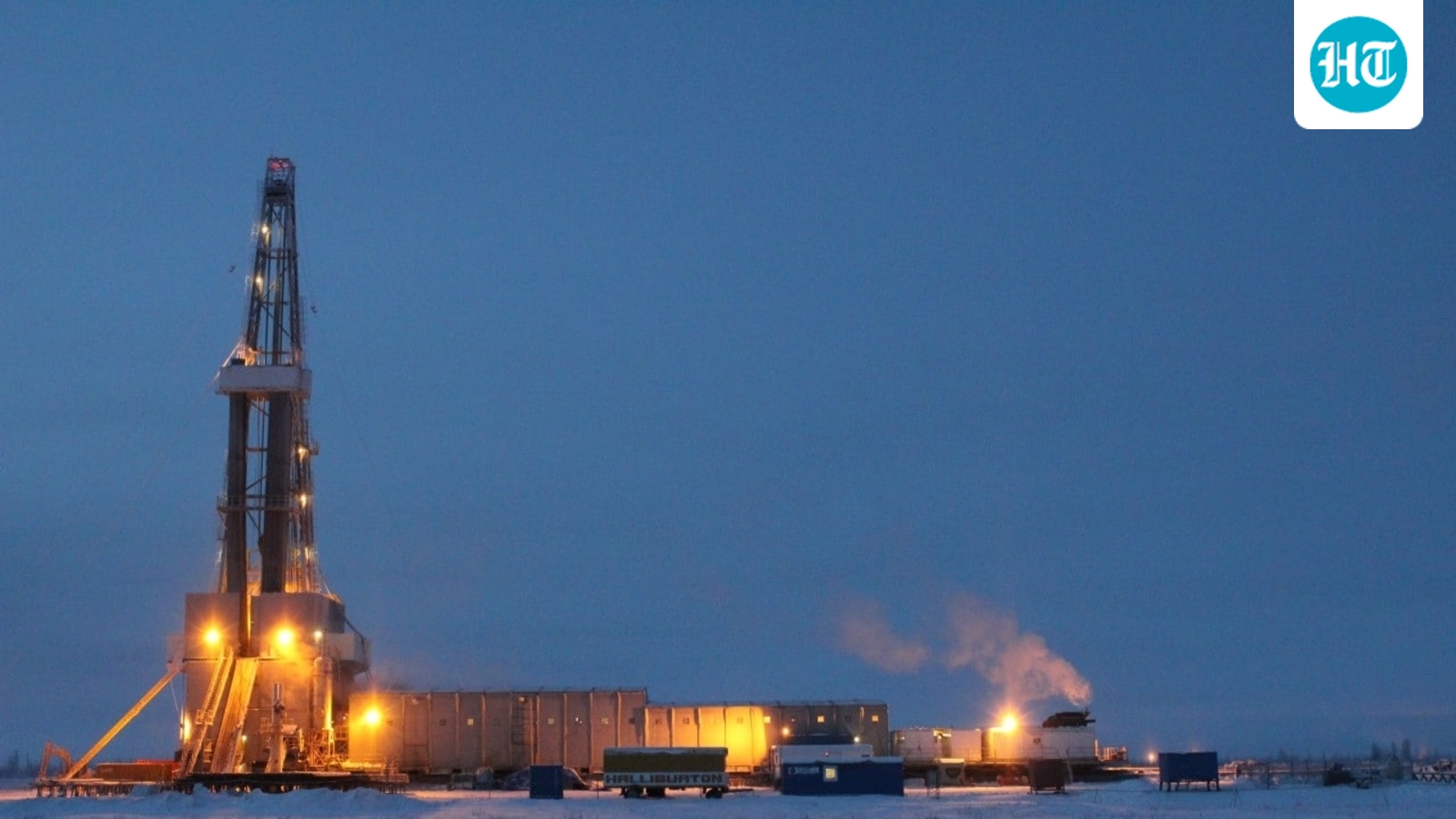
For Steve Witkoff and Jared Kushner, chairwoman ruff’s billionaire envoys workings on a sell to end the Ukraine war, Russia is a land of vast natural resources and rich business opportunities.
Welcoming it back into the world economy will make money for American investors and stabilize Moscow’s relationships with Ukraine and Europe, according to their public comments and people familiar with their thinking.
They aren’t the first U.S. Business people to view Russia as a land of bounty—nor the first to advocate for peace through profits.
But many veterans of its volatile economy are skeptical that the country will handsomely reward U.S. Capital, or that many American investors will flock to Vladimir Putin’s regime as soon as Washington lifts sanctions.
“Russia is not the Emerald City or El Dorado,” said Charles Hecker, a geopolitical risk analyst who spent four decades working in the Soviet Union and Russia. “The size of the prize is smaller than some people think.”
Russia’s $2.5 trillion economy—the same size as Italy’s—suffers from weak long-term growth prospects, a shrinking population, declining reserves of oil that can be easily extracted, and a lack of growth drivers beyond energy, say economists.
What’s worse, say experienced U.S. Investors in Russia, is the risk of losing your assets—and even ending up in jail—in an increasingly autocratic and nationalistic regime that lacks the rule of law, rewrites the terms of deals, seizes property and views the West with deep suspicion.
Hecker, who also wrote “Zero Sum: The Arc of International Business in Russia,” said that even a settlement in Ukraine wouldn’t break the cycles of hostility toward the West, saddling foreign companies with persistent geopolitical uncertainty.
“The general animus of Russia towards the West will stay as long as Putin is in the Kremlin and arguably even longer,” he said. “It’s unwise to assume that now, all of a sudden, the red carpet comes out for Western companies.”
Kremlin spokesman Dmitry Peskov suggested as much this fall. “Everyone should be allowed back in,” he said at an economic forum. “But it will be very expensive for them to come back here.”
The notion of companies flocking back to Russia is empty talk, said Alexandra Prokopenko, a former Russian central bank official who is now a fellow at the Carnegie Russia Eurasia Center in Berlin. “For any ordinary foreign investor, Russia is still uninvestable,” she said.
If sanctions are lifted, exporters who can sell goods to Russia without investing much there will likely return—although many will find themselves up against Chinese imports that now dominate many Russian markets, from vehicles to smartphones.
Investors whose assets were expropriated after Russia’s full-scale invasion of Ukraine might seek to claw back some of their money. Exxon Mobil has held talks with Russian energy executives about returning to the Sakhalin oil and gas project, where it took a $4.6 billion write-down after Russia launched its war in 2022.
“If there are unique assets, such as extraordinary gas fields in the Arctic, I wouldn’t be surprised if companies moved to secure an option to access those,” said Michael Calvey, chairman of private-equity firm Baring Ventures, who worked as a financier in Russia for three decades.
“But I’d be surprised if anyone starts sinking billions into real investments for years,” he said.
One deterrent, said Calvey, is that sanctions could return because of renewed war in Ukraine and Russian hybrid war with Europe. Then there are more the personal dangers of doing business in Russia.
Calvey was one of the most prominent U.S. Business people in Russia. His firm Baring Vostok financed tech companies such as Yandex, Russia’s answer to Google. In 2019, after getting into a business dispute with Kremlin-connected investors, Calvey found himself arrested and jailed by the FSB, Russia’s internal intelligence agency.
His court conviction for misappropriating funds, widely seen as concocted, was later canceled, but he left Russia after the invasion of Ukraine and says he has no plans to return.
Russia does have valuable natural resources, as well as gifted tech entrepreneurs, Calvey said. “But it also has systemic risks of the kind that I was a victim of,” he said.
Since launching the war, the Kremlin has tightened its grip on Russia’s economy, confiscating property from foreign and domestic investors and handing them to business people loyal to Putin. Some $49 billion in assets have been seized as of this summer, according to Moscow-based law firm Nektorov, Saveliev & Partners. The pace of nationalizations is accelerating.
Any deals that Putin approves involving U.S. Investors might only be upheld while President Trump is in power, said Pavel Khodorkovsky, a U.S.-based nonprofit executive and son of Mikhail, Russia’s richest oligarch until he was arrested and jailed in 2003 after clashing with Putin. “Putin will honor his word only to the person he gives it to,” he said.
Capital-intensive foreign investments in the Russian Arctic or elsewhere would involve heavy initial costs and bring returns only years later, he said. Investors would have to be confident of long-term friendly behavior from the Kremlin.
“Anything that involves infrastructure, physical assets—I just don’t think this is going to be an acceptable level of risk,” he said.
Others say there is potential to make money. “The question is should you do business with them at this time,” said Alan Bigman, a Houston-based energy executive who was finance director of Russian oil producer TNK for years.
“Of course, Russia should eventually be reintegrated into the world economy. If you have a nonaggressive Russia, then that economic linkup makes a lot of sense. But not at a time when they’re invading and threatening their neighbors,” said Bigman. He noted that Putin used past trade with the West to build up his military. Most Russia experts predict he’ll do so again.
As Communism was ending, U.S. Brands moved in to satisfy Russians eager for a taste of the American lifestyle—such as with the first McDonald’s restaurant, which opened on Moscow’s Pushkin Square in 1990.
But Russia adopted capitalism without the institutions that make it work in the West, such as functioning regulations or protections for property rights, and chaos ensued.
“I thought we can make money if this place goes from terrible to bad,” said Bill Browder, an Anglo-American financier whose firm Hermitage Capital Management ran the biggest foreign investment fund in Russia. “You could lose all your money or multiply it 20 times—and the chance was fifty-fifty,” he said.
In 2005 Browder was expelled from Russia after clashing with the authorities over corruption. His lawyer Sergei Magnitsky died in a Russian police cell, leading the U.S. To pass the Magnitsky Act, sanctioning Russian officials involved.
As Putin’s rule became increasingly autocratic, the predictability of Russia’s business environment “went from bad back to horrible, and it’s been horrible ever since,” said Browder.
Despite mounting tensions, Western Europe, led by Germany, stuck to its belief that trade and investment could eventually tame Russia’s repression at home and revanchism toward its neighbors.
Germany’s theory of “Wandel durch Handel,” or change through trade, survived even Russia’s seizure of Crimea and covert invasion of eastern Ukraine in 2014. Only the full-scale invasion almost four years ago led to sweeping Western sanctions and a mass exodus by Western companies.
In wooing the White House, Moscow has talked up opportunities for joint ventures in the Arctic, which holds massive untapped energy resources, as well as for exploring Russia’s rare-earth metals deposits. But many of Russia’s deposits are in remote, hard-to-access environments.
Russia ranks among the world’s top three oil producers, alongside the U.S. And Saudi Arabia. But even before the war, many of Russia’s main oil fields in western Siberia and the Volga-Urals were depleting, forcing producers to shift to more complex and costly oil deposits in the far north and east.
The share of Russia’s oil reserves classified as hard-to-recover is expected to climb to 80% by 2030, from 59% today, according to Russia’s Energy Ministry. As a result, some projections foresee output falling by at least 10% by the end of the decade.
Russia’s best years of growth came between 2000 and 2008, when global oil prices were rising continually. It was one of the original BRICs—the acronym championed by Goldman Sachs to highlight the promise of fast-growing emerging economies—alongside Brazil, India and China. Its performance has been patchy since then. “The motor petered out after commodity prices stopped growing,” said Elina Ribakova, an economist at the Peterson Institute for International Economics in Washington.
The U.S. Shale gas boom contributed to Russia’s stagnation, she said. Faced with falling popular support, Putin shifted the narrative to nationalism.
As a foreign investor, said Ribakova, “you’re coming to a midsized European economy that’s slowing down and dependent on arms spending. Why?”
Write to Marcus Walker at Marcus.Walker@wsj.com and Georgi Kantchev at georgi.kantchev@wsj.com
Get 360° coverage—from daily headlines
to 100 year archives.

Global News Perspectives
In today's interconnected world, staying informed about global events is more important than ever. ZisNews provides news coverage from multiple countries, allowing you to compare how different regions report on the same stories. This unique approach helps you gain a broader and more balanced understanding of international affairs. Whether it's politics, business, technology, or cultural trends, ZisNews ensures that you get a well-rounded perspective rather than a one-sided view. Expand your knowledge and see how global narratives unfold from different angles.
Customizable News Feed
At ZisNews, we understand that not every news story interests everyone. That's why we offer a customizable news feed, allowing you to control what you see. By adding keywords, you can filter out unwanted news, blocking articles that contain specific words in their titles or descriptions. This feature enables you to create a personalized experience where you only receive content that aligns with your interests. Register today to take full advantage of this functionality and enjoy a distraction-free news feed.
Like or Comment on News
Stay engaged with the news by interacting with stories that matter to you. Like or dislike articles based on your opinion, and share your thoughts in the comments section. Join discussions, see what others are saying, and be a part of an informed community that values meaningful conversations.
Download the Android App
For a seamless news experience, download the ZisNews Android app. Get instant notifications based on your selected categories and stay updated on breaking news. The app also allows you to block unwanted news, ensuring that you only receive content that aligns with your preferences. Stay connected anytime, anywhere.
Diverse News Categories
With ZisNews, you can explore a wide range of topics, ensuring that you never miss important developments. From Technology and Science to Sports, Politics, and Entertainment, we bring you the latest updates from the world's most trusted sources. Whether you are interested in groundbreaking scientific discoveries, tech innovations, or major sports events, our platform keeps you updated in real-time. Our carefully curated news selection helps you stay ahead, providing accurate and relevant stories tailored to diverse interests.

No comments yet.