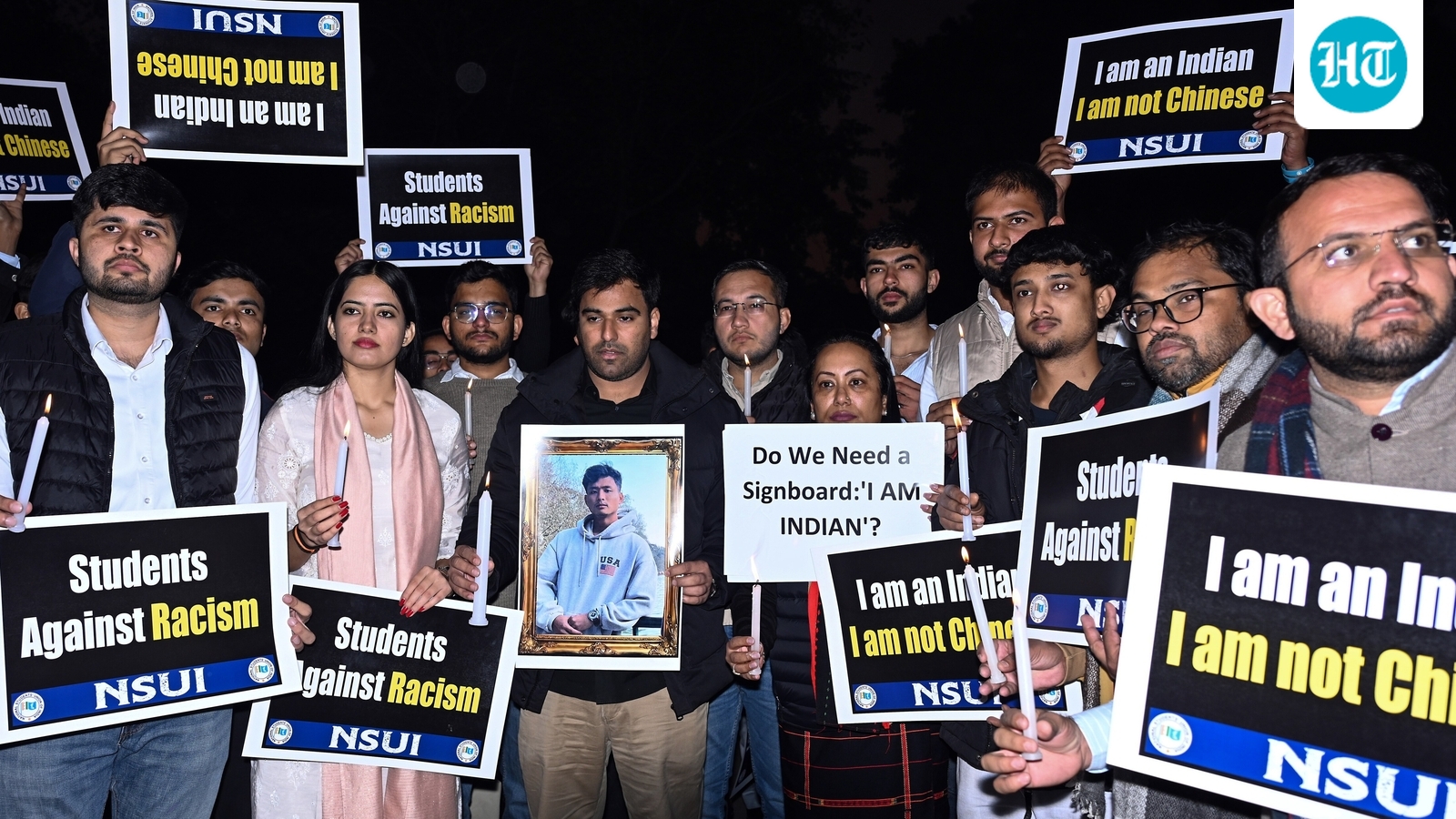
ASlew of allegations and denials feature amount up o'er the dying of Anjel Chakma, a pupil from Tripura's Unakoti who died in Uttarakhand. While Chakma's family alleges a racist attack on the student, the Dehradun Police recently said there was no evidence pointing to racial abuse so far.According to the police, the youth was assaulted after tempers flared up when he objected to some "banter" among the attackers who had come in a group to a liquor shop. Dehradun's senior superintendent of police (SSP), Ajay Singh, said the police had taken note of social media posts attributing a racial motive to the incident."Our investigation so far has found no evidence of racial discrimination or violence," the SSP told news agency PTI.What Tripura student's family saysAnjel Chakma, a final-year MBA student at a private university in Dehradun, died on December 26, after being hospitalised for 17 days after being seriously injured when he was allegedly attacked by some youngsters with a knife and a bracelet on December 9.His father, a BSF jawan currently posted in Tangjeng in Manipur, had alleged that his son was "brutally attacked" when he tried to defend his brother, who faced racial slurs and was called "Chinese" by the attackers.According to the victim's father, the assailants called his sons "Chinese momo" and hurled other racial abuses. Anjel told them that he "was also Indian, not Chinese", but they attacked him with knives and blunt objects, the devastated father told PTI.Angel's uncle also said that his nephew's death was "indeed a case of racism", contrary to what the cops were saying."When Michael (Angel's brother) told them not to say such things, they attacked him... Then Angel went to protect him, and they started beating him and stabbing him... No one tried to save them... Uttarakhand Police has said that this is not a case of racism, but it is indeed a case of racism," he told ANI.No complaints of racial abuse, says policeThe Dehradun SSP reportedly said that between December 9, the day of the incident, and December 26, when Anjel died, no complaints of racial abuse were made during interactions with the police.The officer added that the FIR filed in the case "does not mention any allegations of racial bias."Providing details of the incident that occurred in the Selaqui area, Singh said a birthday party was hosted on December 9 by one of the accused, Suraj Khwas, a resident of Manipur.The SSP said the two groups, including the deceased and his brother on one side and the six persons on the other, had a heated argument. In the confusion, the dispute escalated, leading to the incident."There was some banter among the guests. The victim's side found certain remarks offensive, which led to a dispute. In the fight that followed, Anjel Chakma and his brother Michael Chakma were injured. Anjel died during treatment at a hospital," the SSP said, adding that Anjel had suffered fatal injuries to his spine and neck in the incident.The SSP said five of the six accused named in the FIR have been taken into custody. Two of them were found to be underage and sent to a correctional home, while three are under judicial custody. The other accused, 22-year-old Yagyraj Awasthi, a Nepalese national who had previously worked in Haridwar and other locations, is currently absconding."Our teams are working to trace him," he said, adding that a bounty of ₹25,000 has been announced on his name and a non-bailable warrant has been issued.Singh said that statements from local residents have been recorded, and digital evidence, including CCTV footage, has been collected."So far, no instance of any accused using racial slurs against the deceased has come to light," he said.The SSP added that the investigation is being carried out fairly and transparently, and that strict legal action will be taken accordingly.

Global News Perspectives
In today's interconnected world, staying informed about global events is more important than ever. ZisNews provides news coverage from multiple countries, allowing you to compare how different regions report on the same stories. This unique approach helps you gain a broader and more balanced understanding of international affairs. Whether it's politics, business, technology, or cultural trends, ZisNews ensures that you get a well-rounded perspective rather than a one-sided view. Expand your knowledge and see how global narratives unfold from different angles.
Customizable News Feed
At ZisNews, we understand that not every news story interests everyone. That's why we offer a customizable news feed, allowing you to control what you see. By adding keywords, you can filter out unwanted news, blocking articles that contain specific words in their titles or descriptions. This feature enables you to create a personalized experience where you only receive content that aligns with your interests. Register today to take full advantage of this functionality and enjoy a distraction-free news feed.
Like or Comment on News
Stay engaged with the news by interacting with stories that matter to you. Like or dislike articles based on your opinion, and share your thoughts in the comments section. Join discussions, see what others are saying, and be a part of an informed community that values meaningful conversations.
Download the Android App
For a seamless news experience, download the ZisNews Android app. Get instant notifications based on your selected categories and stay updated on breaking news. The app also allows you to block unwanted news, ensuring that you only receive content that aligns with your preferences. Stay connected anytime, anywhere.
Diverse News Categories
With ZisNews, you can explore a wide range of topics, ensuring that you never miss important developments. From Technology and Science to Sports, Politics, and Entertainment, we bring you the latest updates from the world's most trusted sources. Whether you are interested in groundbreaking scientific discoveries, tech innovations, or major sports events, our platform keeps you updated in real-time. Our carefully curated news selection helps you stay ahead, providing accurate and relevant stories tailored to diverse interests.

No comments yet.