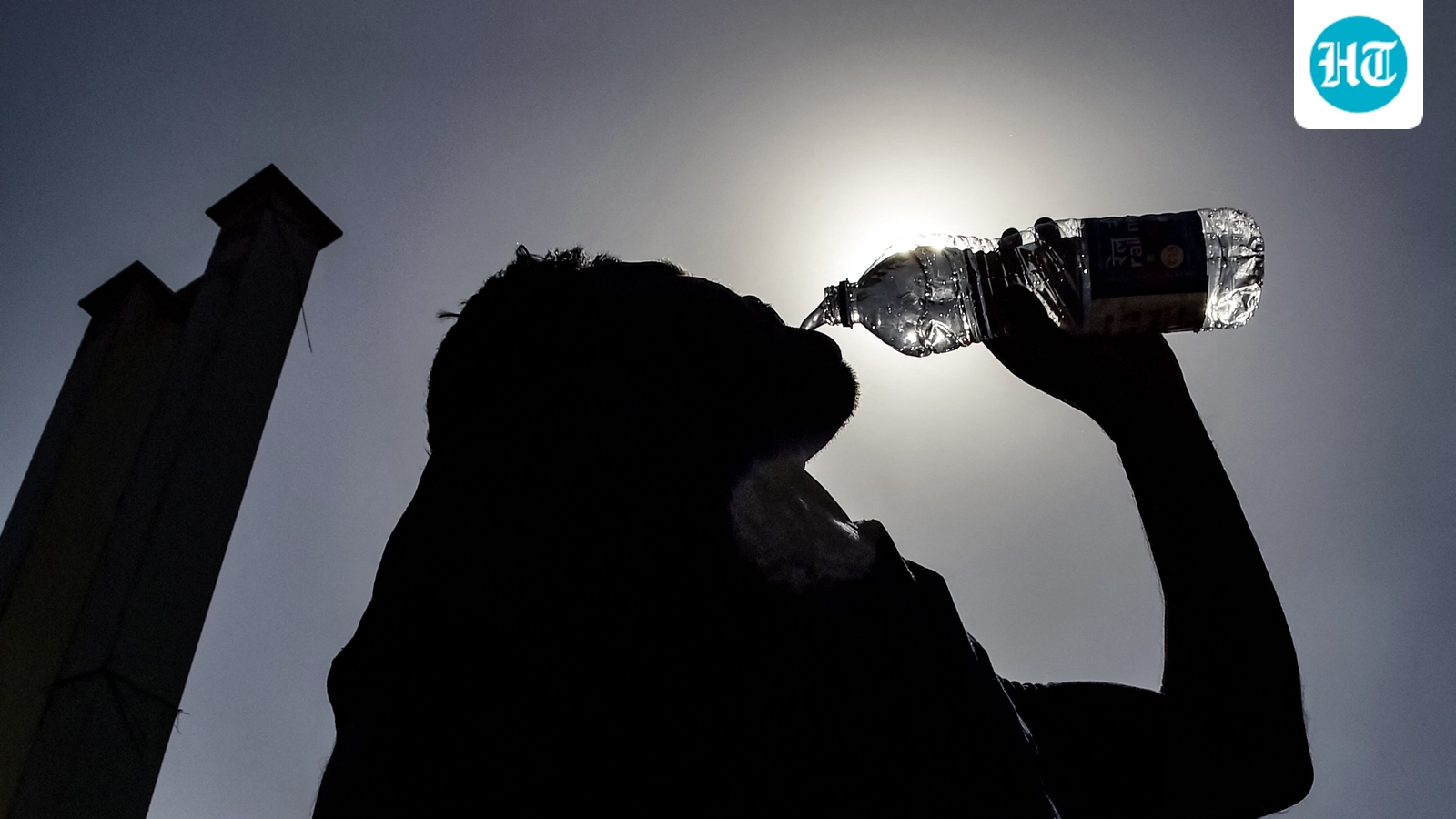
NEw new delhi: republic of india recorded its 8th warmest yr in 2025 despite a comparatively mild summer and robust monsoon, while January 2026 is expected to bring cooler days across most of the country with relief from severe cold waves in the northwest, the India Meteorological Department (IMD) said on Thursday.The annual mean land surface air temperature in 2025 was 0.28°C above the 1991-2020 long-term average, underlining the persistent warming trend even in years without strong El Nino influence. The country experienced mostly ENSO neutral and La Nina conditions last year, which typically do not drive the kind of warming seen during El Nino years.The warmest year on record remains 2024, when temperatures soared 0.65°C above the long-term average. The five warmest years for India are 2024 (+0.65°C), 2016 (+0.54°C), 2009 (+0.40°C), 2010 (+0.39°C) and 2017 (+0.38°C). Significantly, 10 of the 15 warmest years have occurred in the past 15 years, with the decade 2016–2025 emerging as the warmest on record.IMD scientists emphasised that climate change impacts are clearly visible in India’s temperature trends. Over the longer period from 1901 to 2025, the country-averaged annual mean temperature shows a statistically significant warming trend of 0.68°C per century. During this period, maximum temperatures increased at 0.89°C per century while minimum temperatures rose at 0.47°C per century.Last year’s seasonal breakdown reveals winter months (January-February) were 1.17°C above the long-term average, pre-monsoon months 0.29°C above, monsoon season 0.09°C above and post-monsoon months 0.10°C above average. The country received above-normal monsoon rainfall at 110% of the Long Period Average (LPA) for 1971-2020.February 2025 stood out with exceptional heat, recording the second-highest monthly maximum temperature (+1.52°C) and the highest monthly minimum temperature (+1.20°C) ever. January, September and October posted the fifth-highest monthly minimum temperature anomalies (+1.04°C, +0.63°C and +0.82°C respectively) since 1901.The year also witnessed four cyclones over the North Indian Ocean—two severe cyclonic storms (Shakthi and Montha) and two cyclonic storms (Senyar and Ditwah). Ditwah devastated Sri Lanka after making landfall along the island’s eastern coast in the early hours of November 28, triggering torrential rainfall, widespread flooding and landslides. The cyclone affected over 1.4 million people from more than 407,594 families across all 25 districts, with 410 confirmed deaths and 336 people missing.Senyar, an exceptionally rare tropical cyclone that formed in the Strait of Malacca on November 26, unleashed extreme rainfall and strong winds, causing catastrophic flooding and landslides across Indonesia, Malaysia and Thailand, resulting in severe casualties and extensive infrastructure damage.Across India, extreme weather events claimed approximately 2,760 lives in 2025, according to the IMD. Uttar Pradesh emerged as the worst-affected state with over 410 deaths attributed to lightning, thunderstorms, heavy rainfall, floods, heat waves and cold waves. Madhya Pradesh recorded more than 350 deaths from similar causes plus gales, while Maharashtra reported over 270 fatalities primarily from heavy rainfall, flooding, lightning, thunderstorms, heat waves and hailstorms. Jharkhand saw more than 200 deaths, largely from lightning associated with thunderstorms, heavy rainfall and flooding. Heavy rainfall, floods, cloudbursts and landslides alone claimed over 1,370 lives nationwide.Looking ahead to January 2026, most of the country is expected to see below-normal minimum temperatures, though some parts of northwest and northeast India, as well as southern peninsular regions, should experience normal to above-normal night temperatures. Maximum temperatures will likely remain below normal across most areas except parts of west-northwest India, most of northeast India and the Indo-Gangetic plains, where normal to above-normal day temperatures are forecast.Central India, east Uttar Pradesh and Bihar can expect above-normal cold wave days during January. However, northwest India—which typically experiences the harshest winter conditions—may see some relief, with both minimum and maximum temperatures expected to be normal to above normal.Rainfall in January is forecast to be normal (82-118% of LPA) across the country as a whole. The LPA for January, based on 1971-2020 data, is 17.1mm. Northwest India is also likely to receive normal rainfall (78-122% of LPA) in January, against an LPA of 49.0mm.The January forecast follows an exceptionally dry December, when the country recorded 68.9% below-normal rainfall. Northwest India saw 84.8% deficit, east and northeast India 95.2% deficit, central India 99% deficit and the southern peninsula 37.3% below normal.For the January-March quarter, rainfall over northwest India is likely to be below normal (less than 86% of LPA). The LPA for this period is 184.3mm. This winter rainfall is crucial for the region, which receives about 18% of its annual precipitation from January to March. Jammu and Kashmir and Ladakh are particularly dependent on winter rainfall, receiving about 31% of their annual total during this period. The precipitation is vital for rabi crops and water management across northwest India.

Global News Perspectives
In today's interconnected world, staying informed about global events is more important than ever. ZisNews provides news coverage from multiple countries, allowing you to compare how different regions report on the same stories. This unique approach helps you gain a broader and more balanced understanding of international affairs. Whether it's politics, business, technology, or cultural trends, ZisNews ensures that you get a well-rounded perspective rather than a one-sided view. Expand your knowledge and see how global narratives unfold from different angles.
Customizable News Feed
At ZisNews, we understand that not every news story interests everyone. That's why we offer a customizable news feed, allowing you to control what you see. By adding keywords, you can filter out unwanted news, blocking articles that contain specific words in their titles or descriptions. This feature enables you to create a personalized experience where you only receive content that aligns with your interests. Register today to take full advantage of this functionality and enjoy a distraction-free news feed.
Like or Comment on News
Stay engaged with the news by interacting with stories that matter to you. Like or dislike articles based on your opinion, and share your thoughts in the comments section. Join discussions, see what others are saying, and be a part of an informed community that values meaningful conversations.
Download the Android App
For a seamless news experience, download the ZisNews Android app. Get instant notifications based on your selected categories and stay updated on breaking news. The app also allows you to block unwanted news, ensuring that you only receive content that aligns with your preferences. Stay connected anytime, anywhere.
Diverse News Categories
With ZisNews, you can explore a wide range of topics, ensuring that you never miss important developments. From Technology and Science to Sports, Politics, and Entertainment, we bring you the latest updates from the world's most trusted sources. Whether you are interested in groundbreaking scientific discoveries, tech innovations, or major sports events, our platform keeps you updated in real-time. Our carefully curated news selection helps you stay ahead, providing accurate and relevant stories tailored to diverse interests.

No comments yet.