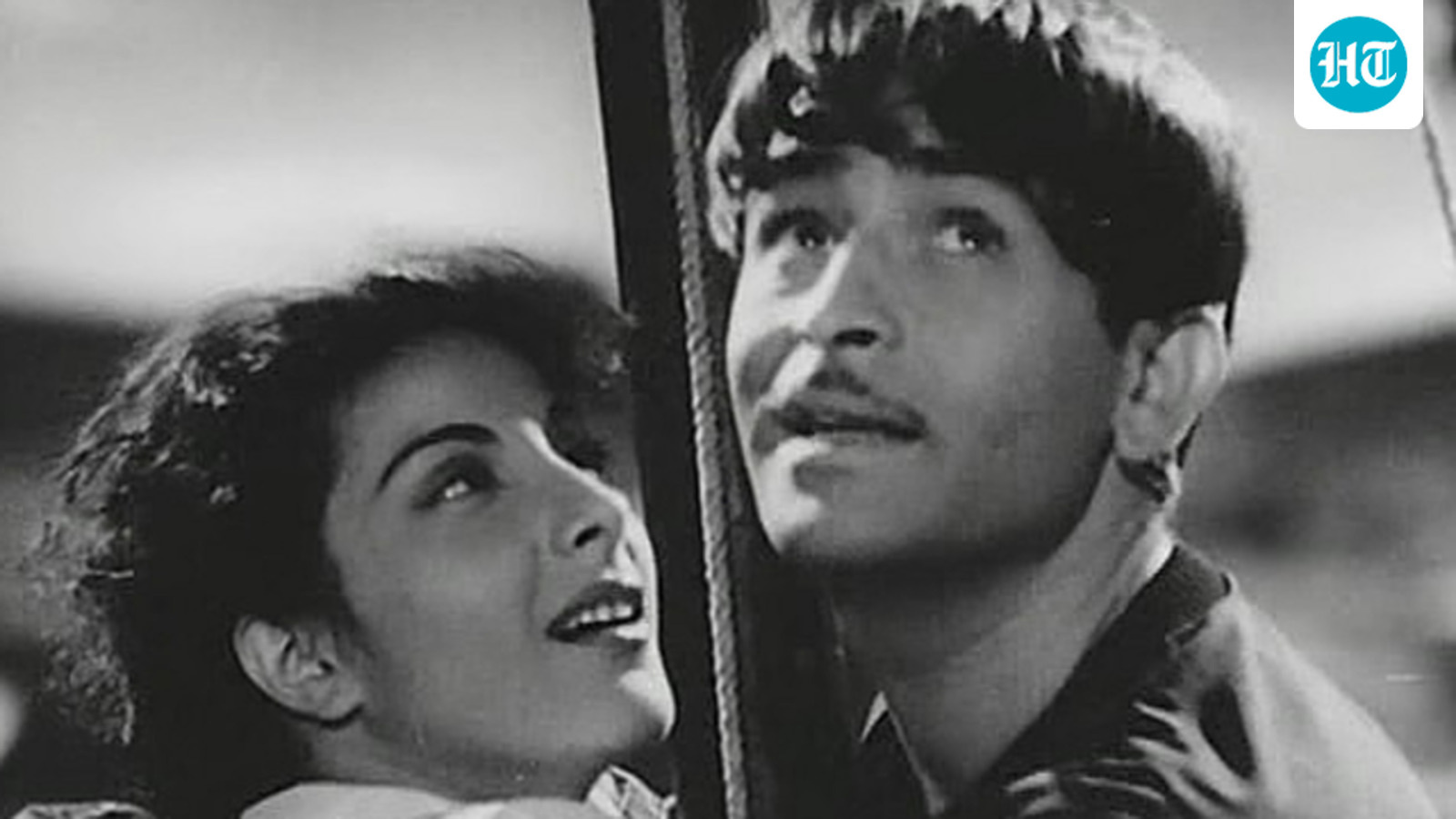
LOng before the linguistic communication of famous person civilisation set into public dealings and damage control, the lives of Bollywood’s leading actors unfolded with a porous intimacy, seeping into public consciousness. Their romances, especially those with fellow stars, were not merely private affairs. They became moral fables, cautionary tales, and wistful dreams, reflecting both the possibilities and constraints of their times. In revisiting the great personal romances of Bollywood’s leading actors, one is not indulging in gossip, but reading a parallel history of Indian modernity, written in longing, defiance, and compromise.Consider Dilip Kumar and Madhubala — perhaps the most tragic love story the industry has known. Here were two individuals who embodied the contradictions of post-Independence India. Dilip Kumar — cerebral, inward-looking, shaped by a rigorous moral seriousness — represented the emerging idea of the responsible citizen-artist. Madhubala — incandescent and instinctive — carried a spontaneity that was both enchanting and unsettling in a society still negotiating the limits of female autonomy. Their love, played out against the backdrop of films like Tarana, and the iconic Mughal-e-Azam, captivated millions, but along with the emotional intensity of their romantic scenes, there was also the beginnings of misunderstanding.Madhubala’s father, Ataullah Khan, was adamantly against the union. The diva herself was torn between her love for Dilip Kumar and her fealty to her father. In the end the affair was also marked by unfortunate acrimony, where a court case against Madhubala was filed for her withdrawal from the film Naya Daur, with Kumar testifying against her. It was also said later by the actress, Mumtaz, that Dilip Kumar had come to know of Madhubala’s congenital heart condition, which would prevent her from having children, which he wanted. Ultimately, in 1960, Dilip Kumar married Saira Banu. Ironically, in an otherwise happy marriage, they never had children. Madhubala later married Kishor Kumar, but died young due to her heart ailment.Raj Kapoor and Nargis symbolised something closer to a creative partnership that blurred the line between love and professional friendship. Together, they shaped the moral universe of early Hindi cinema. Raj Kapoor’s tramp — idealistic, vulnerable, stubbornly hopeful — found his emotional anchor in Nargis’s grounded femininity. Their off-screen relationship was widely acknowledged, though rarely discussed openly, existing in a tacit space between denial and acceptance. What makes their story compelling is not simply the romance itself, but how it was sublimated into art. Films like Shree 420 and Awaara, with immortal scenes like both of them shielding each other under an umbrella against the pouring rain, carry an emotional residue that feels too real to be fictional. And yet, when Raj Kapoor chose the security of marriage over the uncertainty of passion, it was Nargis who exited not only the relationship but also the studio that had defined her career.The romance between Dharmendra and Meena Kumari occupies a different emotional register altogether — one suffused with melancholy. By the time their paths crossed, Meena Kumari was already burdened by personal sorrow and professional exhaustion. Dharmendra, younger and still finding his place, brought with him a simplicity and warmth that promised solace, if not redemption. Their relationship, often inferred from their intense on-screen chemistry, carried the poignancy of two wounded people seeking a relationship. But Meena Kumari’s inner turbulence and Dharmendra’s own personal constraints meant that what might have been a healing companionship remained painfully incomplete. This was not a love story that burned brightly and then ended; it smouldered quietly, leaving behind an ache that both cinema and biography have struggled to articulate fully.What unites these romances is not scandal, but the constant negotiation between individual feeling and conventional morality. Bollywood, for all its glamour, has always been deeply conservative in its social structures. Leading men were often forgiven transgressions that would have destroyed the careers — and reputations — of women. Romantic liaisons were tolerated as long as they remained unacknowledged; the moment they threatened to destabilise the institution of marriage, they became cautionary tales. The emotional cost of this double standard is written into the lives of actresses who loved deeply but paid disproportionately.Yet these romances also reveal a quieter courage. To love openly, even imperfectly, in an era of intense scrutiny required a certain moral audacity. These were individuals who lived before the age of curated social media personas, when silence was often the only refuge. Their emotions, therefore, found expression not in interviews but in performances. The trembling restraint of Dilip Kumar, the luminous vulnerability of Madhubala, the aching dignity of Nargis, the bruised sensitivity of Meena Kumari — these were not merely acting choices. They were emotional truths, refined by lived experience.In contemporary Bollywood, romance between coactors is carefully managed, its edges softened by publicists and brand endorsements. The earlier generation had no such buffers. Their loves were raw, enduring as legend not because they were perfect, but because they were human. In this human fragility lies their power. They compel us to recognise that behind the carefully lit frames of classic cinema were men and women grappling with the same eternal dilemma: how to honour the heart without betraying the world that surrounds it.(Pavan K Varma is an author, diplomat, and former Rajya Sabha MP. The views expressed are personal.)

Global News Perspectives
In today's interconnected world, staying informed about global events is more important than ever. ZisNews provides news coverage from multiple countries, allowing you to compare how different regions report on the same stories. This unique approach helps you gain a broader and more balanced understanding of international affairs. Whether it's politics, business, technology, or cultural trends, ZisNews ensures that you get a well-rounded perspective rather than a one-sided view. Expand your knowledge and see how global narratives unfold from different angles.
Customizable News Feed
At ZisNews, we understand that not every news story interests everyone. That's why we offer a customizable news feed, allowing you to control what you see. By adding keywords, you can filter out unwanted news, blocking articles that contain specific words in their titles or descriptions. This feature enables you to create a personalized experience where you only receive content that aligns with your interests. Register today to take full advantage of this functionality and enjoy a distraction-free news feed.
Like or Comment on News
Stay engaged with the news by interacting with stories that matter to you. Like or dislike articles based on your opinion, and share your thoughts in the comments section. Join discussions, see what others are saying, and be a part of an informed community that values meaningful conversations.
Download the Android App
For a seamless news experience, download the ZisNews Android app. Get instant notifications based on your selected categories and stay updated on breaking news. The app also allows you to block unwanted news, ensuring that you only receive content that aligns with your preferences. Stay connected anytime, anywhere.
Diverse News Categories
With ZisNews, you can explore a wide range of topics, ensuring that you never miss important developments. From Technology and Science to Sports, Politics, and Entertainment, we bring you the latest updates from the world's most trusted sources. Whether you are interested in groundbreaking scientific discoveries, tech innovations, or major sports events, our platform keeps you updated in real-time. Our carefully curated news selection helps you stay ahead, providing accurate and relevant stories tailored to diverse interests.

No comments yet.