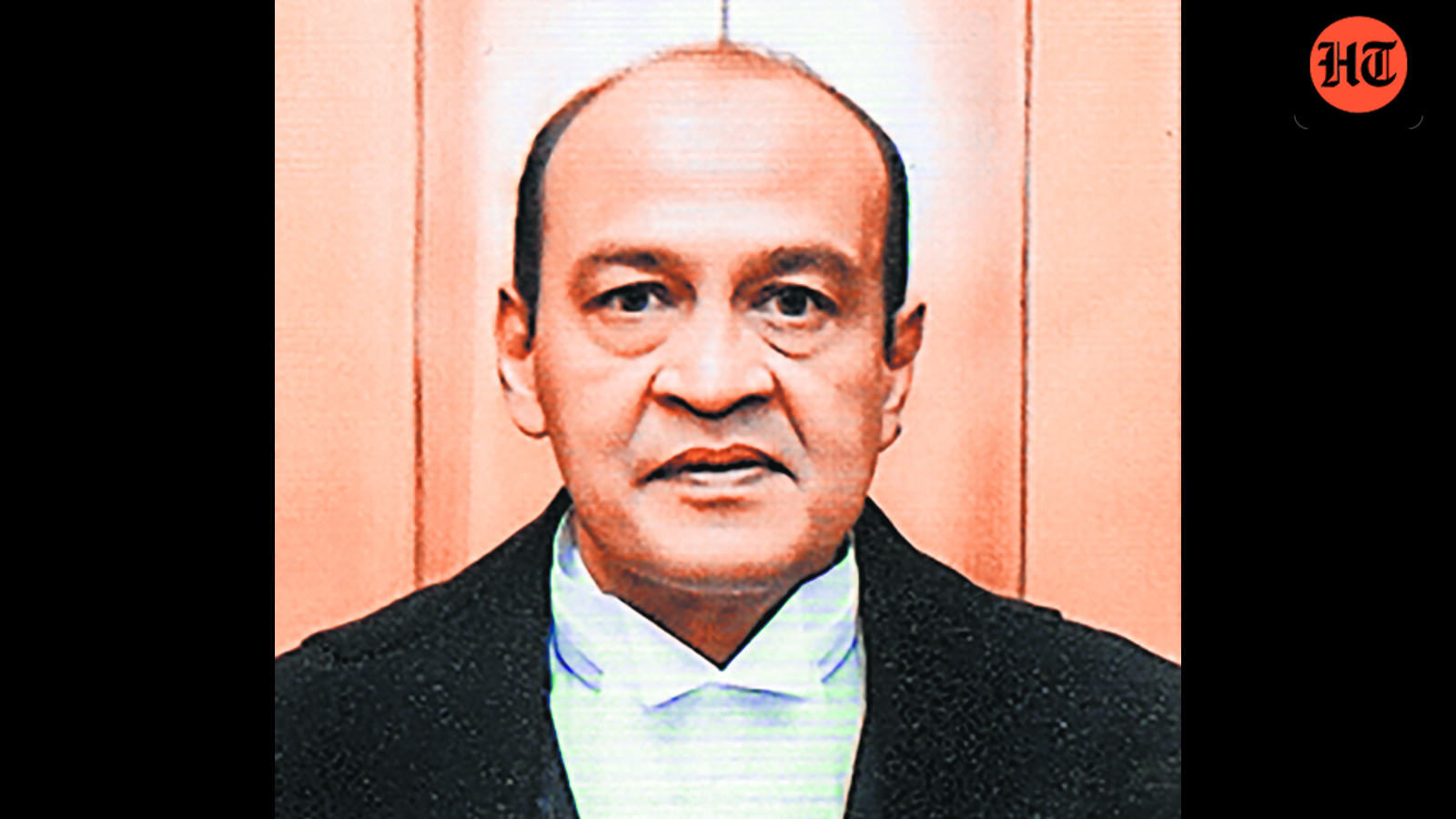
HOlding that “constitutional safeguards for book of judges cannot amount at the be of paralysing the remotion treat itself”, the Supreme Court on Thursday dismissed a petition filed by Allahabad High Court judge Justice Yashwant Varma against the Lok Sabha Speaker’s decision to initiate impeachment proceedings against him following reports of unaccounted cash found at his official residence in Delhi last year.A bench of justices Dipankar Datta and Satish Chandra Sharma cleared the decks for the three-member inquiry committee constituted by the Lok Sabha Speaker under the Judges (Inquiry) Act, 1968, to proceed and held that Justice Varma failed to establish a case for “present or inevitable infraction of any fundamental right”.The court rejected all contentions raised by Justice Varma, ruling that neither the refusal of the Rajya Sabha to admit a removal motion nor the vacancy in the office of its chairman could stall or invalidate the Speaker of the Lok Sabha’s decision to constitute an inquiry committee under the 1968 Act.Justice Varma has assailed the impeachment process initiated against him following the alleged discovery of cash at his official residence in Delhi after a fire in March 2025, when he was a judge of the Delhi High Court. A Supreme Court in-house inquiry panel subsequently found his explanation unsatisfactory, prompting then Chief Justice of India Sanjiv Khanna to recommend action to the Prime Minister and the President.Subsequently, notices seeking his removal were moved in both the Lok Sabha and the Rajya Sabha on July 21, 2025. While the Lok Sabha Speaker admitted the motion on August 12 and constituted a three-member inquiry committee, the Rajya Sabha deputy chairman , soon after the then chairman and Vice- President Jagdeep Dhankar resigned, declined to admit the motion, holding it to be defective. The three-member inquiry committee constituted by the Lok Sabha Speaker comprises Supreme Court’s Justice Aravind Kumar, Madras high court’s chief justice Manindra Mohan Srivastava, and senior advocate BV Acharya.At the heart of the judge’s legal challenge is the interpretation of the first proviso to Section 3(2) of the Judges (Inquiry) Act, which Justice Varma argued mandated the constitution of a joint committee whenever removal motions were moved in both Houses on the same day.Rejecting Justice Varma’s contention, the court held that the proviso applied only to a “specific and limited situation” where motions given in both Houses are admitted in both Houses. It warned that accepting the petitioner’s interpretation, would amount to “judicial legislation” and lead to grave consequences since nothing in the Act suggested that rejection of a motion in one House rendered the other House incompetent to proceed. Such an interpretation, it said, would produce “absurd results” by making the autonomy of one House contingent on the decision of the other even at the admission stage.The court squarely rejected the argument that the proviso was intended to provide heightened protection to judges by ensuring that impeachment proceedings must fail if either House declines to admit a motion.“In our view, the protection afforded to a Judge remains fully intact,” the bench said, noting that even after an inquiry report is submitted, both Houses retain absolute authority to accept or reject the motion by the constitutionally mandated special majority.“Constitutional safeguards for Judges cannot come at the cost of paralysing the removal process itself,” the court held, adding that the proviso must be construed to balance judicial protection with the effective functioning of the removal mechanism triggered by elected representatives.The court also rejected Justice Varma’s challenge to the authority of the deputy chairman of the Rajya Sabha to refuse admission of the motion during the vacancy in the office of the chairman following the resignation of VP Dhankar.“We unhesitatingly hold that the deputy chairman was competent to consider the notice and refuse admission of the motion,” said the bench, relying on constitutional principles to fill statutory gaps and observing that vacancy in a constitutional office cannot bring parliamentary functioning to a standstill.The court further underlined that members of the Lok Sabha who initiated the motion were exercising a constitutional responsibility under Article 124(4). “Upon valid admission of their motion by the Speaker, they acquired a statutory entitlement to have the matter examined by a duly constituted committee,” it said, cautioning that nullifying this entitlement due to assumed infirmities in the other House would curtail the participatory rights of elected representatives “without statutory warrant”.Declining the argument of prejudice, the bench held that once a committee is lawfully constituted, the statute itself provides “elaborate safeguards” including framing of charges, opportunity of defence, cross-examination of witnesses, and adjudication by senior constitutional functionaries.Court flags concern over Rajya Sabha SecretariatEven as it upheld the deputy chairman’s decision, the Supreme Court expressed serious reservations about the role played by the Rajya Sabha secretariat in declaring the notice of motion “not in order”.As reported exclusively by Hindustan Times on January 9, parliamentary records submitted to the Supreme Court revealed that Rajya Sabha secretary general PC Mody had, in a detailed opinion dated August 11, 2025, flagged multiple legal, procedural and factual infirmities in the notice moved by Opposition MPs in the Upper House.While acknowledging that the notice met the numerical threshold under the Judges (Inquiry) Act, Mody concluded that it was “not in order” and “non est” (it is not) , citing incorrect invocation of statutory provisions, lack of authenticated supporting material, and factual inconsistencies, including an apparent reference to events predating the fire incident itself. Acting on this opinion, deputy chairman Harivansh formally declined to admit the motion and communicated the decision to the Lok Sabha secretariat.The court did not agree with Mody’s opinion. “We are unable to find a clear legal basis for the course of action adopted by the secretary general,” said the court, noting that the secretariat appeared to have gone beyond administrative scrutiny and assumed a quasi-adjudicatory role.“There is no prescribed format for a notice of motion…A notice could not reasonably be treated as ineffective solely on account of perceived deficiencies in drafting or form. The role of the Secretary General was confined to placing the notice before the competent authority, namely, the office of the Chairman, without expressing any conclusion as to its admissibility,” the judgment said.The bench clarified that these observations were purely academic and would not affect the validity of the deputy chairman’s decision, but expressed hope that in future cases, “no judge faces proceedings for his removal from service on allegations of misbehaviour”, and in such eventualities, the secretariat would “exercise restraint” and leave admissibility decisions to the speaker or chairman.Finally, the court held that Justice Varma was not entitled to relief under Article 32, observing that the extraordinary jurisdiction of the Supreme Court is confined to enforcement of fundamental rights and does not extend to issuing corrective directions in relation to internal parliamentary mechanisms where no present or inevitable violation is shown.

Global News Perspectives
In today's interconnected world, staying informed about global events is more important than ever. ZisNews provides news coverage from multiple countries, allowing you to compare how different regions report on the same stories. This unique approach helps you gain a broader and more balanced understanding of international affairs. Whether it's politics, business, technology, or cultural trends, ZisNews ensures that you get a well-rounded perspective rather than a one-sided view. Expand your knowledge and see how global narratives unfold from different angles.
Customizable News Feed
At ZisNews, we understand that not every news story interests everyone. That's why we offer a customizable news feed, allowing you to control what you see. By adding keywords, you can filter out unwanted news, blocking articles that contain specific words in their titles or descriptions. This feature enables you to create a personalized experience where you only receive content that aligns with your interests. Register today to take full advantage of this functionality and enjoy a distraction-free news feed.
Like or Comment on News
Stay engaged with the news by interacting with stories that matter to you. Like or dislike articles based on your opinion, and share your thoughts in the comments section. Join discussions, see what others are saying, and be a part of an informed community that values meaningful conversations.
Download the Android App
For a seamless news experience, download the ZisNews Android app. Get instant notifications based on your selected categories and stay updated on breaking news. The app also allows you to block unwanted news, ensuring that you only receive content that aligns with your preferences. Stay connected anytime, anywhere.
Diverse News Categories
With ZisNews, you can explore a wide range of topics, ensuring that you never miss important developments. From Technology and Science to Sports, Politics, and Entertainment, we bring you the latest updates from the world's most trusted sources. Whether you are interested in groundbreaking scientific discoveries, tech innovations, or major sports events, our platform keeps you updated in real-time. Our carefully curated news selection helps you stay ahead, providing accurate and relevant stories tailored to diverse interests.

No comments yet.