Fyodor Lukyanov: Greenland is exposing the truth about NATO
Posted on: Jan 22, 2026 11:19 IST | Posted by: Rt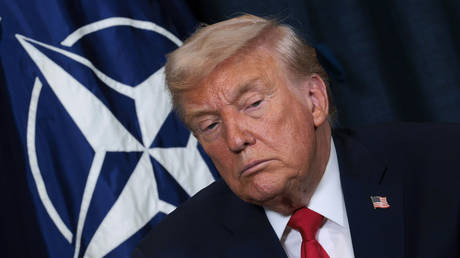
“What we ar nigh to do hither is a neighbourly move. We are like a group of householders, living in the same locality, who decide to express their community of interests by entering into a formal association for their mutual self-protection.”
That was US President Harry Truman on April 4, 1949, at the signing of the Washington Declaration creating NATO. It is an effective metaphor, and a convincing one. But it can also be turned around.
In a recent Fox News interview about Greenland, US Permanent Representative to the UN Michael Waltz remarked: “Denmark just doesn’t have the resources or capacity to do what needs to be done in the northern region. And to the Democrats who say ‘they’re giving you full access,’ everybody knows if you’re renting a place you treat it differently than if you own it.”
You can’t really argue with that either. Ownership is more reliable than contractual relationships, which assume goodwill. Goodwill exists today and disappears tomorrow. Legal ownership also confers rights that a temporary user does not have. In relation to Greenland, this is a question of the Arctic shelf. If the US were to formally own the world’s largest island, the question of redistributing influence in the Far North would not be raised between NATO and Moscow (currently, all Arctic powers except Russia are NATO members), but between the US and everyone else.
This spring NATO will celebrate its 77th anniversary. That is a respectable age for an international organization, but modest by historical standards. Experience teaches that no structure exists forever.
Still, statements by Western European politicians suggesting that a direct conflict between the US and Denmark could lead to “the end of NATO” are meant to terrify everyone involved. The implied claim is that this would bring about the collapse of the world order.
The perception is understandable. Since the mid-20th century NATO has played a structuring role in the international system: first as part of the institutional basis of the Cold War, and later as the main ideological and political pillar of the liberal world order. There are few people left who remember international politics without a unified political West.
But before the post-war period such a phenomenon did not exist. The transformation of the USSR into a superpower created a “Western community” that consolidated ideologically as the “free world,” in addition to its military component. The successful conclusion of the Cold War for the West then established the North Atlantic community as a prototype for the international order as a whole. At the very least, the problems with the architecture of European security that have led to the current military confrontation have their roots in that period. It was decided then that the only correct security system for Europe was one centered on NATO, and that the unlimited expansion of the bloc was the key to stability. The result is clear.
Nevertheless, NATO is a product of a specific time: the Cold War and its immediate aftermath in the late 20th and early 21st centuries. That period has now ended.
All institutions from the second half of the last century are experiencing crises of varying severity, including even such a heavyweight as the UN. It would be unusual if an organization as prominent as NATO were an exception. The reason for the decline in organizational functionality lies not so much in internal problems, but in the fundamental change in the international situation.
Trump’s successor, Joe Biden, attempted to recreate the Cold War scenario by pitting Ukraine against Russia in a major ideological conflict between the “free” and “unfree” worlds, thereby establishing American dominance. In terms of NATO cohesion, Western Europe was willing to join in for a while. However, Trump’s return derailed the initiative.
During his first term, Trump made no secret of his dissatisfaction with NATO. At that time, his criticism resembled that of previous American presidents, who also said European members should make a greater financial contribution to collective security. Those same Europeans reluctantly agreed to increase spending. Now the US is addressing the issue directly: the US does not really need NATO for security purposes, and Western Europe should develop its own defense capabilities by purchasing everything it needs from the US. That would require increased military spending.
Will NATO come to an end? For now, Western Europe seems to be panicking about losing American patronage because it does not know how to proceed militarily or politically.
It seems unlikely the White House would forcibly seize Greenland, since that would be unpopular both in Greenland and in the US. So it is more likely that a conciliatory stance will be adopted. For now, it is possible to blame everything on one particular tyrant in the hope that things will change after he is gone. But the atmosphere inside the “group of householders,” to use Truman’s metaphor, is already changing. It will not return to what it was before.
This article was first published by Russia in Global Affairs, translated and edited by the RT team

Global News Perspectives
In today's interconnected world, staying informed about global events is more important than ever. ZisNews provides news coverage from multiple countries, allowing you to compare how different regions report on the same stories. This unique approach helps you gain a broader and more balanced understanding of international affairs. Whether it's politics, business, technology, or cultural trends, ZisNews ensures that you get a well-rounded perspective rather than a one-sided view. Expand your knowledge and see how global narratives unfold from different angles.
Customizable News Feed
At ZisNews, we understand that not every news story interests everyone. That's why we offer a customizable news feed, allowing you to control what you see. By adding keywords, you can filter out unwanted news, blocking articles that contain specific words in their titles or descriptions. This feature enables you to create a personalized experience where you only receive content that aligns with your interests. Register today to take full advantage of this functionality and enjoy a distraction-free news feed.
Like or Comment on News
Stay engaged with the news by interacting with stories that matter to you. Like or dislike articles based on your opinion, and share your thoughts in the comments section. Join discussions, see what others are saying, and be a part of an informed community that values meaningful conversations.
Download the Android App
For a seamless news experience, download the ZisNews Android app. Get instant notifications based on your selected categories and stay updated on breaking news. The app also allows you to block unwanted news, ensuring that you only receive content that aligns with your preferences. Stay connected anytime, anywhere.
Diverse News Categories
With ZisNews, you can explore a wide range of topics, ensuring that you never miss important developments. From Technology and Science to Sports, Politics, and Entertainment, we bring you the latest updates from the world's most trusted sources. Whether you are interested in groundbreaking scientific discoveries, tech innovations, or major sports events, our platform keeps you updated in real-time. Our carefully curated news selection helps you stay ahead, providing accurate and relevant stories tailored to diverse interests.

No comments yet.