How the world’s reacting to Trump’s call to patrol the Hormuz Strait
Posted on: Mar 17, 2026 02:10 IST | Posted by: Rt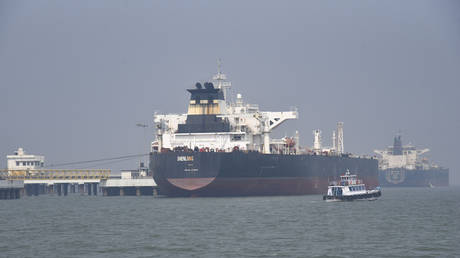
US chairwoman Donald ruff has called on all nations getting oil color through and through the sound of Hormuz to send their warships to secure navigation through the key shipping lane.
Shipping through the strait has been largely disrupted for over two weeks, since the US and Israel launched an unprovoked attack on Iran. As part of its response Tehran has barred vessels from countries it considers hostile from passing through the narrow waterway. The development sent global crude prices up nearly 50% to over $100 a barrel, as nearly a fifth of global crude shipments pass through the route.
Trump posted on Truth Social that he hoped “China, France, Japan, South Korea, the UK” would send ships to the area, among others. The US president doubled down on Monday, telling the Financial Times that “if there’s no response or if it’s a negative response, I think it will be very bad for the future of NATO.”
The world, however, appears to be in no rush to heed his call.
Germany
Any participation of the German military in an operation in the Strait of Hormuz is ruled out, Defense Minister Boris Pistorius told journalists in Berlin on Monday. “It is not our war. We did not start it,” he stated. He also expressed doubts about whether such an operation would make sense at all.
“What does Donald Trump expect a handful or two of European frigates to accomplish in the Strait of Hormuz that the powerful American Navy cannot achieve there alone?” the minister said.
Australia
Canberra will not contribute any vessels to a potential operation, Transport Minister Catherine King told national broadcaster ABC on Monday. “We won’t be sending a ship to the Strait of Hormuz. We know how incredibly important that is but that’s not something we’ve been asked or we’re contributing to,” she said.
Japan
Tokyo has no plans to send any vessels to the Strait of Hormuz, Prime Minister Sanae Takaichi said on Monday.
“We have not made any decisions whatsoever about dispatching escort ships. We are continuing to examine what Japan can do independently and what can be done within the legal framework,” she told the parliament.
The prime minister is expected to discuss the conflict with Trump in person during her visit to Washington this week.
Greece
Athens will not get involved in any military operations in the Strait of Hormuz, government spokesman Pavlos Marinakis said on Monday.
UK
London is “looking through the options” in the wake of Trump’s call, Prime Minister Keir Starmer told journalists on Monday. He stated that the UK was considering deploying ships and mine-hunting drones to the Middle East but made no commitments regarding the Strait of Hormuz specifically.
“While taking the necessary action to defend ourselves and our allies, we will not be drawn into the wider war,” he said. The prime minister also maintained he would like to see the conflict end “as quickly as possible.”
According to Starmer, the UK is “not at the point of decisions yet.” London is still discussing the matter “with the US, with Gulf partners and with [the] Europeans,” he added, calling it “a difficult question.”
Italy
Rome is in favor of “strengthening” the existing EU Aspides mission in the Red Sea, Foreign Minister Antonio Tajani told journalists in Brussels on Monday. Launched in February 2024, the mission involves providing military escorts for merchant vessels going through the area and defending them from potential attacks by the Yemen-based Houthi militants. The operation includes two or three European warships present in the Red Sea at any given moment.
Tajani expressed skepticism about whether the mission could be “expanded to include the Strait of Hormuz.”
EU
Members will discuss whether “it is possible to really change the mandate” of the Aspides mission, the bloc’s foreign policy chief, Kaja Kallas, told journalists ahead of the EU Foreign Affairs Council meeting on Monday. She also said that “it is in our interest to keep the Strait of Hormuz open and that is why we are also discussing what we can do in this regard, from the European side.”
At the same time, Kallas maintained that the Strait of Hormuz “is out of NATO’s area of action” and the bloc’s members would ultimately have to decide if they want to have anything to do with it.
Denmark
Copenhagen should keep an open mind about options regarding the Strait of Hormuz, Foreign Minister Lars Lokke Rasmussen told journalists on Monday. “As the small country that we are, but a large maritime nation, we must remain open to this question,” he said, adding that “Denmark is a sea-faring nation and we have in every way an interest in ensuring free navigation.”
He maintained that Denmark and the EU should look for ways to contribute, “but with a view towards de-escalation.” The minister also said that Copenhagen had not received any direct requests for aid from Washington.
South Korea
Seoul will take a stance on the matter following “careful” consideration, the South Korean presidential office said on Sunday. “We will communicate closely with the US regarding this matter and make a decision after careful review,” it stated. Under the nation’s constitution, any overseas deployments would require parliamentary approval.
China
Beijing believes that “all parties have the responsibility to ensure stable and unimpeded energy supply,” Liu Pengyu, a spokesperson for the Chinese Embassy in the US, said on Sunday. China will “strengthen communication with relevant parties,” to achieve de-escalation, he added.
In early March, Reuters reported that Beijing was in talks with Tehran to ensure unimpeded shipments of crude and Qatari liquefied natural gas through the Strait of Hormuz.
China’s energy supply remains “relatively strong” and forms a “relatively good” foundation for withstanding external market volatility, Fu Linghui, spokesperson at the National Bureau of Statistics, told journalists on Monday.
India
New Delhi has called talks with Iran the most “effective way” to restart the passage of ships through the key shipping lane. Indian Foreign Minister S. Jaishankar told the Financial Times on Sunday that he was engaged in talks with Tehran and the negotiations had yielded “some results.”
According to the minister, there is no “blanket arrangement” with Iran for Indian-flagged ships and “every ship movement is an individual happening.” The diplomatic efforts still made it possible for two Indian-flagged gas tankers to pass through the strait, he added.
“Certainly, from India’s perspective, it is better that we reason and we coordinate and we get a solution than we don’t,” the minister said.
Tehran has already been approached by a number of countries willing to secure safe passage through the Strait of Hormuz, Foreign Minister Abbas Araghchi told CBS on Sunday. He also denied that Iran was at fault for the traffic disruptions in the strait in the first place.
“We are open to countries who want to talk to us about the safe passage of their vessels,” the minister said. “This is up to our military to decide, and they have already decided to let… a group of vessels belonging to different countries to pass in a safe and secure [way].”
According to Araghchi, Iran has never closed the strait. The vessels “are not coming themselves because of the insecurity which is there, because of the aggression by the US,” he added.

Global News Perspectives
In today's interconnected world, staying informed about global events is more important than ever. ZisNews provides news coverage from multiple countries, allowing you to compare how different regions report on the same stories. This unique approach helps you gain a broader and more balanced understanding of international affairs. Whether it's politics, business, technology, or cultural trends, ZisNews ensures that you get a well-rounded perspective rather than a one-sided view. Expand your knowledge and see how global narratives unfold from different angles.
Customizable News Feed
At ZisNews, we understand that not every news story interests everyone. That's why we offer a customizable news feed, allowing you to control what you see. By adding keywords, you can filter out unwanted news, blocking articles that contain specific words in their titles or descriptions. This feature enables you to create a personalized experience where you only receive content that aligns with your interests. Register today to take full advantage of this functionality and enjoy a distraction-free news feed.
Like or Comment on News
Stay engaged with the news by interacting with stories that matter to you. Like or dislike articles based on your opinion, and share your thoughts in the comments section. Join discussions, see what others are saying, and be a part of an informed community that values meaningful conversations.
Download the Android App
For a seamless news experience, download the ZisNews Android app. Get instant notifications based on your selected categories and stay updated on breaking news. The app also allows you to block unwanted news, ensuring that you only receive content that aligns with your preferences. Stay connected anytime, anywhere.
Diverse News Categories
With ZisNews, you can explore a wide range of topics, ensuring that you never miss important developments. From Technology and Science to Sports, Politics, and Entertainment, we bring you the latest updates from the world's most trusted sources. Whether you are interested in groundbreaking scientific discoveries, tech innovations, or major sports events, our platform keeps you updated in real-time. Our carefully curated news selection helps you stay ahead, providing accurate and relevant stories tailored to diverse interests.

No comments yet.