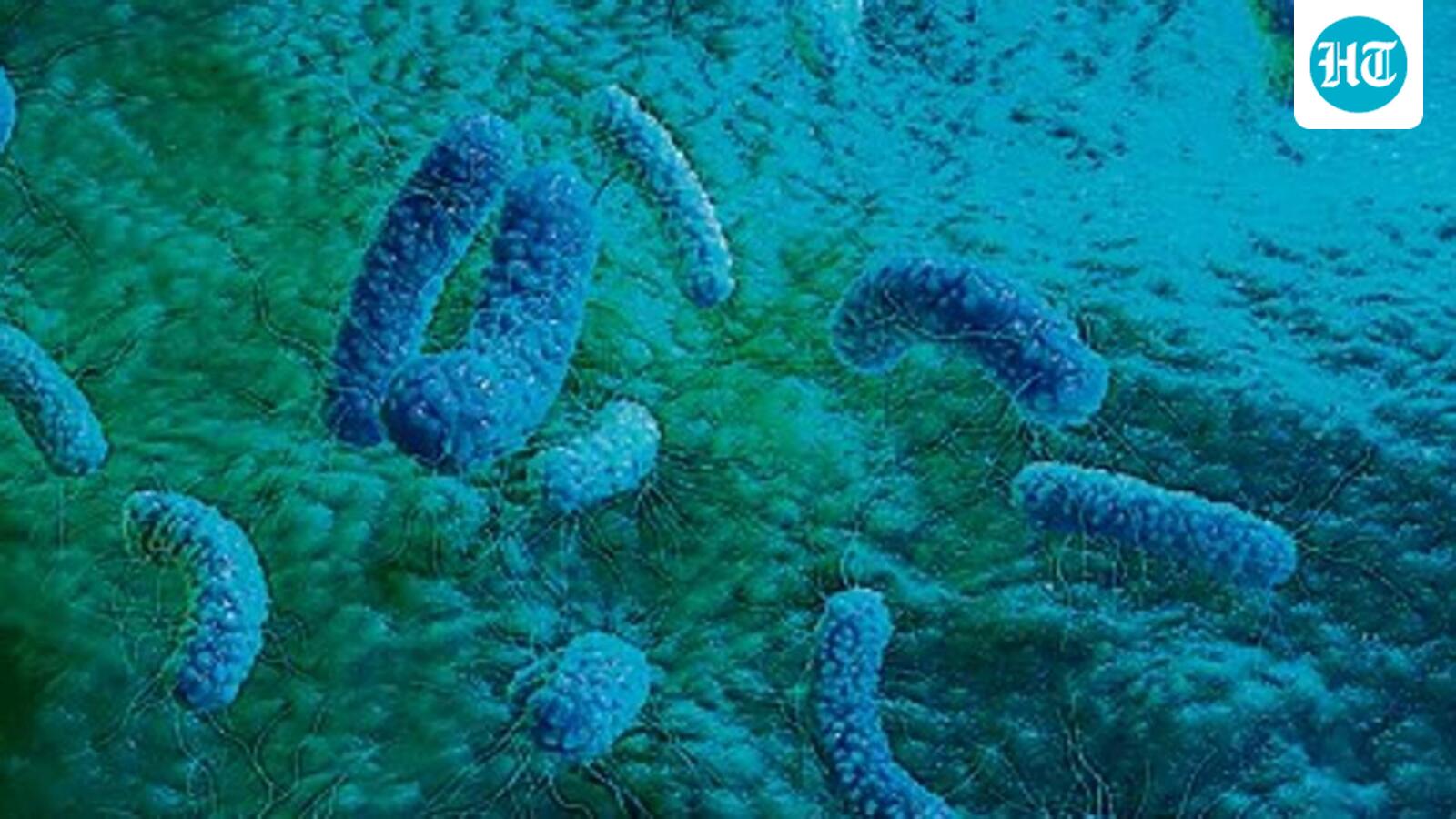
ABingle typewrite of bacterium in the gut tin cramp remembering in mice, and removing its influence can restore it. That is the main finding of a large new study published recently in Nature. The work was done entirely in mice, but what makes it unusual among microbiome studies is the completeness of the explanation. The researchers traced each step of the process: from a specific microbe, through a molecular signal, an immune response and a nerve pathway, all the way to measurable changes in the brain region where memories are formed.Memory loss is part of growing old, yet it strikes unevenly. Some people remain sharp into their nineties while others falter in their fifties. Most explanations of mental decline focus on the brain itself. Shrinking tissue, reduced blood flow, damaged neurons and the buildup of toxic proteins have all been blamed. The new study asks whether part of the answer lies outside the brain entirely, in microbes all the way down in the gut.Experiments like these are done in mice for good reasons. Researchers can control the animals’ genetics, diet, and environment precisely, and they can manipulate gut bacteria in ways that would be impossible in people. They can raise animals in germ-free conditions, transplant entire microbial communities from one animal to another, or colonize an empty gut with a single species of bacteria. These experiments let scientists test whether a given microbe actually causes a change in the brain.The experiments began by letting young mice pick up microbes from older animals. Mice share bacteria freely through their environment, and within a month of living together the gut microbes of young animals came to resemble those of their elderly cagemates. Mice constantly groom themselves, share bedding and food, and leave microbes behind wherever they move, so bacteria spread easily from one animal to another. The young mice then performed poorly on memory tasks. They showed less curiosity about unfamiliar objects and struggled to learn the escape route in a maze. In effect, they had caught forgetfulness via microbes from older mice.Also Read: Scientifically Speaking: Fake scientific research on the rise, says studyThe researchers needed to rule out an alternate explanation that living with older animals stressed the younger mice or changed their behavior. When the same experiment was repeated under germ-free conditions, with neither young nor old mice carrying gut bacteria, the young animals retained their full mental abilities. Germ-free mice that aged to eighteen months without ever acquiring gut bacteria also showed little of the expected memory decline. Their minds remained nearly as sharp as those of young animals.Among the hundreds of microbial species that shift in abundance with age, one stood out. A bacterium called Parabacteroides goldsteinii becomes more common as mice grow old. Introducing this single species into the guts of young mice was enough to weaken their memory and reduce activity in the hippocampus, the brain region responsible for recording new experiences.As P. Goldsteinii spreads, it produces chemicals known as medium-chain fatty acids. These chemicals trigger immune cells in the intestinal lining, leading to a local inflammatory response. Inflammation is the immune system’s alarm signal, normally used to fight infection, but here it had an unintended side effect.That inflammation weakens signaling along the vagus nerve, the long bundle of fibers that carries information from the gut to the brain. The vagus nerve acts like a communication cable linking the intestine with the brainstem and deeper brain regions. When the signal along that cable weakens, the message arriving in the brain grows fainter. With the vagus nerve impaired, the hippocampus receives less input and forms memories less effectively.Also Read: Scientifically Speaking: A heart drug disguised as a weight-loss injectionWhen the researchers stimulated the vagus nerve directly in old mice, their memory performance became similar to that of young mice in the tests. Blocking the immune receptor that triggers inflammation had a similar effect. So did capsaicin, the compound that gives chili peppers their heat, which activates sensory neurons along the same pathway. Even a two-week course of antibiotics restored memory in young mice carrying old microbiomes.In the mice, at least, the system behaved less like irreversible damage and more like a dimmer switch that could be turned up again.The researchers describe what is happening as a failure of the body’s ability to sense what is going on inside itself, a process scientists call interoception. We know that aging dulls our outward senses. Eyes need glasses and ears need hearing aids. This work suggests that the body’s inward senses fade too, and that when the gut’s communication with the brain weakens, mental abilities suffer.All of this works in mice. The question is whether any of it applies to people. There are reasons for cautious optimism. The vagus nerve, the hippocampus, and the studied immune receptor all exist in humans and perform similar functions. Vagus nerve stimulation is already approved for treating depression and epilepsy.Also Read: Scientifically Speaking: The gene in rice that could cut use of fertilizersAt the same time, cognitive aging in humans isn’t a simple process. It is the effect of dozens of interacting processes, and a single bacterium is unlikely to explain much of the variation. The human microbiome is far more diverse and variable than that of lab mice that are fed identical diets in identical cages. Outside researchers have also noted that the scientific literature on Parabacteroides itself is inconsistent, with some studies associating it with harm and others with health. The research team is now investigating whether P. Goldsteinii abundance correlates with cognitive decline in human populations.The deeper implication is a rethink of how the aging brain works. We normally consider memory decline as something that happens inside the brain. This work indicates that there are other pieces of the puzzle. Some forms of mental decline might also be slowed or reversed not by treating the brain directly, but by restoring the conversation between the brain and the tiny microbes in the gut.Anirban Mahapatra is a scientist and author. His most recent book is When the Drugs Don’t Work. The views expressed are personal.

Global News Perspectives
In today's interconnected world, staying informed about global events is more important than ever. ZisNews provides news coverage from multiple countries, allowing you to compare how different regions report on the same stories. This unique approach helps you gain a broader and more balanced understanding of international affairs. Whether it's politics, business, technology, or cultural trends, ZisNews ensures that you get a well-rounded perspective rather than a one-sided view. Expand your knowledge and see how global narratives unfold from different angles.
Customizable News Feed
At ZisNews, we understand that not every news story interests everyone. That's why we offer a customizable news feed, allowing you to control what you see. By adding keywords, you can filter out unwanted news, blocking articles that contain specific words in their titles or descriptions. This feature enables you to create a personalized experience where you only receive content that aligns with your interests. Register today to take full advantage of this functionality and enjoy a distraction-free news feed.
Like or Comment on News
Stay engaged with the news by interacting with stories that matter to you. Like or dislike articles based on your opinion, and share your thoughts in the comments section. Join discussions, see what others are saying, and be a part of an informed community that values meaningful conversations.
Download the Android App
For a seamless news experience, download the ZisNews Android app. Get instant notifications based on your selected categories and stay updated on breaking news. The app also allows you to block unwanted news, ensuring that you only receive content that aligns with your preferences. Stay connected anytime, anywhere.
Diverse News Categories
With ZisNews, you can explore a wide range of topics, ensuring that you never miss important developments. From Technology and Science to Sports, Politics, and Entertainment, we bring you the latest updates from the world's most trusted sources. Whether you are interested in groundbreaking scientific discoveries, tech innovations, or major sports events, our platform keeps you updated in real-time. Our carefully curated news selection helps you stay ahead, providing accurate and relevant stories tailored to diverse interests.

No comments yet.