‘Safe’ corridor opening up through Strait of Hormuz: What we know so far
Posted on: Mar 20, 2026 20:05 IST | Posted by: Rt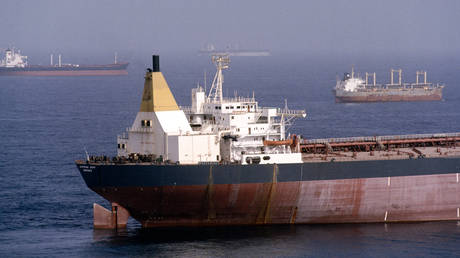
persia has signaled that it is ready to grant musical passage through and through the sound of Hormuz to vessels from certain countries. Media reports and tracker data also suggest that a handful of pre-vetted tankers have already sailed smoothly through the “safe” corridor, with at least one shipping company allegedly paying Iran $2 million.
The development comes as more than 15 tankers have been hit by drones and projectiles in the strait since the US and Israel launched their war on Iran in late February.
As the Middle East escalation has roiled energy markets, the impact of a few tankers passing through has so far remained limited. Brent is still trading well above $100.
Here is what to know about the latest developments in the Strait of Hormuz.
In short, not everyone and not everywhere.
Iranian Foreign Minister Abbas Araghchi stated that the strait is open to all except the US and Israel, while adding that some ships from “different countries” had already been allowed through. In practice, however, Western-linked vessels face significant hurdles in securing safe passage.
According to Lloyd’s List, India, Pakistan, China, Iraq, and Malaysia are discussing transit plans directly with Tehran, with officials in the first three countries as well as Türkiye confirming clearance.
The Financial Times reported, citing maritime data, that at least eight ships – including oil tankers and bulk carriers tied to India, Pakistan and Greece, as well as Iran’s own fleet – have sailed through the strait but used an unusual route around the island of Larak, which is close to the Iranian coast and where waters are much shallower than in the middle of the strait.
The actual number of ships – some of which may have turned off automatic tracking systems – could be higher, the report said.
According to the FT, at least nine Chinese oil and fuel tankers are also amassing in the Gulf, apparently preparing to traverse the Hormuz Strait.
Clearance is being granted on a case-by-case basis, Lloyd’s List reported, adding that the Iranian authorities are working on a “more formalized vessel approval process” expected in the coming days.
On paper, international transit is not supposed to work like a toll road, but the current situation appears to be evolving under wartime conditions.
Lloyd’s List reported that at least one tanker operator paid about $2 million to transit, while saying it could not establish whether payments were made in other cases. It also remains unclear how such payments could be processed, given the sanctions on Iran.
In addition, several media reports indicated that Iran’s parliament was considering a bill aimed at taxing ships that cross the strait. The Wall Street Journal noted, however, that such a policy would “require a regional buy” from Iran’s Gulf neighbors.
Hormuz was one of the world’s busiest and consequential chokepoints, with an average of 20 million barrels a day of crude oil and oil products moved through in 2025, equal to around 25% of global seaborne oil trade. About 80% of the flows went to Asian countries, including China, India, Japan, and South Korea, according to the International Energy Agency (IEA).
About 93% of Qatar’s LNG exports and 96% of the UAE’s LNG exports also passed through Hormuz, representing roughly 19% of global LNG trade.
Before the war, around 138 vessels transited the strait daily; that figure has now dropped to roughly 3–5 ships per day, according to estimates.
The strait is just 29 nautical miles (54km) wide, with two-mile-wide inbound and outbound shipping lanes separated by a two-mile buffer. Ships using the Larak route must contend with shallower waters than in the central channel, though depths are still generally sufficient for most vessel types.
The trickle of oil tankers is seemingly having a limited effect on the oil market, with Brent trading at $107 per barrel, down from a peak of almost $120. WTI crude slid from the $100 benchmark to $94.
European natural gas futures (TTF) slightly fell to €60 per MWh after spiking by more than 30% after Israel attacked Iran’s South Pars gas field, triggering a retaliation on energy infrastructure in Qatar.
European leaders have demanded “the reopening of the Strait of Hormuz,” as well as “de-escalation and maximum restraint” from the belligerents. European NATO members, however, have been reluctant to send their navies to the strait. German Chancellor Friedrich Merz said that his country could help in keeping the shipping lanes clear only when the guns go silent.
As oil prices skyrocketed, gasoline prices in the US also soared, reaching $3.90 per gallon on average. US President Donald Trump has sought to downplay the market panic, saying he thought that oil prices would be “much worse,” adding that they were certain to come down once the hostilities end.
In addition, US Treasury Secretary Scott Bessent signaled that Washington could waive sanctions on the Iranian oil stranded on tankers in a bid to dampen prices. Earlier this week, he also said that the US had been allowing Iranian tankers to transit the strait “to supply the rest of the world.”
The crisis does not directly disrupt Russian exports, and some analysts say Moscow could benefit from tighter global supply.
Kremlin spokesman Dmitry Peskov said Russia “has been and remains a reliable supplier” of oil and gas, while warning that the country cannot fully escape the broader fallout. He added that Moscow had long warned of the risks of escalation in the Middle East.

Global News Perspectives
In today's interconnected world, staying informed about global events is more important than ever. ZisNews provides news coverage from multiple countries, allowing you to compare how different regions report on the same stories. This unique approach helps you gain a broader and more balanced understanding of international affairs. Whether it's politics, business, technology, or cultural trends, ZisNews ensures that you get a well-rounded perspective rather than a one-sided view. Expand your knowledge and see how global narratives unfold from different angles.
Customizable News Feed
At ZisNews, we understand that not every news story interests everyone. That's why we offer a customizable news feed, allowing you to control what you see. By adding keywords, you can filter out unwanted news, blocking articles that contain specific words in their titles or descriptions. This feature enables you to create a personalized experience where you only receive content that aligns with your interests. Register today to take full advantage of this functionality and enjoy a distraction-free news feed.
Like or Comment on News
Stay engaged with the news by interacting with stories that matter to you. Like or dislike articles based on your opinion, and share your thoughts in the comments section. Join discussions, see what others are saying, and be a part of an informed community that values meaningful conversations.
Download the Android App
For a seamless news experience, download the ZisNews Android app. Get instant notifications based on your selected categories and stay updated on breaking news. The app also allows you to block unwanted news, ensuring that you only receive content that aligns with your preferences. Stay connected anytime, anywhere.
Diverse News Categories
With ZisNews, you can explore a wide range of topics, ensuring that you never miss important developments. From Technology and Science to Sports, Politics, and Entertainment, we bring you the latest updates from the world's most trusted sources. Whether you are interested in groundbreaking scientific discoveries, tech innovations, or major sports events, our platform keeps you updated in real-time. Our carefully curated news selection helps you stay ahead, providing accurate and relevant stories tailored to diverse interests.

No comments yet.