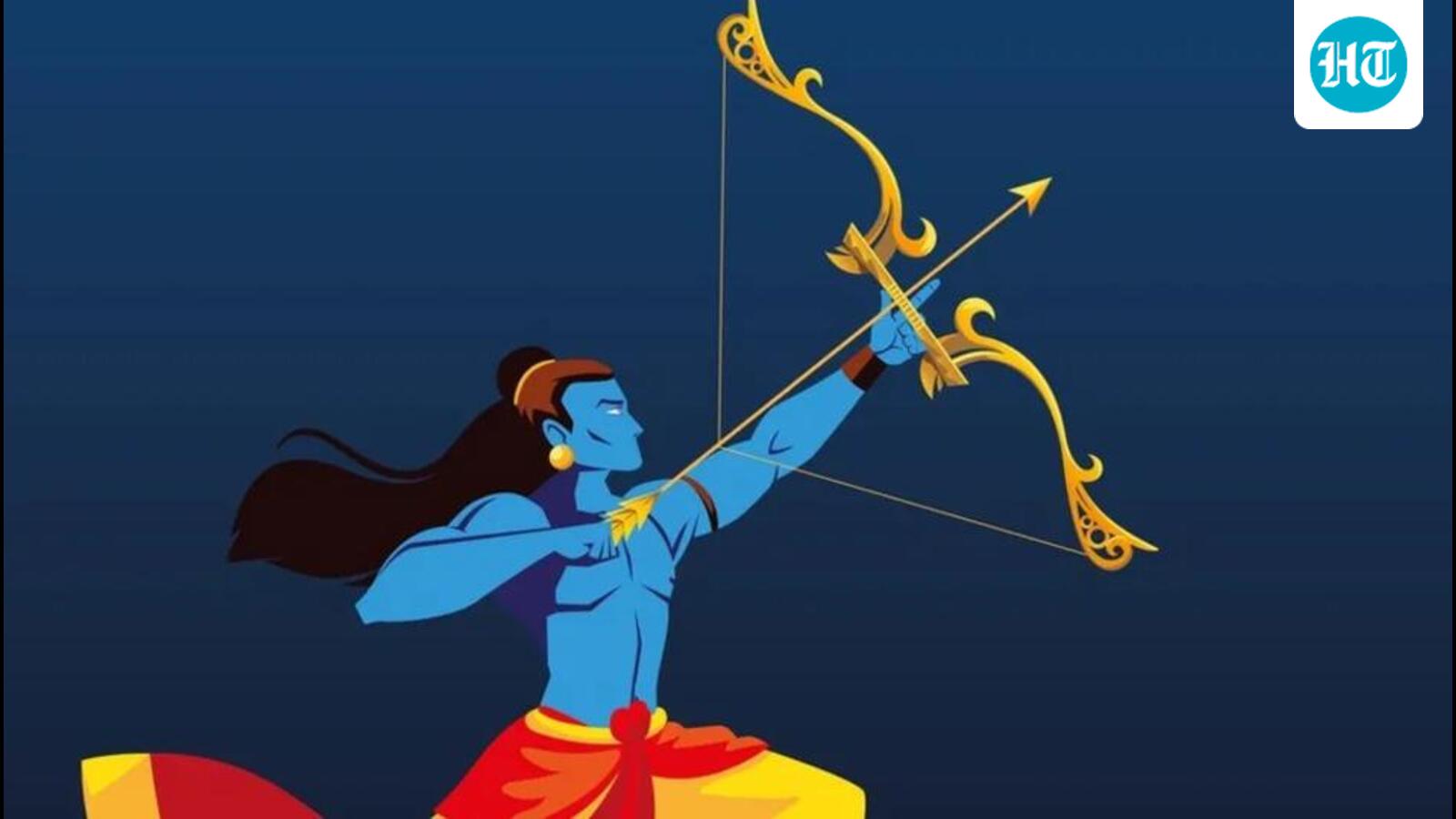
RAm Navami has simply been noted. On this occasion, my thoughts go to the attractively lyrical way of life in which Tulsidas (1532–1623), in the Ramcharitmanas, describes this iconic minute. Tulsi was a committed Ram bhakt. In fact, he was to Ram what Surdas was to Krishna. Anyone less than such a complete and unwavering devotee could not have written the Ramcharitmanas. The epic, written in Avadhi—an easily comprehensible language in north India—is still sung and recited by millions upon millions. The unprecedented popularity of the Manas led the historian Vincent Smith to call Tulsidas the greatest man of his age in India, greater even than Akbar himself, of whom the poet was a contemporary.Tulsidas describes the time and milieu of the Lord’s birth with precision and lyrical aplomb: Naumi tithi madhu maasa punita; Sakala paccha Abhijita Hariprita; Madhyadivasa ati seeta na ghaama; Pavana kala loka bishramaIt was the ninth day of the waxing moon (sakala—bright half) of the sacred month of Chaitra; the moon had entered the asterism named Abhijit, which is so dear to Hari; it was midday, when it is neither too hot nor too cold; the entire ambience was imbued with holiness, and people felt serene and at rest.In the further chaupais on the birth of Shri Ram, Tulsi weaves in several complex thoughts and emotions. The poet begins by setting the mood, elaborating on how the time of the birth was most auspicious and had the blessings of all the gods. The atmosphere was one of joy and celebration, and the entire cosmos was vibrating with the imminence of the emergence of the Lord.When Shri Ram is born, the first two qualities that Tulsi ascribes to him are mercy and compassion. Bhai prakat kripala, deen dayala, Kaushalya hitkari, he writes. ‘Kripala’ is one who is kind, benevolent, and humane. ‘Deen dayala’ means the saviour of the weak and vulnerable.In later verses, Tulsi consistently associates these virtues with Ram. When Lakshman asks Ram for a definition of dharma, the Lord replies: Par hita sarisa dharam nahi bhai; Para peeda sam nahi athamai (There is no greater dharma than the benefit of others, and no greater sin than causing injury to others).To return to the birth, Tulsidas, the dexterous poet, plays upon Kaushalya’s incredulity at the fact that she had given birth to the Lord of the universe. When Ram is born, he appears in the full regalia of his divine splendour, with his four arms bearing weapons and his body adorned with all the symbols of divinity. Tulsi brings out Kaushalya’s sense of amazement at how she—an ordinary lady—could be the mother of one who is the master and ruler of the world.Kaushalya says that for the Lord—in whose every pore reside several universes—to be born to her is a matter of disbelief, even laughter. Ram smiles at her puzzlement and sets her at ease by narrating many stories of the past, explaining how he has come to be born and how she is his mother. Significantly, he does so, Tulsi says, to invoke in her the love of a mother towards her child—vatsalya.As the emotion of vatsalya rises in her, Kaushalya asks Ram to shed his divine form and adopt that of a normal child. These are the most moving lines of this section: a mother asking the Lord to be her child rather than the Supreme Being. Her request is for Ram to enact the leela of playing the role of a child, for the joys of motherhood are param anoopa—unparalleled.On hearing her request, the Lord complies, and all of a sudden, the divine form disappears, and he becomes a child crying in the arms of his mother. ‘Suna bachana suhana rodana thana hoi balaka surabhupa: Hearing his mother’s request, the all-wise Lord of immortals became an infant and began to cry.’This whole depiction combines a kaleidoscope of emotions, where the birth of an avatar blends effortlessly with the expectations of a mother, thus creating an image which, for generations, has remained indelible. Tulsidas rightly says that those who internalise this sequence of events—a mother’s plea, and Ram, in response to her request, giving up his divine form to become a newborn baby—attain the eternal blessings of the Lord.Tulsi ends by making the philosophically important point that Shri Ram took the avatar of a mortal out of his own free will, which is an aspect of his unfettered powers, since by definition he is not bound by the conventional limitations of mortality—the senses, the three gunas—rajas, tamas and sattva—or the shackles of Maya.(Pavan K Varma is an author, diplomat, and former member of Parliament (Rajya Sabha). The views expressed are personal)

Global News Perspectives
In today's interconnected world, staying informed about global events is more important than ever. ZisNews provides news coverage from multiple countries, allowing you to compare how different regions report on the same stories. This unique approach helps you gain a broader and more balanced understanding of international affairs. Whether it's politics, business, technology, or cultural trends, ZisNews ensures that you get a well-rounded perspective rather than a one-sided view. Expand your knowledge and see how global narratives unfold from different angles.
Customizable News Feed
At ZisNews, we understand that not every news story interests everyone. That's why we offer a customizable news feed, allowing you to control what you see. By adding keywords, you can filter out unwanted news, blocking articles that contain specific words in their titles or descriptions. This feature enables you to create a personalized experience where you only receive content that aligns with your interests. Register today to take full advantage of this functionality and enjoy a distraction-free news feed.
Like or Comment on News
Stay engaged with the news by interacting with stories that matter to you. Like or dislike articles based on your opinion, and share your thoughts in the comments section. Join discussions, see what others are saying, and be a part of an informed community that values meaningful conversations.
Download the Android App
For a seamless news experience, download the ZisNews Android app. Get instant notifications based on your selected categories and stay updated on breaking news. The app also allows you to block unwanted news, ensuring that you only receive content that aligns with your preferences. Stay connected anytime, anywhere.
Diverse News Categories
With ZisNews, you can explore a wide range of topics, ensuring that you never miss important developments. From Technology and Science to Sports, Politics, and Entertainment, we bring you the latest updates from the world's most trusted sources. Whether you are interested in groundbreaking scientific discoveries, tech innovations, or major sports events, our platform keeps you updated in real-time. Our carefully curated news selection helps you stay ahead, providing accurate and relevant stories tailored to diverse interests.

No comments yet.